
Picking the right artisanal wooden puzzle sounds simple until you’re staring at dozens of options, each promising premium craftsmanship, eco-friendly materials, and stunning design. The picture on the box is just the beginning. What really separates a puzzle worth treasuring from one that disappoints after the first sitting is a combination of wood quality, cutting precision, image resolution, and the maker’s actual commitment to sustainability. This checklist cuts through the noise. Whether you’re shopping for yourself, searching for a meaningful gift, or curating a piece of living art for your home, these criteria will help you choose with confidence.
Table of Contents
- Material matters: wood types, thickness, and sustainability
- Craftsmanship and cutting: precision vs. artistry
- Design, image quality, and home decor potential
- Top brands and benchmarking: a value comparison
- Choosing puzzles: beyond the checklist
- Discover your ideal handcrafted wooden puzzle
- Frequently asked questions
Key Takeaways
| Point | Details |
|---|---|
| Choose quality wood | Select puzzles made from birch, basswood, or maple plywood for durability and sustainability. |
| Prioritize craftsmanship | Assess both precision and unique artistry in puzzle cut and finish to ensure a tactile and memorable experience. |
| Select mindful designs | Opt for high-resolution, matte-finish images and whimsical shapes for decor and relaxation value. |
| Compare brands | Review top artisanal brands using practical criteria for value, artistry, and eco-friendliness. |
Material matters: wood types, thickness, and sustainability
The wood a puzzle is made from shapes everything: how it feels in your hands, how well pieces connect, how long it lasts, and whether it truly deserves the “eco-friendly” label. Not all wood is equal, and knowing the difference protects you from paying premium prices for a subpar product.
The best artisanal puzzles use birch, basswood, or maple plywood cut to a thickness of 4 to 6mm. This range gives pieces enough heft to feel satisfying without being clunky. Birch is especially popular because its tight grain resists warping and holds laser-cut edges cleanly. Basswood is slightly softer, making it ideal for hand-cutting. Maple plywood offers a beautiful pale finish that lets printed artwork pop.
Here’s what to look for and what to avoid when evaluating materials:
- Birch plywood (4-6mm): Durable, warp-resistant, excellent for laser cutting
- Basswood: Softer grain, preferred for hand-cut artisanal work
- Maple plywood: Smooth surface, great print adhesion, beautiful natural color
- MDF or particleboard: Avoid these entirely. They often contain formaldehyde-based adhesives, which off-gas over time and compromise indoor air quality
- Unverified “eco” claims: Ask for specifics before trusting a sustainability badge
Speaking of sustainability, FSC certification (Forest Stewardship Council) is the gold standard, but it has limits. A basic FSC badge tells you the wood came from a managed forest. It does not automatically guarantee full traceability through every step of production or that the manufacturer meets wood sourcing benchmarks like material utilization rates above 90%. Greenwashing is real in this space. Brands that genuinely prioritize sustainability will tell you exactly where their wood comes from, how offcuts are handled, and whether their packaging is recyclable.
Stat to know: FSC-certified operations are expected to demonstrate material utilization above 90%, meaning minimal waste in the cutting process. Brands that meet this standard produce puzzles that are both precise and genuinely low-waste.
Material quality also affects display appeal. A well-cut birch puzzle has a warm, natural edge that looks beautiful when framed. A cheap MDF puzzle looks flat and lifeless on a wall. If you plan to frame your finished puzzle as home decor, wood type matters as much as the image itself.
Pro Tip: Run your finger along the edge of a puzzle piece before buying (or request a sample photo from the seller). Clean, smooth edges with no splintering or rough grain indicate quality wood and precise cutting.
For a deeper breakdown of what separates truly quality puzzles from the rest, the quality jigsaw puzzle checklist at Lubiwood is a great starting point. And if sustainability is a priority for you, exploring eco-conscious puzzle bundles can help you find options that align with your values.
With materials as a foundation, the next step is craftsmanship: how your puzzle is actually brought to life.
Craftsmanship and cutting: precision vs. artistry
Two methods dominate artisanal wooden puzzle production: laser cutting and hand cutting. Each has a distinct personality, and knowing the difference helps you choose the right puzzle for your purpose.
Laser cutting uses computer-guided lasers to cut pieces with extraordinary precision. Every piece fits snugly without forcing. The result is a satisfying, consistent assembly experience, and the cutting process allows for intricate shapes that would be nearly impossible to achieve by hand at scale. Laser-cut puzzles are generally more affordable and widely available.
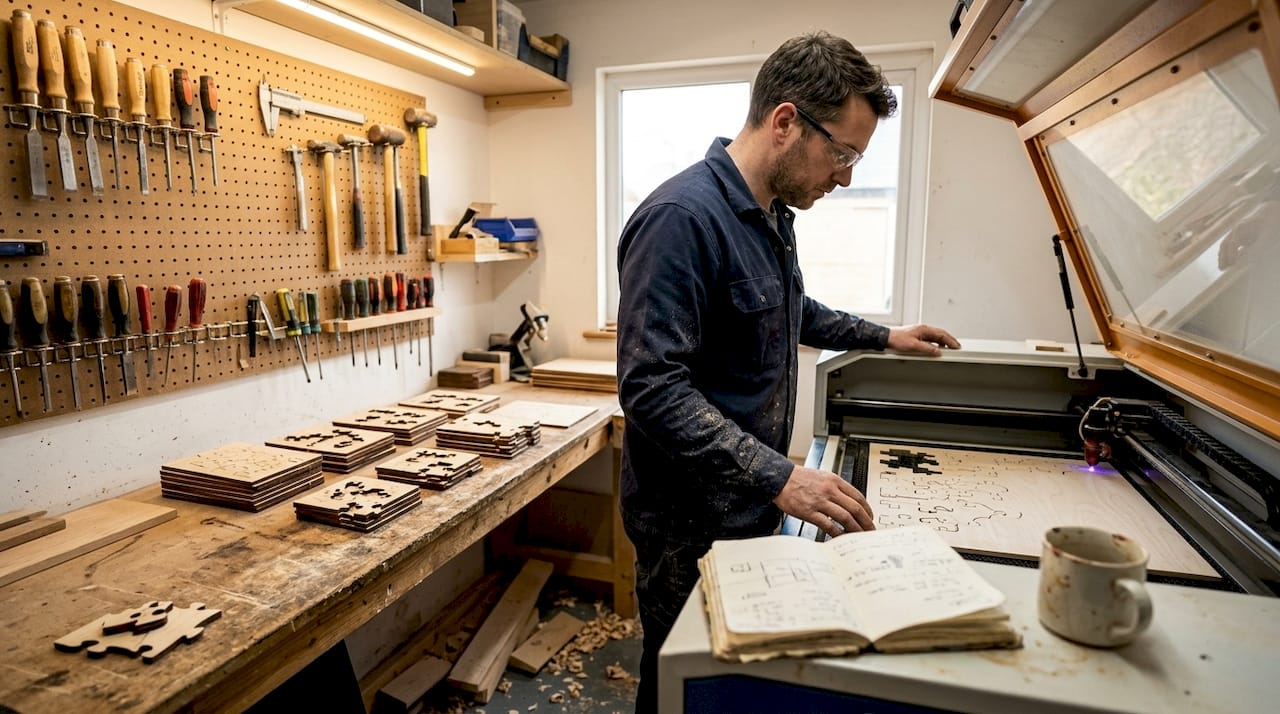
Hand cutting is a centuries-old craft practiced by a small number of specialty makers. Brands like Elms and Stave are known for this approach. Each piece is cut individually, which means no two puzzles are identical. The fit is slightly looser than laser-cut, and pieces may have subtle variations in shape. That’s not a flaw. It’s the signature of human hands at work.
Here’s how to evaluate craftsmanship before you commit:
- Smooth rub test: Rub your thumb across the face of a piece. Quality wood should feel smooth, not rough or fibrous.
- Twist resistance: Hold a piece between two fingers and apply light pressure. It should not flex or bend. Flimsy pieces signal thin or low-grade wood.
- Uniform grain: Look at the back of the pieces. Consistent grain direction indicates quality plywood layering.
- Edge clarity: Laser-cut edges should be clean with minimal scorch marks. Light browning is normal; black charring is a sign of poor calibration.
- Whimsy check: Premium artisanal puzzles often include “whimsy pieces,” which are pieces cut into recognizable shapes like animals, stars, or letters. These are a hallmark of luxury puzzle craftsmanship and add real joy to the assembly experience.
This five-step approach is a version of what puzzle reviewers call the “Three-Touch Test”: smooth rub, twist resistance, and uniform grain. It’s a simple, reliable way to assess quality without needing expert knowledge.
“The best wooden puzzles reward you twice: once during assembly, and again every time you look at the finished piece on your wall.” This is the standard worth holding every maker to.
One pitfall for beginners: don’t confuse complexity with quality. A 1,000-piece puzzle with irregular, intricate cuts can be more satisfying than a 2,000-piece puzzle with generic grid cuts. Piece count is not a proxy for craftsmanship. Focus on fit, feel, and the presence of artistic details.
For ideas on how to make the assembly process itself more creative and rewarding, the guide on creative puzzle activities offers some genuinely fun approaches.
Once you’ve checked materials and construction, design and artistry choices create the puzzle’s personality.
Design, image quality, and home decor potential
A wooden puzzle’s design is where art and function meet. For gift buyers and home decor enthusiasts, this is often the deciding factor. A beautiful image on low-quality wood is a disappointment. A mediocre image on exceptional wood is a missed opportunity. The best puzzles deliver both.
When evaluating design, start with the image itself. Choose something that connects emotionally, whether it’s a landscape that calms you, an illustration that sparks joy, or a pattern that complements your living space. The image should feel intentional, not generic. High-resolution printing with a matte finish reduces glare and gives the puzzle a gallery-quality look that holds up beautifully when framed.
Key design factors to assess:
- Print resolution: Look for crisp edges and rich color depth. Blurry or pixelated images are a red flag for low production standards.
- Matte vs. glossy finish: Matte finishes reduce light reflection and are far better for display. Glossy finishes can look cheap and create glare under indoor lighting.
- Unique piece shapes: Puzzles with varied, non-uniform piece shapes are more visually interesting during assembly and more impressive as display pieces.
- Whimsy pieces: As mentioned earlier, these custom-shaped pieces add personality and make the puzzle feel like a one-of-a-kind object.
- Frameable dimensions: Check whether the completed puzzle fits standard frame sizes. This small detail dramatically increases its value as home decor.
For more inspiration on turning finished puzzles into display-worthy pieces, the guide on displaying puzzles as decor is full of practical ideas. You can also explore eco-friendly puzzle decor uses for creative ways to integrate puzzles into your home sustainably.
| Finish type | Glare level | Decor appeal | Best for |
|---|---|---|---|
| Matte | Low | High | Framing, display, gifting |
| Satin | Medium | Medium | Casual play, storage |
| Glossy | High | Low | Photography, novelty use |
For puzzles with truly intricate puzzle design, the visual complexity of the image should complement the complexity of the cuts. A simple image with elaborate piece shapes can be just as striking as a detailed illustration with standard cuts.
With an eye for materials and design, brand choice and value benchmarks finalize your decision.
Top brands and benchmarking: a value comparison
Knowing what to look for is only half the equation. Knowing which brands actually deliver helps you spend wisely. The artisanal wooden puzzle market has a handful of standout names, each with a distinct identity.
Liberty Puzzles is known for intricate whimsy pieces and high-end production. Their puzzles are collector-level objects, priced accordingly. Artifact Puzzles leans into artistic imagery and quality laser cutting, offering a strong mid-to-high range option. Nautilus Puzzles uses FSC-certified birch and focuses on sustainability alongside design quality. Elms Puzzles and Stave Puzzles represent the hand-cut luxury tier, where each puzzle is a genuinely unique object. Laser-cut options are more precise and affordable, while hand-cut puzzles carry a premium for their uniqueness and artisanal character.
| Brand | Cut type | Price range | Sustainability | Decor appeal |
|---|---|---|---|---|
| Liberty | Laser | High | Moderate | Very high |
| Artifact | Laser | Mid-high | Moderate | High |
| Nautilus | Laser | Mid | FSC-certified | High |
| Elms | Hand | Premium | Variable | Very high |
| Stave | Hand | Luxury | Variable | Exceptional |
When matching brands to your checklist, ask yourself these questions:
- Is sustainability a top priority? Look for Nautilus or brands with verified FSC sourcing.
- Do you want a display piece or a gifting centerpiece? Liberty and Stave deliver the most visual impact.
- Are you working within a budget? Artifact offers strong quality at a more accessible price point.
- Is artisanal uniqueness more important than precision fit? Hand-cut brands like Elms are your answer.
For a closer look at what sets one maker apart in terms of design philosophy and production values, the piece on what makes Lubiwood special offers a useful reference point for comparison.
Armed with the full checklist, it’s time to apply what you’ve learned to real-world puzzle selection.
Choosing puzzles: beyond the checklist
Here’s something no checklist will tell you: the puzzle that ends up most loved in your home probably won’t score perfectly on every criterion. We’ve seen it happen. A simple laser-cut puzzle with a modest piece count and a matte print of a forest scene becomes the piece that guests always stop to admire. Not because it was the most technically impressive option, but because it felt right.
Checklists are tools, not rules. They help you filter out genuinely poor quality and avoid greenwashing. But once you’ve cleared that bar, trust your instincts. Does the image make you feel something? Does the wood feel warm and solid in your hand? Does the puzzle fit the personality of the person you’re gifting it to? Those answers matter more than any spec sheet.
The uncomfortable truth about the premium puzzle market is that price does not always equal joy. Some of the most memorable puzzle experiences come from mid-range options chosen with intention. Conversely, a luxury hand-cut puzzle gifted without thought for the recipient’s taste can sit unopened for years.
The real skill in puzzle selection is balancing aspiration with fit. Use the checklist to protect your investment, then let your instincts and the insider puzzle design secrets guide your final choice.
Discover your ideal handcrafted wooden puzzle
Every point in this checklist reflects what we’ve built into the Lubiwood collection: premium laser-cut birch wood, matte-finish high-resolution artwork, whimsical piece shapes, and a genuine commitment to recyclable materials. Whether you’re looking for a mindful leisure activity, a conversation-starting decor piece, or a gift that will be remembered long after the occasion, we’ve designed each puzzle to deliver on all three.
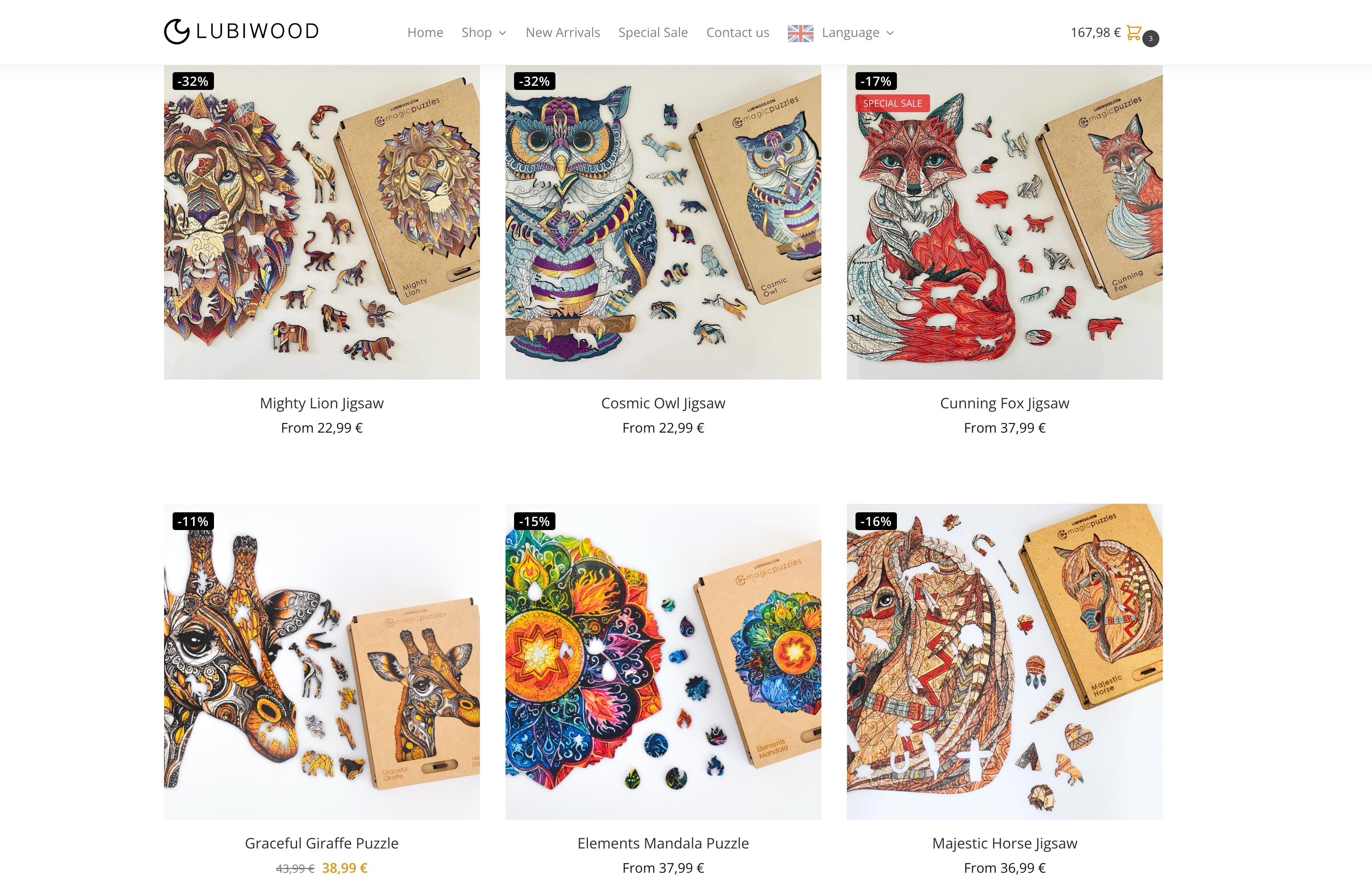
Browse our full range of wooden jigsaw puzzles to find the design that speaks to you, or explore our 3D wooden puzzles for something truly unexpected. Not sure which size fits your space or skill level? Our wooden puzzle size guide makes the decision easy.
Frequently asked questions
What materials should I look for in a quality wooden puzzle?
Preferred woods are birch, basswood, maple plywood at 4 to 6mm thick, offering durability, a satisfying feel, and resistance to warping over time.
How do I spot true artisanal craftsmanship in puzzles?
Look for hand-cut details, whimsical shaped pieces, and use the “Three-Touch Test” to check for smoothness, twist resistance, and uniform grain.
Why is puzzle image and finish important for home decor?
A high-res, matte-finish puzzle with unique piece shapes doubles as frameable wall art and eliminates the glare that makes glossy puzzles look cheap on display.
Which brands are trusted for artisanal wooden puzzles?
Liberty, Artifact, Nautilus, Elms, and Stave each bring distinct strengths, from FSC-certified sustainability to hand-cut luxury, making them reliable benchmarks for quality comparison.
