




Blog
Next-gen puzzle design: AI, innovation, and sustainability


TL;DR:
- Next-gen puzzles incorporate AI-driven adaptive difficulty and procedurally generated designs.
- They prioritize eco-friendly materials like FSC-certified wood, recycled cardboard, and biodegradable inks.
- These innovations enhance the aesthetic, durability, and display value for collectors and enthusiasts.
Puzzles have always been more than cardboard and cut lines. But what’s happening right now goes far beyond a new image or a higher piece count. Artificial intelligence, precision manufacturing, and genuinely sustainable materials are reshaping what a puzzle can be, how it challenges you, and what it looks like hanging on your wall. Next-gen puzzle design centers on AI-driven advancements and eco-friendly materials that make each experience feel fresh, intentional, and worth keeping. Whether you’re a seasoned collector or someone who just discovered the joy of wooden jigsaws, this guide will walk you through every shift shaping the puzzle world in 2026.
Table of Contents
- What defines next-gen puzzle design?
- How AI transforms the puzzle experience
- Eco-friendly materials and sustainable trends
- Next-gen puzzles for collectors: Display, durability, and value
- Why the greenest puzzle might be online—and what physical designers still do best
- Bring next-gen design home: Where to start your collection
- Frequently asked questions
Key Takeaways
| Point | Details |
|---|---|
| AI-driven puzzles | Next-gen puzzle design uses artificial intelligence for smarter, adaptive, and more challenging experiences. |
| Sustainable materials | Modern physical puzzles feature recycled, organic, and biodegradable components for eco-friendly enjoyment. |
| Decor and display value | Today’s puzzles double as artistic home decor and meaningful collector’s items. |
| Personalized challenge | Adaptive technology ensures each puzzle suits your skill level and offers a unique experience. |
| No one-size-fits-all green solution | Both digital and physical next-gen puzzles offer eco-advantages, so choose what fits your values and lifestyle. |
What defines next-gen puzzle design?
The phrase “next-gen puzzle design” sounds like tech jargon, but it actually points to something real and tangible. It describes a generation of puzzles built with smarter tools, better materials, and a sharper eye for how people actually use them. That includes both the digital side and the physical one.
On the digital end, AI-driven and computational approaches power procedurally generated puzzles that never repeat the same layout twice. These systems use deep learning and reinforcement learning to adapt complexity on the fly, meaning the puzzle grows with you instead of frustrating you or boring you. Vision transformers, a type of AI architecture originally built for image recognition, now help computers understand how puzzle pieces relate to each other spatially.
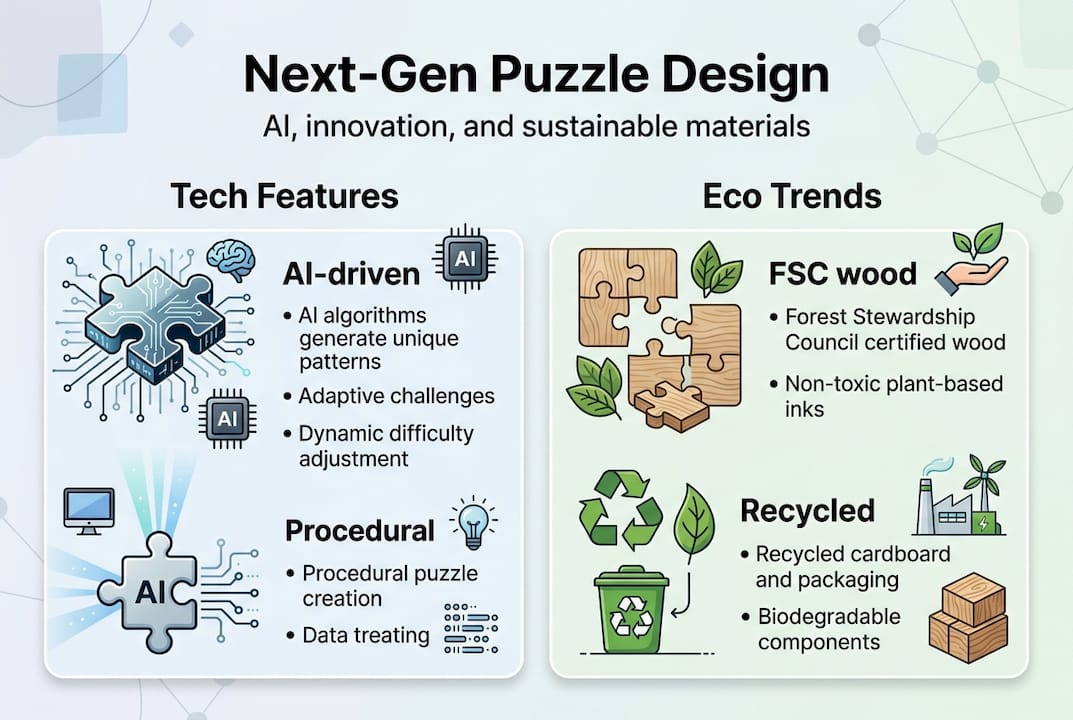
On the physical side, next-gen means something different but equally exciting. It means laser-cut wooden pieces with interlocking shapes that feel satisfying to handle. It means FSC-certified wood, plant-based inks, and packaging you can actually recycle. It also means designs that look stunning assembled or framed, making them as much a part of your home as any print or painting.
Here’s what separates a next-gen puzzle from a standard one:
- Adaptive difficulty that responds to your solving speed and accuracy
- No-guess piece placement guided by AI-assisted shape logic
- Eco-friendly materials including sustainably sourced wood and recycled cardboard
- Display-ready aesthetics with intricate, art-forward imagery
- Unique piece shapes that make assembly feel like an event, not a chore
“Next-gen puzzle design is not just about making puzzles harder or prettier. It’s about making them more meaningful, more personal, and more responsible.”
If you’ve ever assembled a quality jigsaw puzzle and felt that specific kind of calm focus settle over you, next-gen design is built to deepen that feeling, not replace it.
How AI transforms the puzzle experience
Artificial intelligence isn’t coming for your puzzle table. It’s actually making that table a more interesting place to sit.
The most visible change is procedural generation. Instead of one fixed image cut into a fixed number of pieces, AI systems can generate thousands of unique configurations from a single image. Each solve feels different. The piece shapes change. The entry points shift. This keeps experienced puzzlers genuinely challenged without requiring them to buy a new puzzle every week.
Deep learning takes this further. Vision transformers outperform traditional methods for solving jigsaw puzzles, even when pieces have eroded edges or large gaps between them. This matters enormously for cultural preservation. Museums and archaeologists now use these systems to digitally reconstruct damaged mosaics, fragmented manuscripts, and ancient artifacts that would take human experts years to piece together manually.
The ERL-MPP framework takes things even further, using evolutionary reinforcement learning to outperform previous benchmarks on large-scale puzzle reconstruction. It essentially teaches itself to get better by running thousands of simulated solve attempts and learning from each one.
Here’s a side-by-side look at how traditional and AI-driven puzzle approaches compare:
| Feature | Traditional puzzles | AI-driven puzzles |
|---|---|---|
| Piece variety | Fixed cut pattern | Procedurally generated |
| Difficulty | Static | Adaptive |
| Error correction | Manual | AI-assisted |
| Replay value | Low | High |
| Cultural restoration use | Limited | Active and growing |
For physical puzzle makers, AI informs design decisions too. It helps identify which image areas will produce the most satisfying piece shapes and which compositions translate best into tactile, hand-held pieces. If you’ve ever explored custom wooden puzzles, you already know how much design thinking goes into a single cut.
Pro Tip: When shopping for puzzles, look for brands that mention adaptive design or procedural generation. Even in physical form, puzzles built with AI-informed cutting patterns tend to offer a more engaging solve.
Eco-friendly materials and sustainable trends
While digital puzzles go zero-waste by default, the physical puzzle world is catching up fast with a different kind of sustainability.

The shift starts with materials. Sustainable puzzles use FSC-certified wood, recycled cardboard, biopolymers, and soy or vegetable-based inks. FSC certification means the wood comes from responsibly managed forests where replanting and ecosystem health are part of the process. Soy inks avoid the petroleum-based chemicals found in traditional printing, making finished puzzles safer to handle and easier to recycle.
Leading brands are already making this standard. Cloudberries prints on recycled board and uses plastic-free packaging. Eeboo sources sustainably and prints with vegetable inks. Wentworth uses real wood and focuses on heirloom-quality durability. These aren’t niche choices anymore. They’re becoming the baseline expectation for serious puzzle buyers.
Here’s a quick comparison of common eco-materials used across top puzzle brands:
| Material | Benefit | Common use |
|---|---|---|
| FSC-certified wood | Responsibly sourced, durable | Premium wooden puzzles |
| Recycled cardboard | Reduces virgin material use | Budget and mid-range puzzles |
| Soy/vegetable inks | Non-toxic, recyclable | Printing on all puzzle types |
| Biodegradable plastics | Breaks down without microplastics | Packaging and some piece coatings |
Beyond materials, the most forward-thinking brands are adopting broader sustainability practices like tree planting programs, carbon-offset shipping, and zero-landfill manufacturing goals.
For collectors, sustainability adds a layer of meaning to every purchase. A puzzle made from recycled and responsibly sourced materials isn’t just better for the planet. It also tends to be more durable, more beautiful, and more worth displaying. You can explore how these choices play out in decorative puzzle home decor or find thoughtfully sourced options through eco-conscious gifting guides.
- Look for plastic-free packaging as a baseline standard
- Check whether the brand contributes to reforestation or offset programs
- Prioritize soy or vegetable inks over petroleum-based alternatives
- Choose artisanal wooden puzzles for the best combination of durability and low environmental impact
Pro Tip: Before buying, check the brand’s packaging claims. “Eco-friendly” on a box means nothing without specifics. Look for FSC logos, ink type disclosures, or recycled content percentages.
Next-gen puzzles for collectors: Display, durability, and value
With materials and innovation covered, here’s how next-gen puzzles are changing what it means to collect, use, and showcase them.
For collectors, a puzzle is never just a puzzle. It’s a statement about taste, patience, and values. Next-gen designs understand this. They’re built with display in mind from the very first cut. Unusual piece shapes, rich color palettes, and art-forward imagery mean a finished puzzle looks intentional on a wall, not accidental.
Durable materials like biodegradable polymers extend product life and support mindful home decor while reducing waste over time. A puzzle that holds together for decades, keeps its color, and doesn’t warp under humidity is worth far more than a cheap alternative you’ll throw away after one solve.
“The best puzzles aren’t finished when the last piece clicks in. They’re finished when they find a permanent place in your home.”
Here’s what next-gen puzzles offer collectors specifically:
- Display value: Intricate designs and premium finishes look stunning framed or mounted
- Longevity: Sustainably sourced wood and quality coatings resist warping and fading
- Gift-giving appeal: Unique designs and thoughtful packaging make them memorable presents
- Mindful play: The tactile experience of wooden pieces creates a genuine screen-free ritual
- Investment potential: Limited-edition or artist-collaboration puzzles appreciate in value over time
Caring for a collectible puzzle matters too. Store assembled pieces flat, away from direct sunlight, and use a puzzle preserver if you plan to frame them. Proper eco-friendly puzzle storage extends the life of wooden pieces significantly and keeps colors vivid for years.
If you’re drawn to the idea of puzzles as art objects, exploring wooden puzzle art meaning can help you find designs that resonate beyond the solve itself.
Why the greenest puzzle might be online—and what physical designers still do best
Here’s a question worth sitting with: Is a digital puzzle actually greener than a wooden one?
On paper, yes. Digital puzzles are often considered the most eco-friendly option because they produce zero physical waste. No wood, no ink, no shipping emissions. But that argument gets complicated fast. Digital devices require rare earth metals to manufacture, draw electricity to run, and generate e-waste when they’re retired. A single tablet used for puzzle apps has a larger environmental footprint than most people realize.
Physical puzzles made from FSC-certified wood and soy inks, shipped in recycled packaging, and designed to last decades can actually compete on sustainability when you account for full lifecycle impact. And they do something digital puzzles simply cannot. They sit on your shelf. They frame beautifully. They become part of your eco-friendly home decor in a way no app ever will.
For most collectors, the honest answer is that neither format wins outright. What matters is intention. A physical puzzle bought thoughtfully, used repeatedly, and displayed with care is a deeply sustainable choice. A digital puzzle played on a device you already own is also a reasonable one. The worst option is buying cheap, disposable puzzles that end up in a landfill after one use. That’s the habit worth breaking, not the format itself.
Bring next-gen design home: Where to start your collection
Ready to upgrade your leisure or decor with truly next-gen designs?
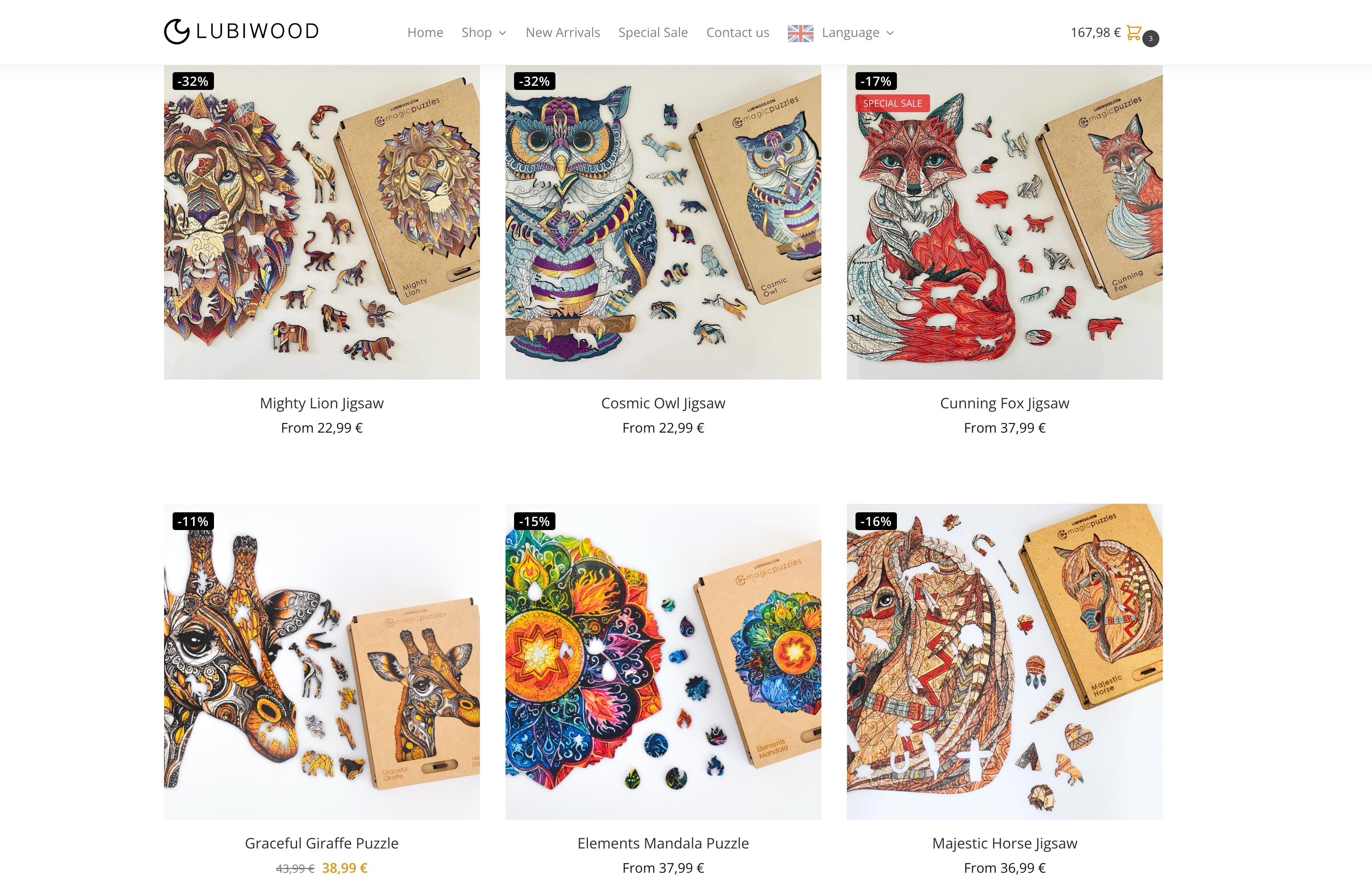
At Lubiwood, every puzzle starts with a commitment to craftsmanship and sustainability. Our laser-cut wooden jigsaw puzzles are made from premium, responsibly sourced wood, and each piece is shaped to feel as satisfying in your hands as it looks on your wall. If you’re looking for something dimensional and striking, our 3D wooden puzzles push the format in a completely different direction. For gift-givers and collectors who want a curated starting point, the Mandala Bundle brings together intricate, art-forward designs in one thoughtful package. Explore the full collection and find the puzzle that fits your space, your style, and your values.
Frequently asked questions
What makes a puzzle ‘next-gen’?
Next-gen puzzles use AI, procedural generation, and sustainable materials to create experiences that are more engaging, more adaptive, and more environmentally responsible than traditional designs. They go beyond a fixed image and a fixed cut to offer something genuinely new each time.
Are digital or physical puzzles more eco-friendly?
Digital puzzles eliminate material waste, but physical eco-puzzles made from responsibly sourced wood and recycled materials offer durability, display value, and a full lifecycle that competes on sustainability when you account for device manufacturing and e-waste.
Which materials are used in sustainable puzzles?
Sustainable puzzles use FSC-certified wood, recycled cardboard, soy and vegetable inks, and biodegradable plastics, all of which reduce environmental impact without sacrificing quality or longevity.
What is adaptive puzzle difficulty?
Adaptive difficulty means the puzzle adjusts its complexity based on your solving speed and accuracy, so the challenge stays fresh rather than becoming predictable. Procedural generation and adaptive difficulty are two of the defining features of next-gen digital puzzle design.
Can next-gen digital puzzle technology help with cultural preservation?
Yes. Transformers and reinforcement learning frameworks are actively used in archaeology and museum restoration to digitally reconstruct damaged mosaics, fragmented manuscripts, and ancient artifacts that would take human experts years to reassemble by hand.