




Blog
Puzzle display ideas: step-by-step guide for home decor

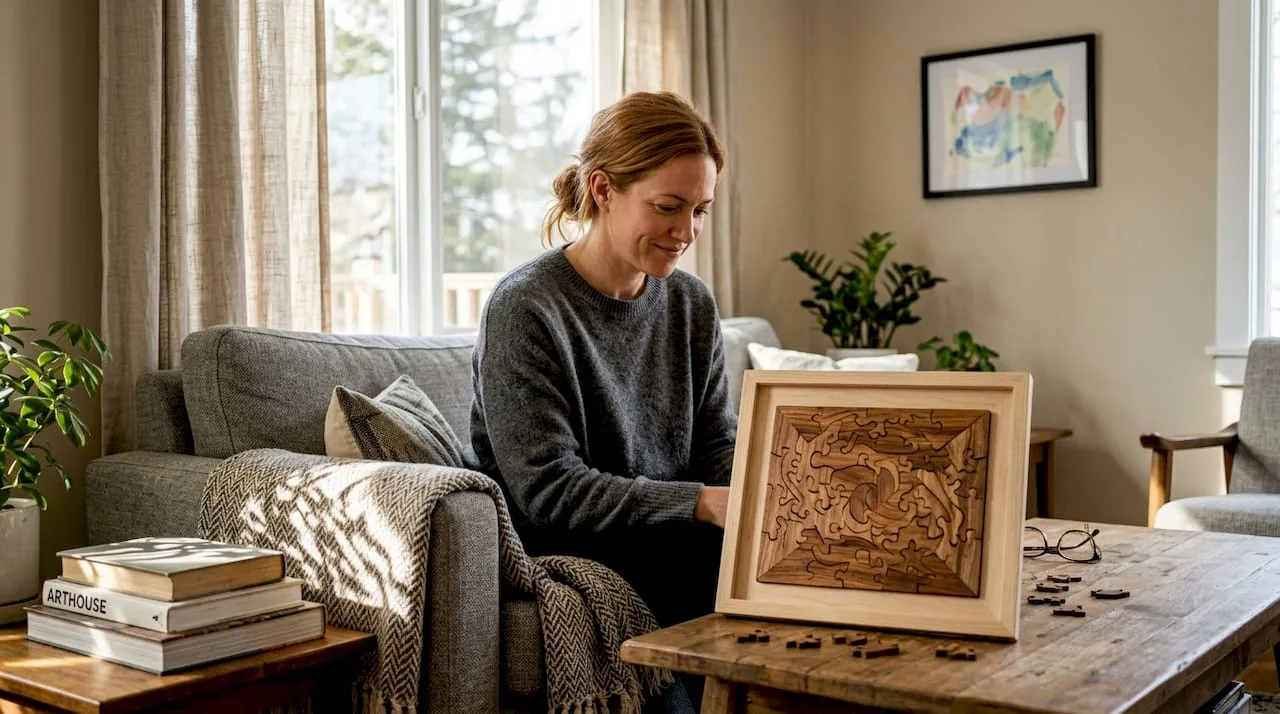
You’ve just finished a stunning handcrafted wooden puzzle, every piece locked into place, the image vivid and satisfying. Now what? Leaving it on the table feels like a waste, and breaking it apart feels almost wrong. The good news is that your completed puzzle can become a genuine piece of wall art or a conversation-starting display. This guide walks you through everything: preparation, gluing, mounting, framing, creative alternatives, and long-term care, so your puzzle earns a permanent, beautiful spot in your home.
Table of Contents
- Why display wooden puzzles? Artistry, family, and ambiance
- What you need: Tools and materials for displaying puzzles
- Step-by-step: Prepare, glue, and mount wooden puzzles
- Framing and creative alternatives: Display options for every space
- Caring for your puzzle art: Maintenance, troubleshooting, and long-term tips
- Elevate your home with handcrafted puzzle art
- Frequently asked questions
Key Takeaways
| Point | Details |
|---|---|
| Choose display method | Pick between permanent (glue, frame) or reversible (shadow box, DIY) solutions. |
| Protect against damage | Control humidity and avoid direct sun to keep wooden puzzles pristine and vibrant. |
| Use the right tools | Have adhesives, backing boards, and UV glass on hand for best framing results. |
| Enjoy artistic impact | Turn completed puzzles into meaningful, customizable home decor pieces for all ages. |
Why display wooden puzzles? Artistry, family, and ambiance
A finished puzzle is more than a completed task. It’s a record of patience, creativity, and time well spent, often with people you love. When you display it, you turn that experience into something your whole household can enjoy every day. Wooden puzzles in particular carry a warmth and texture that printed canvas or mass-produced art simply can’t replicate.
Displaying puzzles also opens up real conversations. Guests notice them. Kids point to the pieces they placed. Families revisit the memory of assembling it together on a rainy afternoon. That kind of emotional resonance is rare in home decor, and it’s something you can build intentionally.
From an interior design perspective, handcrafted wooden puzzles fit naturally into a wide range of aesthetics, from Scandinavian minimalism to cozy cottagecore. Their natural grain and laser-cut precision make them look intentional on any wall. If you’re already exploring eco-friendly decor ideas, wooden puzzle art is one of the most sustainable and personal choices you can make.
The impact is measurable too. 90% satisfaction rates are claimed for display guides by top puzzle brands, reflecting just how rewarding the process becomes when done right. For a deeper look at how puzzles function as decor, puzzle decor creativity is worth exploring before you pick up a frame.
Key reasons to display your wooden puzzle:
- Transforms a leisure activity into lasting, personalized art
- Creates a meaningful focal point in living rooms, hallways, or home offices
- Supports eco-conscious decorating with sustainable, natural materials
- Sparks family storytelling and shared memory
- Adds texture and warmth that printed art can’t match
What you need: Tools and materials for displaying puzzles
Before you touch a single piece, gather your supplies. Having everything ready prevents rushed decisions that lead to warped boards or peeling edges. Here’s what you’ll need based on your chosen display method.
| Item | Purpose | Notes |
|---|---|---|
| Puzzle-specific glue | Bonds pieces together | Apply to back only for wood |
| Foam core or rigid backing | Supports the puzzle | Cut to exact puzzle size |
| Deep frame or shadow box | Houses thicker wooden pieces | Allows for piece depth |
| UV-protective acrylic glazing | Prevents sun fading | Essential for long-term display |
| Weights or heavy books | Holds puzzle flat while drying | Use for 24+ hours |
| Spacers | Keeps puzzle off the glass | Critical for wooden thickness |
| Microfiber cloth | Ongoing cleaning | Never use liquids directly |
For wooden puzzles specifically, puzzle-specific adhesives and UV-protective acrylic in wood frames are the recommended combination. Standard paper puzzle glue can soak through and damage the wood finish, so always check the label.
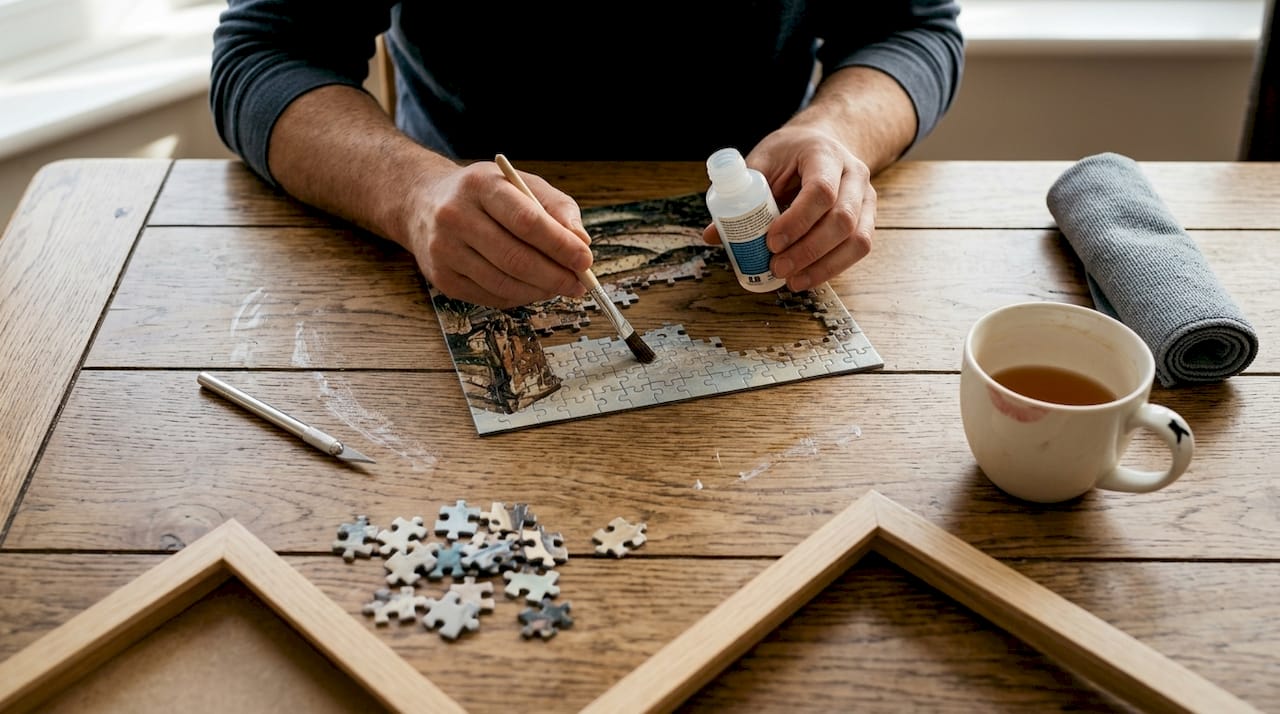
If you want flexibility, consider building or buying a DIY puzzle board with a flat surface and storage underneath. These boards let you assemble, display, and move your puzzle without committing to a permanent frame. For more on keeping your materials in top shape, eco-friendly puzzle storage covers smart options that protect both the puzzle and the planet.
Environmental checklist before you display:
- Humidity between 40 and 55% (use a hygrometer to check)
- No direct sunlight on the display wall
- Away from kitchens, bathrooms, and heating vents
- Stable temperature with minimal daily fluctuation
For a full breakdown of framing materials and how to choose the right backing, preserving handcrafted art is an excellent next step.
Pro Tip: If you’re unsure about humidity in your space, place a small silica gel pack behind the backing board before sealing the frame. It absorbs excess moisture and protects the wood from warping over time.
Step-by-step: Prepare, glue, and mount wooden puzzles
Follow these steps carefully. Rushing any stage, especially the drying time, is the most common reason displays fail.
- Assemble your puzzle completely on a flat, clean surface. Use a large piece of cardboard or a dedicated puzzle board underneath.
- Slide a rigid backing board under the completed puzzle without disturbing the pieces. A piece of foam core cut to size works well.
- Apply a thin, even layer of puzzle glue to the back only. For wooden puzzles, apply glue only on the back to preserve the front finish. Never brush glue across the top surface of a wooden puzzle.
- Place weights evenly across the puzzle and let it dry for at least 24 hours. Uneven pressure causes bowing, which is very difficult to fix once dry.
- Check for gaps or lifted edges after drying. Apply a second thin coat if needed and re-press.
- Fit the glued puzzle into your chosen frame or shadow box, using spacers to keep the puzzle surface from pressing against the glass.
“For wooden puzzles, apply glue only on the back to preserve the front finish, and use shadow boxes for thicker pieces.” This single rule prevents the most common and most visible display mistakes.
For complete puzzle framing instructions including how to handle oversized or irregularly shaped wooden puzzles, the full guide covers every scenario in detail.
Pro Tip: Always do a dry run first. Place your puzzle in the frame without glue to check the fit, depth, and spacing. Wooden puzzles are thicker than cardboard ones, and many standard frames won’t accommodate them without modification.
Framing and creative alternatives: Display options for every space
Not every puzzle needs a traditional frame, and not every family wants a permanent display. Here’s how the main options compare.
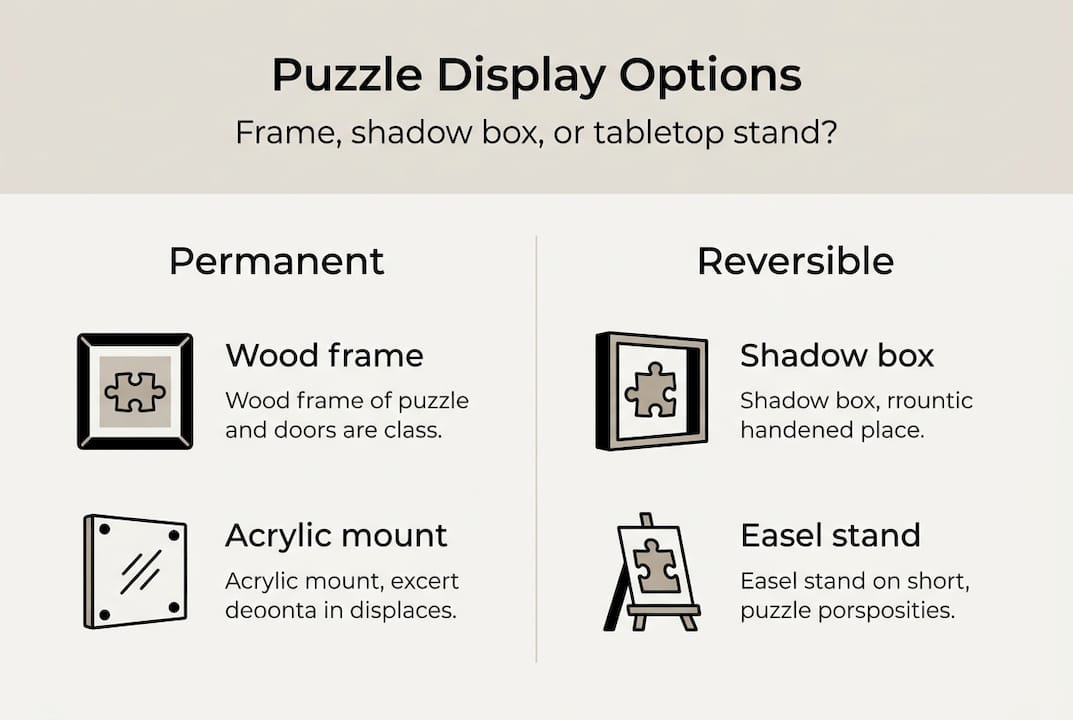
| Display method | Permanence | Best for | Cost range |
|---|---|---|---|
| Deep wood frame | Permanent | Artistic wall displays | Moderate to high |
| Shadow box | Permanent | Thick wooden puzzles | Moderate |
| DIY puzzle board | Flexible | Ongoing assembly and display | Low to moderate |
| Magnetic or clip frame | Reversible | Families, kids, renters | Low |
| Display as-is on shelf | Non-permanent | Smaller puzzles, casual display | None |
No-glue methods are great for reversible family displays and kids’ activities, giving you the freedom to disassemble and reassemble without any commitment. Magnetic frames in particular are growing in popularity because they’re easy to swap out seasonally.
For families who love the process as much as the result, DIY puzzle boards can include drawers and rotating features for sorting and accessibility, making them both a workspace and a display surface in one.
Creative display ideas beyond the wall:
- Lean a large framed puzzle against a bookshelf for a gallery-style look
- Use a shadow box as a centerpiece on a dining table or console
- Group three smaller framed puzzles in a triptych arrangement
- Display a puzzle on an easel for a rotating art-gallery feel at home
For more inspiration, the full puzzle display guide and creative puzzling activities both offer ideas that go well beyond the standard frame-and-hang approach.
Caring for your puzzle art: Maintenance, troubleshooting, and long-term tips
Displaying a puzzle is only half the work. Keeping it looking sharp for years requires a few simple habits and some awareness of what damages wood over time.
Long-term care requires indirect light, controlled humidity, and regular cleaning. These three factors account for the vast majority of display failures, and all three are easy to manage once you know what to watch for.
Ongoing care checklist:
- Dust with a dry microfiber cloth once a month
- Check the display wall for humidity changes each season
- Rotate puzzle displays seasonally to limit cumulative light exposure
- Keep displays away from kitchens, bathrooms, and exterior walls prone to condensation
- Inspect the frame backing annually for signs of moisture or warping
Humidity must be kept at 40 to 55% to prevent warping, and oversized puzzles may need sectional gluing to stay flat across their full surface. If you notice minor bowing in a displayed puzzle, remove it from the frame, place it face-down on a flat surface, and apply gentle weighted pressure for 48 hours. This often corrects early warping before it becomes permanent.
For puzzles displayed in rooms with variable humidity, silica gel packs placed inside the frame backing are a simple and effective solution. Replace them every three to six months.
Pro Tip: Never hang a wooden puzzle display on an exterior wall. These walls experience the most temperature and humidity fluctuation, which accelerates warping and can cause the glue bond to weaken over time.
For guidance on caring for custom or personalized pieces, custom wooden puzzle care covers the specific needs of one-of-a-kind designs.
Elevate your home with handcrafted puzzle art
If this guide has you thinking about which puzzle to display next, that’s exactly the right instinct. The best displays start with puzzles that are genuinely worth showing off: intricate designs, premium wood, and laser-cut precision that holds up beautifully on a wall.
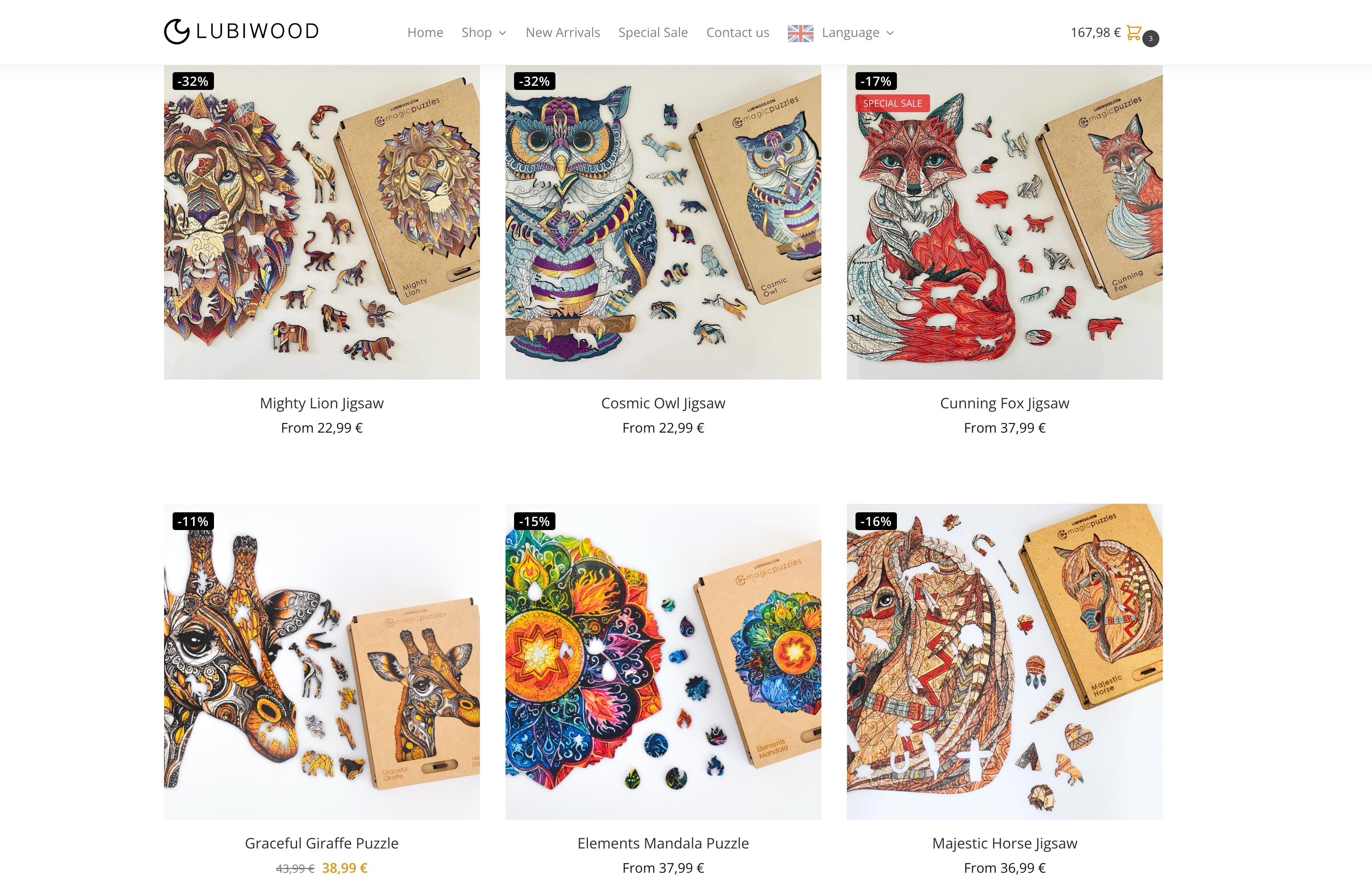
At Lubiwood, every puzzle is crafted from sustainable wood with the kind of detail that makes framing feel like a natural next step. Browse the full range of wooden jigsaw puzzles to find a design that fits your space and style. If you’re looking for something truly special, the best wooden puzzle selections highlight the most popular and display-worthy options. For something with real sculptural presence, 3D wooden puzzle art adds dimension that flat frames simply can’t contain.
Frequently asked questions
Can you frame a wooden puzzle without glue?
Yes, you can use reversible methods like shadow boxes or magnetic frames to display without glue. No-glue methods suit reversible displays for families and kids who want to keep their options open.
How do you prevent a puzzle from warping over time?
Keep the display area at 40 to 55% humidity and out of direct sunlight, and use silica packs inside the frame for extra protection. Humidity warps wood faster than almost any other environmental factor.
What is the best way to clean a framed puzzle?
Dust with a microfiber cloth monthly and never use liquids directly on the puzzle or frame. Monthly microfiber dusting is the recommended standard for long-term care.
Can you reuse a puzzle after gluing it for display?
No, gluing permanently bonds the pieces, so only non-glued or magnetic methods allow for future reassembly. Gluing preserves but commits the puzzle permanently, which is why choosing your method before you glue matters so much.