
Most people assume puzzle intricacy comes from piece count alone. That’s wrong. True intricacy lives in the unique shapes, precision cuts, and artisan craftsmanship behind each piece. Handcrafted wooden puzzles redefine what intricate means, transforming puzzling into an art form that decorates your home and engages your mind. Understanding intricacy helps you choose eco-friendly puzzles that deliver real satisfaction and lasting beauty.
Table of Contents
- Introduction To Puzzle Piece Intricacy
- Craftsmanship Techniques Behind Intricacy
- Role Of Technology In Enhancing Intricacy
- Impact Of Intricacy On Puzzle Experience
- Materials And Sustainability In Intricate Puzzle Crafting
- Comparison Of Intricacy Effects: Wood Vs Cardboard
- Common Misconceptions About Puzzle Piece Intricacy
- Practical Tips For Choosing Intricate Wooden Puzzles
- Explore Lubiwood’s Intricate Wooden Puzzles
- Frequently Asked Questions
Key takeaways
| Point | Details |
|---|---|
| Intricacy means complexity | Puzzle intricacy refers to unique, complex piece shapes, not just the number of pieces in a box. |
| Handcrafted precision matters | Artisan hand cutting and laser technology create one-of-a-kind pieces with exceptional detail and fit. |
| Wooden puzzles outlast cardboard | Premium hardwoods offer superior durability, tactile warmth, and artistic value compared to disposable cardboard alternatives. |
| Sustainability drives quality | Eco-conscious sourcing of premium wood supports intricate designs while respecting the environment. |
| Whimsy pieces elevate experience | Unique shaped pieces add charm, increase challenge, and transform puzzles into collectible decor. |
Introduction to puzzle piece intricacy
Puzzle piece intricacy refers to the quality of being intricate, involving many small, detailed, complex parts that fit together. In puzzles, this means each piece features deliberate design complexity beyond simple tabs and blanks. Intricate pieces have irregular edges, unexpected curves, and distinct silhouettes that make assembly both challenging and rewarding.
Many assume a 1,000-piece puzzle is automatically more intricate than a 500-piece puzzle. That’s misleading. A 500-piece puzzle with handcrafted, uniquely shaped pieces can be far more intricate than a 1,000-piece puzzle with repetitive, mass-produced shapes. Piece count measures quantity; intricacy measures quality of design and execution.
The confusion stems from marketing language. Manufacturers use “complex” and “intricate” interchangeably with “large piece count.” True intricacy examines how pieces interlock, the precision of cuts, and the creativity embedded in shapes. A puzzle with whimsical animal-shaped pieces or themed silhouettes displays higher intricacy than one with generic grid-cut pieces, regardless of total count.
Handcrafted wooden puzzles exemplify genuine intricacy. Each piece receives individual attention during design and cutting. Artisans create shapes that complement the image, adding visual interest and tactical variety. This approach contrasts sharply with die-cut cardboard puzzles, where machines stamp identical piece patterns across different images, resulting in predictable, repetitive assembly.
Understanding intricacy transforms how you evaluate and enjoy puzzles. You begin noticing craftsmanship details like edge variation, piece thickness consistency, and how shapes relate to the artwork. This awareness elevates puzzling from simple entertainment to appreciation of functional art.
Craftsmanship techniques behind intricacy
Traditional hand cutting creates puzzle pieces through skilled artisan labor. A craftsperson uses fine saws or blades to cut each piece individually, following patterns they’ve developed through years of experience. This method produces truly unique pieces because human hands never replicate shapes exactly, even when following templates.
Artisans invest thousands of hours mastering the balance between piece difficulty and solvability. They learn which cuts create satisfying challenges without frustration. A skilled puzzle maker knows how to hide piece boundaries within image details, making assembly require careful observation. They also understand how to distribute whimsy pieces for maximum delight without overwhelming the overall design.
The hand cutting process allows for spontaneous creativity. While working, artisans might notice an image element that suggests a particular piece shape. A cloud formation might inspire a bird-shaped piece. A flower cluster could become a butterfly silhouette. These improvisational moments, impossible in automated production, give handcrafted puzzles their distinctive character.
Key characteristics of handcrafted intricacy include:
- Individual piece variation that ensures no two pieces share identical shapes
- Deliberate edge complexity that requires close examination to find matching pieces
- Thoughtful integration of whimsy pieces that complement rather than distract from imagery
- Consistent piece thickness and smooth edges resulting from practiced technique
Years of experience separate novice cutters from masters. Beginners produce functional pieces, but masters create puzzles that feel alive in your hands. Each piece becomes a small sculpture, worthy of examination beyond its role in the larger image. This craftsmanship explains why collectors value handmade puzzles as heirlooms.
Pro Tip: When evaluating handcrafted puzzles, examine individual piece photos if available. Look for organic, flowing edges rather than geometric uniformity. True handcraft shows subtle variations in similar pieces.
The artisan approach connects modern puzzlers to centuries of woodworking tradition. Creating custom wooden puzzles involves selecting appropriate wood types, planning cut patterns, and executing with precision tools. This marriage of planning and improvisation produces puzzles that engage both analytically and aesthetically.
Role of technology in enhancing intricacy
Laser cutting revolutionized wooden puzzle manufacturing by achieving precision impossible through hand cutting alone. Laser beams focus intense heat to vaporize wood along programmed paths, creating clean edges with tolerances measured in fractions of millimeters. This accuracy enables piece designs with delicate features like narrow tabs, intricate curves, and fine detail work.
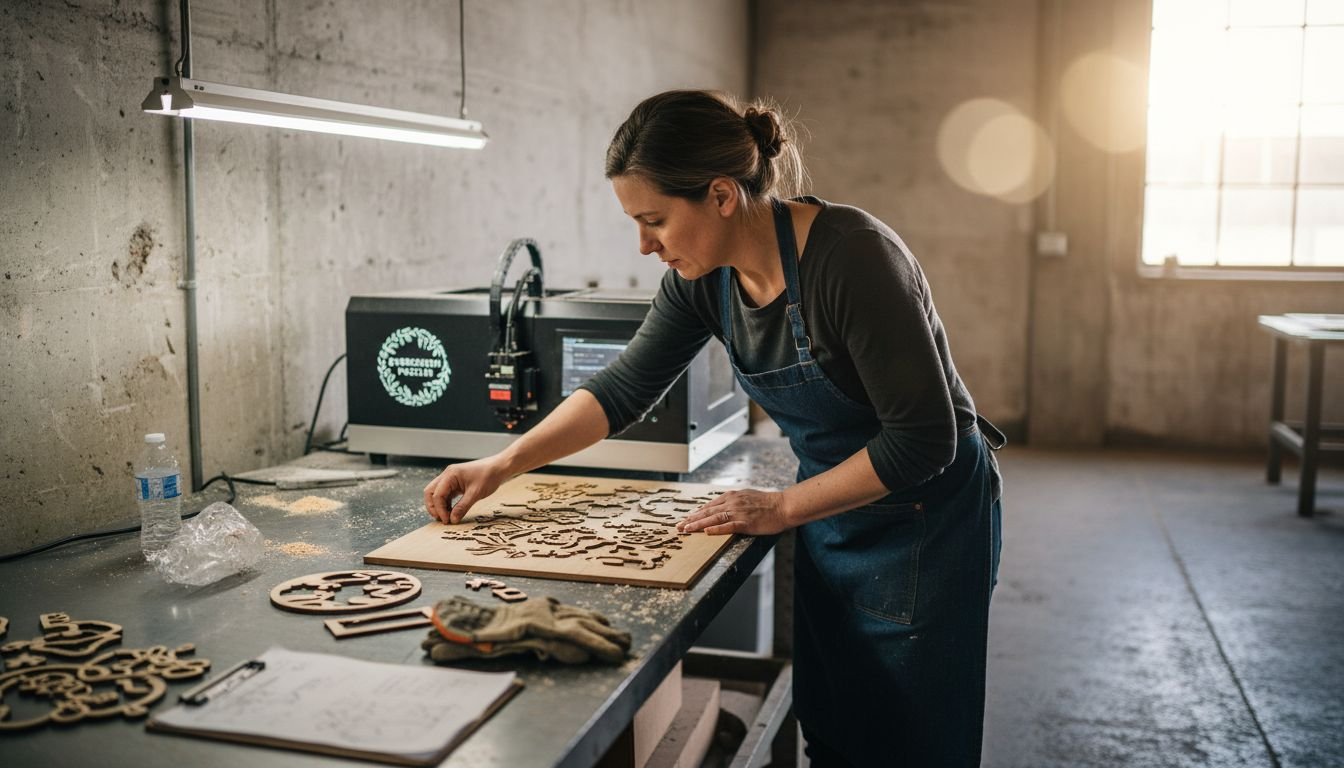
The technology allows designers to program complex piece patterns digitally before cutting. They can test fit virtually, adjust tolerances, and ensure every piece interlocks perfectly. Once programmed, lasers reproduce these patterns with absolute consistency across multiple puzzles. This reliability means you get museum-quality precision in every box.
Laser cutting supports sustainability in ways traditional methods cannot. The process produces minimal waste because lasers follow optimal cutting paths. Wood scraps can be recycled or repurposed. Many manufacturers use archival, non-toxic inks paired with laser cutting, ensuring puzzles remain vibrant and safe for generations.
Advantages of laser-cut intricacy:
- Microscopic precision creating pieces that snap together with satisfying tightness
- Ability to cut extremely fine details like hair-thin connectors and tiny whimsy shapes
- Consistent piece quality across entire production runs
- Eco-friendly operation using recyclable wood and minimal chemical treatments
- Color preservation through sealed edges that prevent ink bleeding or fading
Some laser-cut wooden puzzles can maintain quality for centuries when stored properly. The sealed wood edges resist moisture and wear far better than exposed cardboard. Archival inks don’t fade under normal light exposure. This longevity transforms puzzles from disposable entertainment into collectible art pieces you can assemble repeatedly.
The precision enables new puzzle experiences. Designers create pieces with multiple connection points, allowing alternative assembly sequences. They hide miniature images within piece shapes. They craft gradient cuts where piece boundaries become nearly invisible against the artwork. These innovations stem directly from laser technology’s capabilities.
Combining laser precision with artisan design philosophy produces optimal results. Designers with traditional craftsmanship backgrounds program laser patterns that retain handcrafted character while gaining technological advantages. You get the organic feel of hand-cut puzzles with the perfect fit of machine precision.
Impact of intricacy on puzzle experience
Intricate puzzle pieces transform assembly from mechanical sorting into artistic exploration. When each piece has a distinct shape, you can’t rely on repetitive patterns. You must observe image details, study piece contours, and think creatively about fits. This engagement promotes mindfulness, pulling your attention fully into the present moment.
Whimsy pieces add layers of discovery to puzzling. As you assemble, you suddenly recognize a piece shaped like a cat hidden within a garden scene, or a heart silhouette in a romantic landscape. These surprises create emotional connections to the puzzle. You remember where specific whimsy pieces belonged long after completing the image.
The challenge level scales with intricacy. Beginners might struggle with highly irregular pieces, while experienced puzzlers find predictable shapes boring. Intricate designs accommodate this spectrum by offering varied difficulty within single puzzles. Edge pieces might be straightforward while interior sections demand serious concentration.
Benefits of intricate puzzle design:
- Enhanced cognitive engagement requiring spatial reasoning and pattern recognition
- Tactile satisfaction from precisely cut pieces that fit with audible clicks
- Visual appeal as completed puzzles become frameable art for home display
- Replay value since complex pieces remain challenging in subsequent assemblies
- Social bonding when families or friends collaborate on intricate challenges
Completed intricate wooden puzzles serve as distinctive home decor. The wood grain adds depth and warmth that cardboard can’t match. Light plays across the piece edges, creating subtle texture visible from across rooms. Guests notice and ask about these displayed puzzles, sparking conversations about craftsmanship and the images themselves.
The tactile experience matters more than many realize. Wooden puzzle art combines visual beauty with physical pleasure. Running fingers over smooth wood pieces, feeling their weight, experiencing how they nest together, all these sensations contribute to puzzle enjoyment. Intricate pieces maximize this tactile richness through varied shapes and detailed edges.
Pro Tip: Choose intricate puzzles matching your current skill level, then gradually increase complexity. Jumping to extremely intricate designs too quickly can frustrate rather than delight. Build confidence with moderate intricacy first.
Materials and sustainability in intricate puzzle crafting
Premium hardwoods form the foundation of quality intricate puzzles. Birch and maple stand out for their fine, consistent grain that accepts detailed cuts without splintering. These woods offer durability that allows repeated assembly and disassembly without wearing piece edges. Their natural beauty shines through even under printed images, adding warmth to the final product.
Wood thickness directly impacts piece strength and feel. Most quality wooden puzzles use 4mm to 6mm thick wood. Thinner wood risks breakage in delicate cuts; thicker wood becomes unwieldy and doesn’t stack neatly. The optimal thickness balances structural integrity with tactile refinement, letting pieces feel substantial without being clunky.
Sustainable forestry practices ensure puzzle production doesn’t harm ecosystems. Responsible manufacturers source wood from certified sustainable forests where harvested trees get replaced. This approach maintains forest health while providing renewable materials. Some companies go further, using reclaimed wood or partnering with reforestation initiatives.
| Wood Type | Grain Quality | Durability | Eco Considerations |
|---|---|---|---|
| Baltic Birch | Fine, uniform | Excellent | Sustainably harvested in managed forests |
| Maple | Smooth, tight | Superior | North American sources with replanting programs |
| Basswood | Soft, workable | Good | Renewable, fast-growing species |
| Oak | Pronounced grain | Very high | Durable but heavier, requiring more material |
Eco-friendly finishes protect wood without introducing toxins. Water-based sealers and plant-derived oils preserve puzzles while remaining safe for children and pets. These finishes enhance wood’s natural resistance to moisture and UV damage. Unlike chemical-heavy treatments, they don’t off-gas harmful compounds into your home.
Durability and sustainability intersect in meaningful ways. A puzzle that lasts decades prevents waste far better than one requiring replacement after a few uses. The materials and construction methods that create intricate, beautiful puzzles also tend to be the most environmentally responsible. Quality and eco-consciousness align naturally.
Exploring 3D wooden puzzles reveals how premium materials enable complex architectural designs. These puzzles require wood that holds precise angles and supports its own weight when assembled. Only high-quality hardwoods deliver this performance.
What makes puzzle craftsmanship special includes material selection as a foundational element. Craftspeople understand how different woods respond to cutting techniques, how grain direction affects strength, and which finishes complement specific wood types. This knowledge informs every production decision.
Comparison of intricacy effects: wood vs cardboard
Wooden and cardboard puzzles deliver fundamentally different experiences despite both being jigsaw puzzles. The material choice affects every aspect from assembly challenge to long-term value. Understanding these differences helps you make informed purchasing decisions aligned with your priorities.
| Feature | Wooden Puzzles | Cardboard Puzzles |
|---|---|---|
| Piece Uniqueness | Each piece individually designed, no repetition | Mass-produced dies create repeated shapes |
| Durability | Lasts decades with minimal wear | Deteriorates after multiple assemblies |
| Tactile Quality | Warm wood texture, satisfying weight | Thin, bendable material with paper feel |
| Assembly Challenge | Irregular shapes require careful observation | Predictable patterns enable mechanical sorting |
| Artistic Value | Functions as displayable decor | Disposable entertainment, rarely preserved |
| Environmental Impact | Sustainable wood, fully recyclable | Often uses petroleum-based coatings, limited recycling |
| Price Point | Higher initial cost | Budget-friendly, mass-market pricing |
| Whimsy Pieces | Commonly included, diverse designs | Rare, limited by die-cutting technology |
The piece shape difference creates the most noticeable impact. Cardboard puzzle manufacturers use metal dies that stamp identical patterns across thousands of puzzles. You might find the exact same piece shapes in puzzles with completely different images. This repetition reduces challenge because experienced puzzlers recognize familiar piece types instantly.
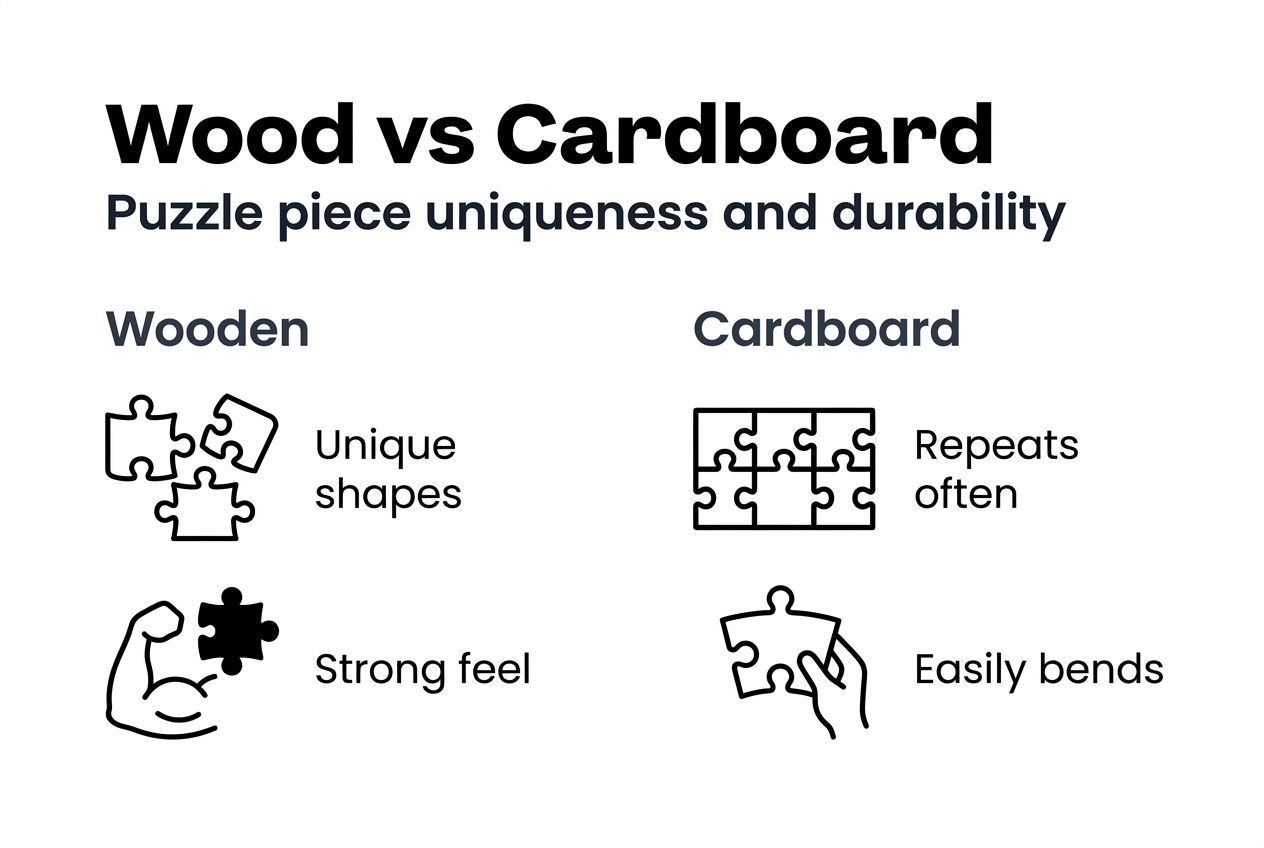
Wooden puzzles, especially handcrafted or laser-cut varieties, feature unique piece designs. No two pieces share identical shapes. This uniqueness forces you to engage with each piece individually, examining its specific contours rather than sorting by familiar patterns. The assembly becomes genuinely exploratory rather than algorithmic.
Durability manifests in everyday use. Cardboard pieces develop fuzzy edges, bend at corners, and separate into layers after multiple assemblies. The image surface scratches and fades. Within a few years, pieces may no longer fit snugly. Wooden pieces maintain their integrity indefinitely. The solid construction resists wear, and quality finishes protect printed images from handling damage.
Tactile experience separates casual puzzlers from enthusiasts. Wooden pieces feel substantial in your hands. They make satisfying sounds when placed correctly. The temperature and texture of wood engage your sense of touch in ways cardboard cannot. These sensory elements contribute to the meditative, relaxing quality many seek in puzzling.
Collectability and display value favor wooden puzzles dramatically. Completed cardboard puzzles rarely warrant preservation beyond gluing and framing. Wooden puzzles become art objects you proudly display, disassemble for others to enjoy, and potentially pass down as heirlooms. This lasting value justifies the higher upfront cost.
Common misconceptions about puzzle piece intricacy
Many buyers equate piece count with intricacy automatically. A 2,000-piece puzzle must be more intricate than a 1,000-piece puzzle, right? Wrong. Intricacy measures shape complexity and uniqueness, not quantity. A 500-piece wooden puzzle with individually designed shapes can challenge you more than a 2,000-piece cardboard puzzle with repetitive die-cut patterns.
The assumption that all wooden puzzles offer high intricacy causes disappointment. Some wooden puzzles use simple grid cuts similar to cardboard puzzles, just in wood material. These provide durability benefits without genuine intricacy. Always verify that wooden puzzles specifically mention handcrafted, laser-cut, or unique piece designs before assuming superior intricacy.
Another myth suggests intricate puzzles only appeal to experts. Actually, intricacy enhances enjoyment across skill levels when properly matched. Beginners benefit from moderately intricate pieces that teach observation skills without overwhelming. Intermediate puzzlers find their sweet spot in designs balancing challenge with accessibility. Experts seek maximum intricacy to fully engage their developed skills.
Key intricacy misconceptions:
- Believing piece count alone determines difficulty or intricacy level
- Assuming wooden construction automatically means handcrafted quality and unique pieces
- Thinking intricate puzzles require expert-level skills to enjoy
- Expecting all puzzles marketed as “premium” to feature genuine design intricacy
- Confusing image complexity with piece shape intricacy
Image complexity differs from piece intricacy, yet many conflate them. A puzzle can have an incredibly detailed image like a dense floral scene while having simple, repetitive piece shapes. Conversely, a minimalist image might feature highly intricate piece designs. Both factors contribute to overall challenge, but they’re independent variables.
The price-to-quality relationship isn’t always linear in puzzles. Some expensive puzzles deliver mediocre intricacy, relying on brand reputation or image licensing costs to justify pricing. Meanwhile, some moderately priced artisan puzzles offer exceptional intricacy because creators prioritize craftsmanship over marketing. Research specific manufacturers and read detailed reviews to identify true quality.
Marketing language exploits these misconceptions. Terms like “challenging,” “complex,” and “detailed” often describe image characteristics rather than piece design. Look for specific mentions of unique piece shapes, handcrafted cutting, laser precision, or whimsy pieces when evaluating intricacy claims. Vague promotional language rarely indicates genuine craftsmanship.
Practical tips for choosing intricate wooden puzzles
Identifying genuinely intricate wooden puzzles requires examining specific product details. Start with manufacturing method descriptions. Look for explicit mentions of “handcrafted,” “laser-cut,” “individually designed pieces,” or “artisan-made.” These terms signal attention to piece intricacy. Generic descriptions like “wooden puzzle” or “premium quality” don’t guarantee intricate design.
- Verify the cutting method through product descriptions or manufacturer information. Laser-cut and hand-cut puzzles typically offer higher intricacy than mass-produced alternatives.
- Examine close-up photos of individual pieces if available. Look for irregular edges, varied piece sizes, and unique shapes rather than uniform geometric patterns.
- Check for whimsy piece mentions and examples. Quality intricate puzzles usually include themed silhouette pieces that complement the image.
- Confirm wood type and thickness specifications. Premium hardwoods like birch or maple in 4mm to 6mm thickness indicate quality construction supporting intricate cuts.
- Research the manufacturer’s craftsmanship philosophy and production methods. Niche puzzle shops often prioritize quality and uniqueness over mass-market appeal.
- Read detailed customer reviews focusing on assembly experience comments. Reviewers often mention piece uniqueness, fit quality, and whether the puzzle felt genuinely challenging.
- Investigate sustainability claims and certifications. Eco-friendly puzzle production often correlates with careful craftsmanship and attention to detail.
Balance piece count with your available time and skill level. A 1,000-piece intricate puzzle requires significantly more time than a 500-piece puzzle with similar intricacy. Consider your typical puzzle session length and completion timeline preferences. Highly intricate small puzzles can satisfy when time is limited.
Pro Tip: Start your intricate wooden puzzle journey with a mid-size puzzle from a reputable artisan brand. This allows you to experience quality craftsmanship without overwhelming time or financial commitment. You’ll quickly understand what genuine intricacy feels like.
Sustainability certifications provide valuable quality signals. FSC (Forest Stewardship Council) certification indicates responsibly sourced wood. Mentions of water-based inks or non-toxic finishes show environmental consideration. Companies investing in sustainable practices typically maintain high standards across all production aspects, including piece design.
When selecting eco-friendly gifts, examine the complete product lifecycle. True eco-consciousness encompasses sustainable materials, responsible manufacturing, product longevity, and end-of-life recyclability. Intricate wooden puzzles excel in all these areas when produced by committed manufacturers.
Consider proper storage solutions before purchasing. Intricate wooden puzzles deserve protection that maintains their quality. Dedicated puzzle boxes, drawstring bags, or display cases prevent piece loss and damage. Factor storage into your puzzle budget and space planning.
Compare offerings across multiple artisan puzzle makers. Each has distinctive design aesthetics and intricacy approaches. Some excel at whimsy pieces, others at edge complexity, and some at overall shape variety. Choosing memorable unique gifts requires understanding recipient preferences and matching them to specific puzzle characteristics.
Explore Lubiwood’s intricate wooden puzzles
Lubiwood offers a curated collection of handcrafted, laser-cut wooden jigsaw puzzles designed for puzzle enthusiasts who value artistry and sustainability. Each puzzle features exceptional piece intricacy with unique shapes, whimsical silhouettes, and precision fits that transform assembly into a meditative art experience. Sustainably sourced premium hardwoods ensure durability, while archival inks preserve vibrant colors for generations.
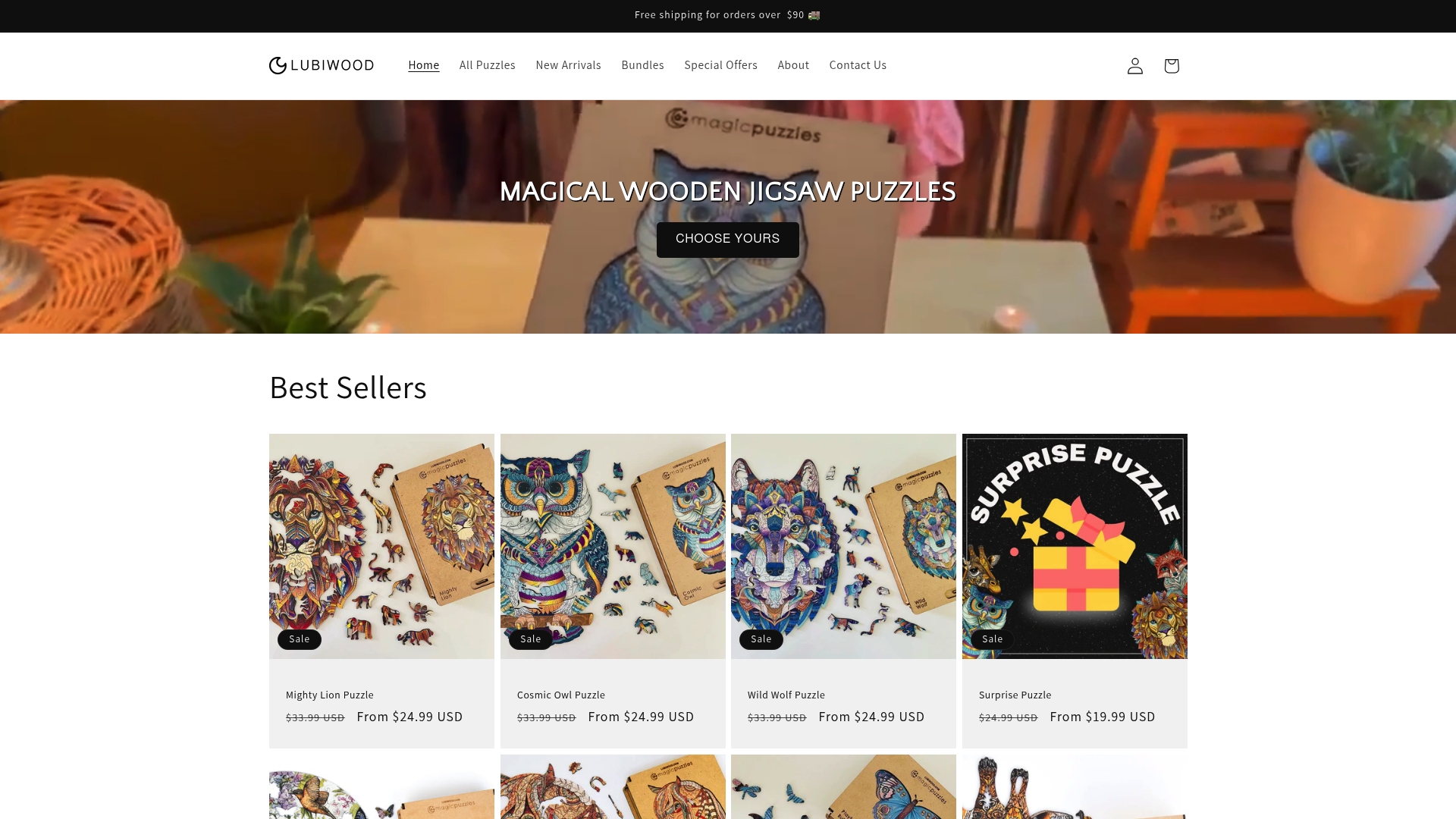
The collection spans diverse artistic styles and themes, from nature scenes to abstract designs, each crafted to function as engaging puzzles and striking home decor. 3D wooden puzzles add architectural challenges for those seeking dimensional assembly experiences. Every puzzle reflects a commitment to eco-friendly production and exceptional craftsmanship.
Choosing the right puzzle size and complexity matters. Lubiwood’s wooden puzzle size guide helps you select puzzles matching your skill level, available time, and display preferences. Whether you’re buying for yourself or seeking a meaningful gift, understanding these factors ensures satisfaction.
Frequently asked questions
What exactly is puzzle piece intricacy?
Puzzle piece intricacy refers to the complexity and uniqueness of individual piece shapes, including irregular edges, varied sizes, and creative silhouettes. It measures design quality rather than quantity. Intricate pieces require careful observation and thoughtful placement, making assembly more engaging than puzzles with repetitive, predictable shapes.
How does laser cutting improve puzzle piece intricacy?
Laser cutting delivers microscopic precision that enables extremely detailed piece designs with delicate features impossible through traditional methods. This technology creates perfect fits while supporting eco-friendly production through minimal waste and recyclable materials. Laser-cut puzzles maintain vibrant colors and structural integrity for decades or even centuries.
Why are handcrafted wooden puzzles considered better than cardboard?
Wooden puzzles feature unique, non-repetitive pieces that create genuine assembly challenges and superior tactile experiences. They last for generations without deteriorating, unlike cardboard puzzles that wear out after multiple uses. The premium materials, artistic value, and sustainability of eco-friendly wooden puzzles make them collectible art pieces rather than disposable entertainment.
How can I identify a truly intricate wooden puzzle before buying?
Look for specific manufacturing details like “handcrafted,” “laser-cut,” or “unique piece designs” in product descriptions. Examine close-up photos for irregular piece edges and whimsy shapes. Verify premium hardwood materials and sustainability certifications. Choosing quality puzzles requires researching manufacturer craftsmanship philosophy and reading detailed customer reviews about assembly experiences.
Do intricate puzzles require expert-level skills?
No. Intricacy enhances enjoyment across all skill levels when properly matched to experience. Beginners benefit from moderate intricacy that teaches observation without frustration. The key is selecting appropriate complexity for your current abilities, then gradually increasing challenge as skills develop. Intricate design makes puzzles more engaging, not necessarily harder, when sized appropriately.
How do I care for intricate wooden puzzles to maintain quality?
Store puzzles in dedicated boxes or bags away from direct sunlight and moisture. Handle pieces by edges to preserve printed surfaces. Avoid forcing pieces during assembly, as wooden puzzles fit precisely when correct. Clean with dry, soft cloths only; never use water or cleaning solutions. Proper care allows intricate wooden puzzles to maintain perfect condition through countless assemblies over many years.
