




Blog
Puzzle storage solutions: Eco-friendly picks for 2026

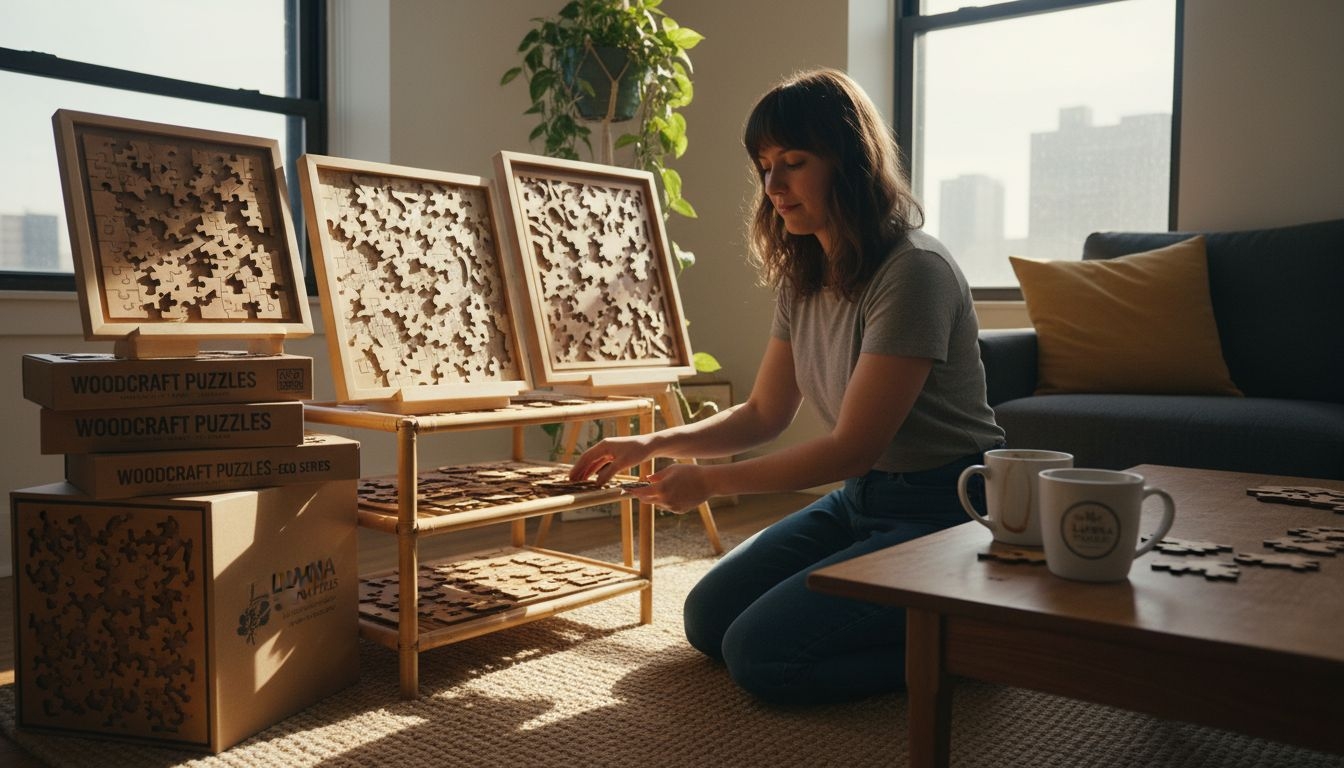
If you collect artisanal wooden puzzles, you know the struggle of storing them safely without sacrificing your eco-values or cluttering your space. Finding storage that preserves delicate pieces, organizes your collection, and complements your home decor can feel impossible. This guide walks you through sustainable storage options designed specifically for wooden puzzle enthusiasts who care about quality, aesthetics, and the planet.
Table of Contents
- How To Choose The Right Puzzle Storage: Key Selection Criteria
- Wooden Puzzle Stands: Elegant, Stable Display And Storage
- Breathable Storage Options: Mesh And Zippered Pouches
- Stackable Bins And Containers: Space-Saving, Protective Storage
- Summary Comparison Of Puzzle Storage Solutions
- Situational Picks: Choosing The Best Storage For Your Puzzle Needs
- Discover Artisanal Wooden Puzzles And Eco-Friendly Accessories At Lubiwood
- Frequently Asked Questions About Puzzle Storage Solutions
Key takeaways
| Point | Details |
|---|---|
| Sustainability matters | Natural materials like wooden stands and breathable fabric pouches align with eco-conscious values while protecting puzzles. |
| Display meets function | Multi-purpose solutions such as wooden stands and furniture integrate storage seamlessly into home decor. |
| Organization optimizes space | Stackable bins and labeled pouches keep collections accessible and prevent piece loss. |
| Budget-friendly options exist | Simple ziplock bags with labels offer affordable flexibility for smaller collections. |
| Match storage to your needs | Different scenarios call for different solutions, from in-progress mats to permanent display frames. |
How to choose the right puzzle storage: key selection criteria
Before diving into specific products, you need a framework for evaluating puzzle storage. The right choice balances several competing priorities, and understanding these criteria helps you make decisions aligned with your values and practical needs.
Sustainability should top your list. Look for natural wood puzzle stands made from renewable resources, recycled plastics, or biodegradable fabrics. These materials minimize environmental impact while maintaining durability. Many eco-friendly options also avoid synthetic coatings that off-gas chemicals near your puzzles.
Preservation protects your investment. Wooden pieces are sensitive to moisture, temperature swings, and direct sunlight. Quality storage shields against these threats while allowing airflow to prevent mold. Consider how each solution handles dust accumulation, which can settle into laser-cut grooves and dull the wood’s natural beauty.
Organization determines how quickly you can find specific puzzles or pieces. Transparent containers, labeled sections, and modular systems reduce search time dramatically. For serious collectors, systematic organization prevents the frustration of mixing pieces from different sets, especially when creating custom wooden puzzles with unique dimensions.
Size compatibility varies widely. Check whether storage accommodates your collection’s range, from compact 100-piece sets to sprawling 1000-piece landscapes. The wooden puzzle size guide helps match storage capacity to actual puzzle dimensions rather than just piece count.
Aesthetic integration elevates your space. Storage shouldn’t hide beautiful wooden puzzle art and eco gifts but showcase them as décor elements. Natural wood finishes, neutral tones, and minimalist designs blend into various interior styles while celebrating craftsmanship.
Affordability and accessibility affect your options. Premium wooden organizers deliver superior longevity but require upfront investment. Budget solutions like labeled bags work perfectly for casual puzzlers. Balance cost against expected use frequency and collection growth.
Pro Tip: Measure your storage space before purchasing any system. Many attractive options fail simply because they don’t fit existing shelves or closets, wasting money and creating more clutter.
Wooden puzzle stands: elegant, stable display and storage
Wooden stands represent the gold standard for eco-conscious puzzle storage. These structures combine form and function, turning organization into an attractive display element that celebrates your collection’s artistry.
Crafted from sustainably sourced wood, these stands echo the material quality of your puzzles themselves. Natural grain patterns and warm tones complement wooden puzzle aesthetics, creating visual harmony in living spaces. Unlike plastic alternatives, wood ages gracefully, developing character that enhances rather than detracts from your décor.
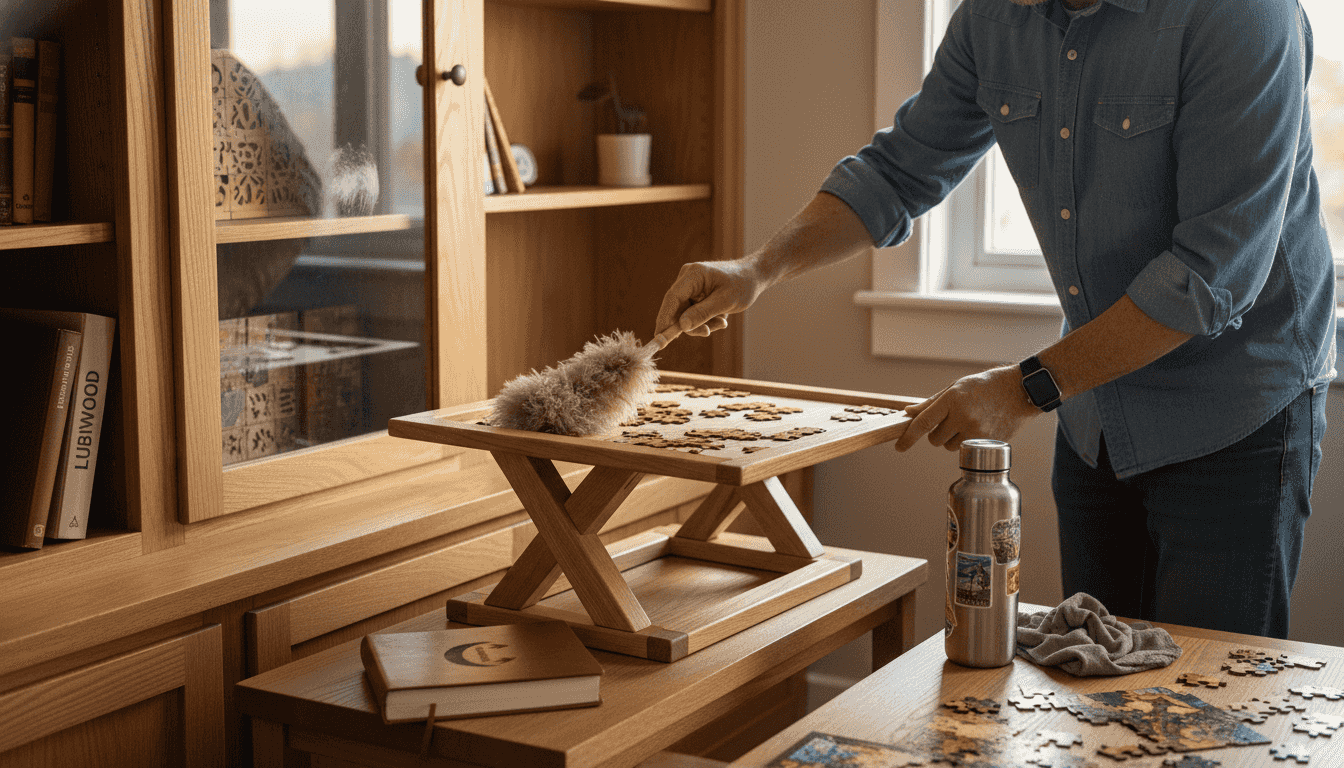
Using natural wooden puzzle stands provides stability that prevents warping or bending of stored puzzles. The rigid construction holds multiple sets vertically without crushing delicate pieces beneath. Slots or shelves keep individual puzzles separated, eliminating the risk of mixing pieces between sets.
Odorless and chemically inert, wooden stands won’t transfer scents or residues to your puzzles. This matters particularly for heirloom pieces or limited editions where preservation of original wood scent and finish is essential. The breathable nature of wood also allows air circulation, reducing moisture accumulation.
Maintenance requires only occasional dusting with a soft cloth. Unlike fabric solutions that trap dust or plastic bins that develop static, wooden stands stay clean with minimal effort. Their durability means they often outlast the puzzles they store, making them a true investment piece.
Multiple configurations suit different collection sizes. Single-tier stands work for small collections, while modular towers expand vertically to accommodate growth. Some designs incorporate drawers or compartments for storing loose pieces during assembly breaks.
Pro Tip: Position wooden stands away from direct sunlight and heating vents to prevent both the stand and stored puzzles from experiencing temperature extremes that cause expansion and contraction.
Consider browsing 3d wooden puzzles collection to see how dimensional puzzles pair beautifully with dedicated wooden display stands.
Breathable storage options: mesh and zippered pouches
For puzzle enthusiasts prioritizing portability and moisture control, breathable fabric solutions offer practical advantages. These lightweight organizers protect while allowing critical airflow that wooden puzzles need for long-term preservation.
Mesh zipper pouches allow breathable storage that prevents moisture damage, making them ideal for humid climates where sealed containers would trap condensation. The permeable fabric lets air circulate freely around stored pieces, reducing mildew and warping risks dramatically.
Transparent mesh windows enable instant visual identification without unzipping. You can spot specific puzzles at a glance, saving time when browsing your collection. Color-coded zippers or mesh tints help categorize by theme, difficulty, or piece count.
Sustainable fabric options include organic cotton, recycled polyester mesh, and biodegradable plant fibers. These materials align with eco-conscious values while providing durability for repeated use. Unlike synthetic bags that shed microplastics, natural fabrics decompose safely at end of life.
Label areas on most pouches accommodate tags or marker notes. Write puzzle names, piece counts, or completion dates directly on the fabric or attached cards. This simple organization system scales beautifully as collections grow, maintaining order without complex tracking systems.
Lightweight construction makes pouches perfect for travel or temporary storage during home moves. Stack them in drawers, hang them on hooks, or pack them in larger containers without adding significant weight. Their flexibility allows fitting into irregular spaces that rigid containers can’t utilize.
For those who value niche puzzle shops for eco gifts, breathable pouches complement artisanal puzzle quality by extending piece longevity through proper storage.
Stackable bins and containers: space-saving, protective storage
When collection size demands serious organization, transparent stackable bins deliver maximum protection with efficient space utilization. These containers shield puzzles from environmental threats while maintaining accessibility through smart design.
Clear stackable plastic bins provide effortless visibility, letting you identify contents without opening lids. This transparency speeds retrieval dramatically compared to opaque storage, especially when bins are stacked multiple levels high. You can scan your entire collection at once.
Stackable design transforms vertical space into storage real estate. Closet shelves, garage corners, and under-bed areas accommodate multiple bins without floor sprawl. Interlocking lips or grooves ensure stable stacking that won’t topple when accessing lower bins.
Many manufacturers now use recycled plastic for bin production, reducing virgin material consumption. After years of service, these containers remain recyclable themselves, closing the loop on material use. Look for bins labeled with recycling codes to verify end-of-life options.
Labeling systems range from simple masking tape to sophisticated label makers. Identify bins by puzzle theme, piece count, or completion status. Update labels as your collection evolves without permanent marking that limits future reorganization flexibility.
Protection from dust, moisture, and accidental impacts keeps puzzles pristine during storage. Sealed lids block airborne particles while gaskets prevent humidity infiltration. Drop one bin, and only that puzzle risks damage rather than your entire exposed collection.
Reference the wooden puzzle size guide when selecting bin dimensions to ensure adequate capacity without wasted space.
| Bin Size | Puzzle Capacity | Typical Dimensions | Best For |
|---|---|---|---|
| Small | 1-2 puzzles (100-300 pieces) | 6" x 8" x 4" | Individual sets, in-progress sections |
| Medium | 2-4 puzzles (300-500 pieces) | 12" x 10" x 6" | Standard collections, mixed sizes |
| Large | 4-6 puzzles (500-1000 pieces) | 16" x 14" x 8" | Bulk storage, large format puzzles |
| Extra Large | 6+ puzzles or accessories | 20" x 16" x 10" | Entire collections, stands and tools |
Summary comparison of puzzle storage solutions
Deciding between storage types becomes clearer when you compare them side by side across the criteria that matter most to eco-conscious puzzle enthusiasts. This table synthesizes key attributes to guide your choice.
| Storage Type | Sustainability | Preservation | Organization | Aesthetics | Cost Range |
|---|---|---|---|---|---|
| Wooden Stands | Excellent (natural renewable material) | Excellent (stable, breathable, protects shape) | Good (visible vertical storage) | Excellent (beautiful display piece) | $$$ (premium investment) |
| Mesh Pouches | Very Good (fabric options, biodegradable) | Very Good (breathable, moisture control) | Excellent (labeled, portable, stackable) | Fair (functional over decorative) | $ (budget-friendly) |
| Stackable Bins | Good (recycled plastic available) | Excellent (sealed, dust-proof, durable) | Excellent (transparent, labeled, modular) | Good (clean modern look) | $$ (moderate cost) |
| Ziplock Bags | Fair (plastic, reusable but not eco-ideal) | Fair (basic protection, static issues) | Very Good (cheap labels, see-through) | Poor (purely utilitarian) | $ (most affordable) |
| Framing Kits | Good (glass and wood combination) | Excellent (permanent protection, UV options) | Poor (one puzzle per frame) | Excellent (wall art conversion) | $$$ (highest per puzzle) |
This comparison reveals tradeoffs inherent in any storage decision. Wooden stands excel at sustainability and aesthetics but cost more upfront. Stackable bins optimize organization and protection at moderate prices. Mesh pouches balance eco-friendliness with portability. Ziplock bags sacrifice sustainability for maximum affordability.
Your ideal solution likely combines multiple types. Use wooden stands for prized display pieces, stackable bins for bulk storage, and mesh pouches for puzzles in rotation. This layered approach maximizes each method’s strengths while minimizing weaknesses.
Situational picks: choosing the best storage for your puzzle needs
Generic recommendations miss the mark because every collector has unique priorities. These scenario-based suggestions help you select storage matching your specific situation and values.
-
Eco-conscious minimalists: Choose natural wooden stands for visible storage that doubles as décor, plus acid-free fabric pouches for overflow. Avoid plastic entirely, accepting the premium cost as investment in sustainability. Prioritize quality over quantity in both puzzles and storage solutions.
-
Large collection managers: Invest in transparent stackable bins with detailed labeling systems. Create zones by theme, difficulty, or acquisition date. Add drawer organizers for loose pieces and small accessories. Budget for commercial shelving units to support weight and access needs.
-
Display enthusiasts: Select premium framing kits for completed favorites, rotating seasonal or thematic puzzles as wall décor. Use shallow display cases for three-dimensional puzzles that traditional frames can’t accommodate. Invest in UV-protective glass to prevent sun damage on permanently displayed pieces.
-
Budget-conscious buyers: Start with labeled ziplock bags organized in cardboard boxes. Upgrade individual puzzles to better storage as budget allows rather than buying entire systems upfront. Repurpose household containers like shoe boxes and drawer dividers before purchasing specialized products.
-
In-progress puzzlers: Combine roll-up mats for active projects with multi-functional furniture like puzzle tables featuring drawers. This setup lets you pause assembly without dismantling progress while keeping pieces organized by section. Store completed puzzles separately in bins or pouches to avoid mixing.
-
Frequent gifters: Maintain a gift-ready section using attractive fabric pouches or small wooden boxes. These double as gift packaging, eliminating waste from disposable wrapping. Keep popular sizes and themes accessible for spontaneous giving occasions.
Adapt these frameworks to your reality. If you’re building a collection of custom wooden puzzles, storage needs evolve as piece counts and dimensions vary more than mass-produced sets.
Discover artisanal wooden puzzles and eco-friendly accessories at Lubiwood
Now that you understand sustainable storage principles, explore puzzles worthy of that care. Lubiwood specializes in handcrafted wooden puzzles that blend mindful leisure with artistic home décor, perfectly complementing the eco-friendly storage methods discussed here.
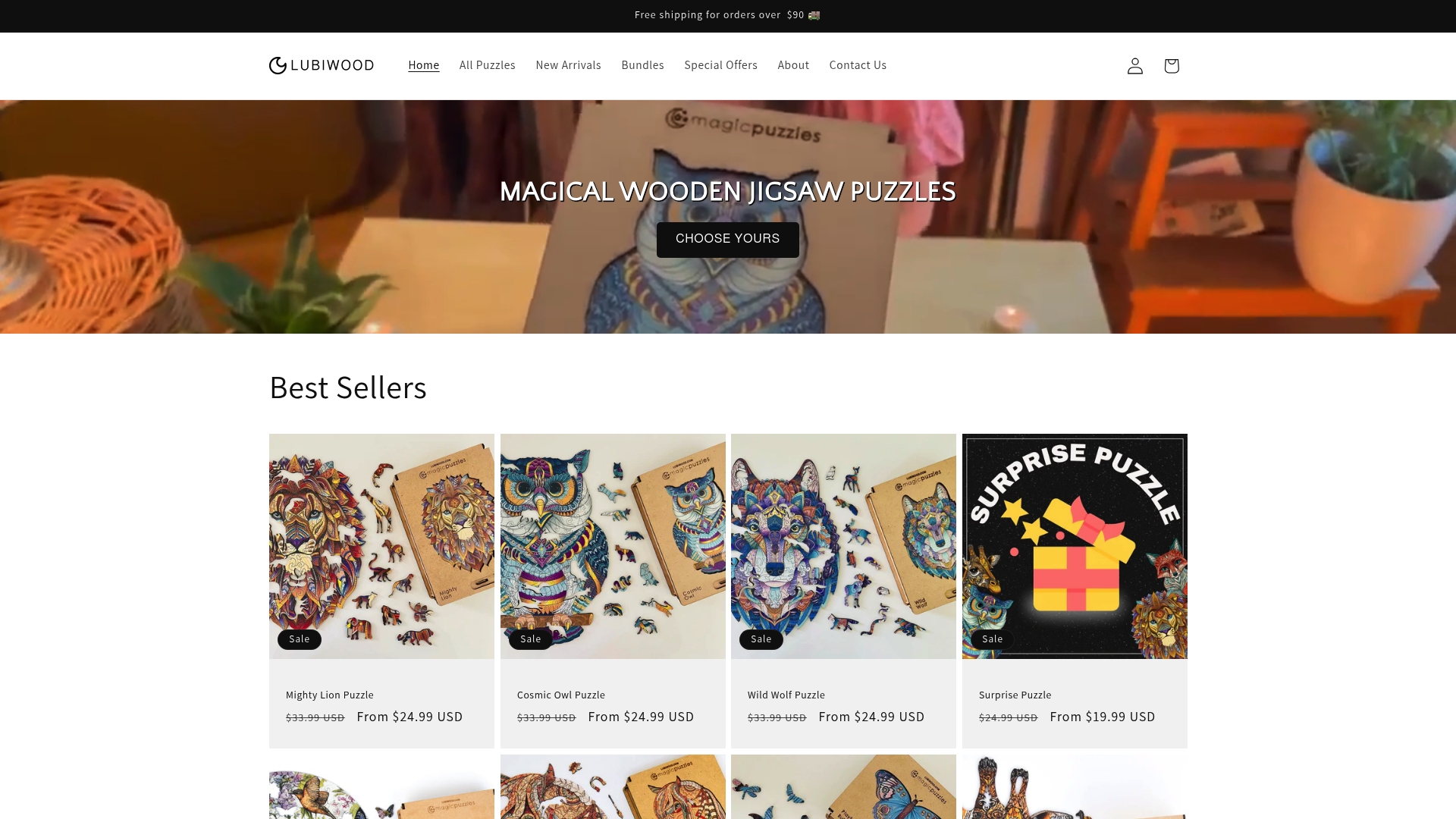
Browse the 3d wooden puzzles collection featuring architectural marvels and natural forms that become stunning display pieces. Or discover the wooden jigsaw puzzles collection with intricate laser-cut designs celebrating art, nature, and storytelling. Each puzzle uses sustainably sourced wood and arrives ready to pair with the storage solutions you’ve learned about. Consult the wooden puzzle size guide to match your favorite storage methods with puzzle dimensions, ensuring every piece fits perfectly in your organized, eco-conscious collection.
Frequently asked questions about puzzle storage solutions
What materials are best for eco-friendly puzzle storage?
Natural wood stands, organic cotton pouches, and recycled plastic bins represent the most sustainable choices. Wood offers renewable, biodegradable storage that ages beautifully. Fabric pouches made from plant fibers or recycled polyester reduce plastic dependence. Even recycled plastic bins outperform virgin plastic by reusing existing materials.
How can I protect wooden puzzles from moisture and damage?
Use breathable storage like mesh pouches or wooden stands rather than sealed plastic bags that trap condensation. Keep puzzles in climate-controlled spaces away from basements, attics, or exterior walls prone to temperature swings. Silica gel packets inside storage containers absorb excess humidity without requiring power or maintenance.
Are stackable bins safe for delicate wooden pieces?
Yes, when you avoid overstacking weight and choose bins with smooth interiors. Line bins with soft fabric or acid-free tissue if pieces have particularly delicate finishes. Never force lids closed over pieces, as pressure can crack thin wood. Transparent bins let you verify pieces lie flat before stacking another bin on top.
Can I use ziplock bags without harming puzzle quality?
Ziplock bags work short-term but create static that attracts dust and may trap moisture over months or years. If using them, choose bags larger than needed so pieces aren’t compressed. Add small holes for airflow and store bags in larger breathable containers. Consider them transitional storage while you acquire better long-term solutions.
What is the best way to display completed wooden puzzles?
Framing kits with UV-protective glass preserve completed puzzles as permanent wall art while blocking sunlight damage. For rotating displays, use wooden stands with tilted shelves that showcase puzzles like artwork on easels. Shadow box frames work beautifully for three-dimensional wooden puzzles, adding depth to wall displays while protecting intricate details.