
Framing handcrafted wooden puzzles requires special care to avoid warping, discoloration, and damage that plague 60% of improperly framed pieces. Unlike paper puzzles, wooden puzzles demand archival materials, UV protection, and mounting techniques that respect their weight, thickness, and natural grain. This guide provides mindful framing steps tailored to preserve both the artistic beauty and sustainability values of your wooden puzzle art.
Table of Contents
- Introduction To Framing Handcrafted Wooden Puzzles
- Materials And Tools Needed For Wooden Puzzle Framing
- Step-By-Step Framing Process For Handcrafted Wooden Puzzles
- Non-Permanent Mounting Alternatives For Wooden Puzzles
- Common Mistakes And Troubleshooting In Framing Wooden Puzzles
- Decorative Framing Styles For Handcrafted Wooden Puzzles
- Expected Results And Outcomes Of Proper Wooden Puzzle Framing
- Explore Handcrafted Wooden Puzzles And Framing Solutions At Lubiwood
Key takeaways
| Point | Details |
|---|---|
| Proper framing preserves puzzle art and sustainability | Archival materials and UV-protective glass prevent fading and damage over years. |
| Use tested mounting methods | Apply adhesive to corners first to prevent warping and staining. |
| Shadow box frames suit thick wooden puzzles | Extra depth protects puzzles from glass pressure while enhancing display aesthetics. |
| Non-permanent options allow repositioning | Mounting putty and removable backing enable maintenance and future updates without damage. |
| Avoid common mistakes | Skip excessive glue, always use spacers, and choose UV glass to prevent warping and fading. |
Introduction to framing handcrafted wooden puzzles
Wood differs fundamentally from paper in weight, thickness, and moisture sensitivity. While paper puzzles tolerate standard craft glue and lightweight frames, wooden puzzles demand specialized approaches. Each handcrafted piece carries natural grain patterns and laser-cut precision that require gentle handling to maintain integrity.
Traditional paper puzzle framing methods often cause warping or damage in wooden puzzles because they ignore material differences. Paper absorbs adhesives without structural consequences, but wooden puzzles’ delicate craftsmanship and material require special care to maintain longevity. Excessive moisture from glue causes wood to expand unevenly, creating permanent bowing. Heavy glass without spacers compresses the puzzle, damaging intricate cuts.
Framing protects sustainability values by using eco-friendly materials that honor the puzzle’s origins. Recycled frames and archival boards extend the life cycle of renewable resources, aligning with the environmental ethos behind wooden puzzle art and eco-friendly gifts. Proper techniques transform puzzles into lasting artwork rather than disposable craft projects.
Key considerations for wooden puzzle framing include:
- Material weight requiring stronger mounting and frame support
- Natural wood grain demanding even adhesive distribution
- Moisture sensitivity necessitating controlled application methods
- Thickness requiring shadow box frames or spacer systems
- Surface finish preservation through gentle cleaning and handling
Materials and tools needed for wooden puzzle framing
Selecting the right archival materials ensures your framed puzzle survives decades without yellowing, fading, or structural failure. Start with acid-free mounting boards sized to match your puzzle dimensions precisely. These boards prevent chemical reactions that degrade wood fibers over time.
UV-protective glass or acrylic shields puzzle colors from sunlight damage that causes irreversible fading. Museums use this technology to preserve priceless artifacts, and your handcrafted puzzle deserves the same protection. Acid-free archival boards and UV-protective glass preserve puzzle colors and prevent damage, making them essential investments.
Eco-friendly frames made from recycled or sustainably sourced wood complement your puzzle’s environmental values. Look for FSC-certified frames or sustainable tonewood options that match the craftsmanship quality. Avoid plastic frames that contradict the natural aesthetic.
| Material Type | Purpose | Sustainability Factor |
|---|---|---|
| Acid-free mounting board | Prevents chemical degradation | Archival-quality, recyclable |
| UV-protective glass | Blocks 99% harmful UV rays | Protects against fading for 50+ years |
| Shadow box frame | Provides depth for thick puzzles | Choose FSC-certified or recycled wood |
| Mounting putty | Repositionable adhesive | Removable, leaves no residue |
| Archival tape | Gentle permanent mounting | Acid-free, museum-quality |
Mounting options require careful selection based on your display goals. Test adhesives beforehand on a small puzzle corner to check for staining or warping. Removable putty works for temporary displays, while archival tape provides gentle permanence. Visit custom wooden puzzle framing materials for detailed comparisons.
Spacers prevent pressure damage between the puzzle and glass. These small foam or rubber elements create air circulation that stops moisture buildup while protecting raised puzzle pieces from compression. Check eco-friendly puzzle framing materials for sustainable spacer options.
Essential tools include:
- Clean microfiber cloths for dust removal
- Precision measuring tape for alignment
- Level for hanging accuracy
- Soft brush for wood grain cleaning
- Cotton gloves to prevent fingerprint oils
Step-by-step framing process for handcrafted wooden puzzles
Prepare a clean, dust-free workspace on a flat surface covered with soft cloth. Clean your puzzle surface gently using a dry microfiber cloth, brushing along the wood grain to remove particles without scratching. Avoid liquid cleaners that penetrate wood joints and cause swelling.
Test your chosen adhesive on a small puzzle corner before full application. Apply a tiny amount to an edge piece, wait 24 hours, then check for discoloration, warping, or finish damage. This adhesive testing prevents damage that ruins hours of assembly work. Skip this step and risk permanent staining across your entire puzzle.
- Position the archival mounting board on your workspace with the puzzle centered on top
- Apply mounting adhesive, tape, or putty according to manufacturer directions, working from center outward
- Press the puzzle gently but firmly onto the board, smoothing from center to edges to eliminate air pockets
- Allow adhesive to cure fully per product instructions, typically 24 to 48 hours in a dry environment
- Place spacers around the puzzle perimeter on the mounting board, creating a 1/8-inch gap
- Position UV-protective glass over the spacers, ensuring no direct contact with the puzzle surface
- Insert the mounted puzzle assembly into the shadow box frame, securing with frame backing
- Seal the frame back with archival tape or frame points, leaving one edge slightly loose for maintenance access
Pro Tip: Use removable frame backing secured with small clips rather than permanent nails. This allows you to open the frame annually for dust removal and condition checks without damaging the assembly.
The step-by-step framing process for wooden puzzles varies slightly for dimensional puzzles with sculptural elements. These require deeper shadow boxes and strategic spacer placement to support protruding pieces. Consult detailed wood crafting step-by-step guides for advanced techniques on handling irregular surfaces.
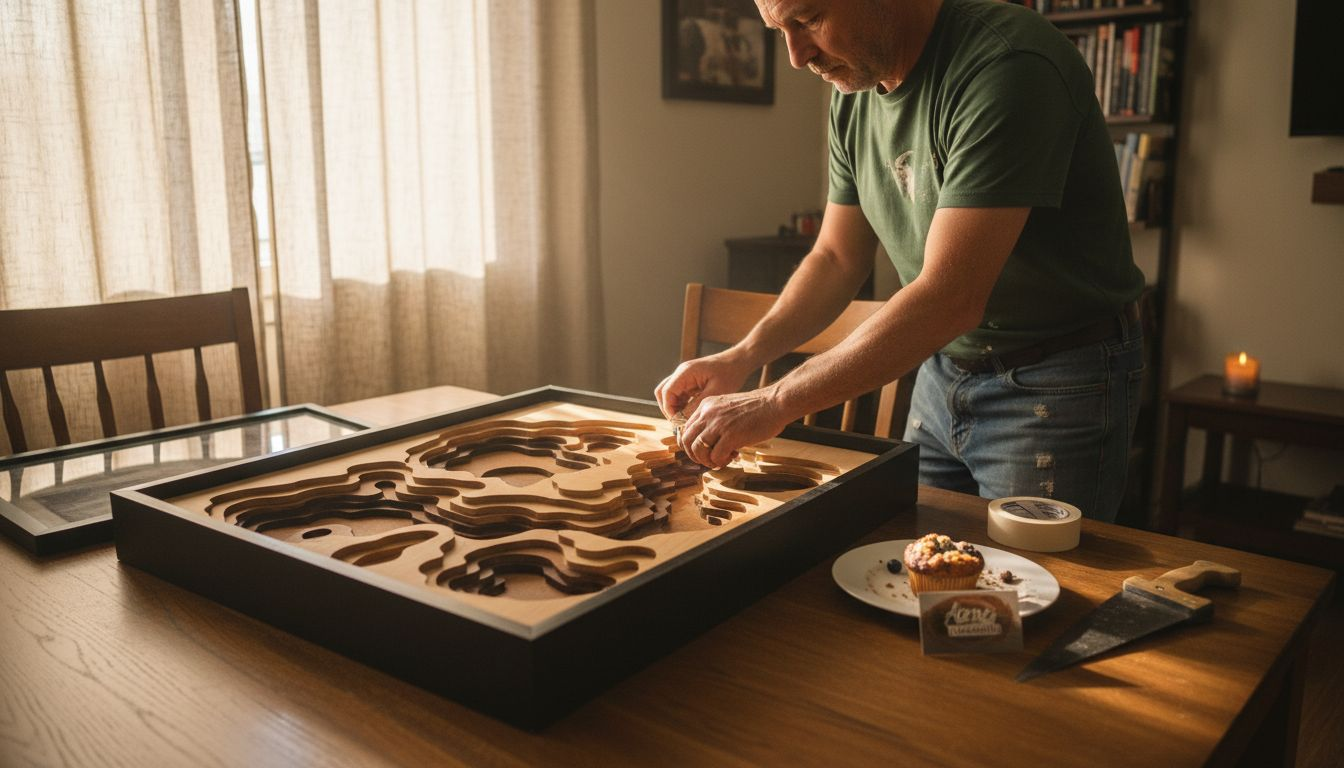
Verify your work by checking for trapped dust, uneven mounting, or glass contact points. View the frame from multiple angles under different lighting to spot imperfections before final sealing. Testing with the puzzle saver adhesive testing method ensures professional results that last decades.
Non-permanent mounting alternatives for wooden puzzles
Removable mounting methods preserve puzzle integrity when you need flexibility for future repositioning, gifting, or maintenance. Mounting putty supports up to 2 lbs and is repositionable without residue, making it ideal for wooden puzzles under 500 pieces. Apply small putty dots to the puzzle back at regular intervals, then press onto the mounting board.
Archival tape offers another gentle option that balances security with removability. Unlike permanent adhesives, this tape uses pressure-sensitive technology that releases cleanly when you need to access the puzzle. Position tape strips along puzzle edges and center supports, avoiding excessive coverage that makes removal difficult.
Benefits of non-permanent mounting include:
- Easy puzzle removal for cleaning or repair without damage
- Flexibility to update framing style as decor changes
- Simplified gifting since recipients can reframe to their preferences
- Reduced commitment anxiety for first-time framers learning techniques
- Preservation of puzzle resale value if original condition matters
Pro Tip: Document your mounting process with photos showing putty or tape placement. If you need to remove and remount the puzzle later, these reference images ensure consistent results and prevent trial-and-error damage.
Choose non-permanent mounting methods when displaying limited edition puzzles you might sell or when framing gifts for others who may want different presentation styles. Removable backing boards secured with clips rather than nails provide maintenance access without tools. This approach suits collectors who rotate displays seasonally or parents framing children’s puzzle achievements temporarily.
When to use non-permanent methods:
- Gifting puzzles where recipient preferences are unknown
- Temporary seasonal displays that change quarterly
- Testing frame styles before permanent commitment
- High-value puzzles requiring preservation flexibility
Common mistakes and troubleshooting in framing wooden puzzles
Excessive glue application causes the most frequent and severe damage. 60% of damaged puzzle frames showed glue-related warping, resulting from moisture penetrating wood joints and causing uneven expansion. Use minimal adhesive applied in dots rather than continuous beads. Let each application dry completely before adding more.
Omitting spacers leads to pressure damage that crushes delicate puzzle pieces against glass. Glass weight plus frame tension compresses wood over time, flattening intricate cuts and damaging finish. Always include 1/8-inch spacers around the entire puzzle perimeter, even if the frame seems shallow.
Skipping UV-protective glass causes irreversible color fading within months of sun exposure. Standard glass blocks zero UV radiation, allowing sunlight to bleach wood tones and painted details. The 45% fading rate from non-UV glass makes this upgrade essential for preservation.
Common framing errors and solutions:
- Warped puzzle surface: Remove from frame, place under weighted board for 48 hours, remount with less adhesive
- Glue stains on wood: Prevention only; stains are permanent once set into grain
- Dust trapped under glass: Open frame annually, clean with soft brush, reseal
- Loose pieces rattling: Add thin foam backing behind mounting board for stability
- Condensation inside frame: Install additional spacers to improve air circulation
“Testing adhesive application and including proper spacers prevents 90% of framing damage. The extra hour invested in preparation saves irreplaceable puzzle art from permanent harm.”
Not testing adhesives risks surface staining that appears hours after application. Different wood finishes react unpredictably to various glues, with some combinations causing immediate discoloration. The framing mistakes and fixes guide details compatibility charts for common adhesive and finish pairings.
Fixes require patience and sometimes partial disassembly. Address warping immediately by removing the puzzle from the frame and allowing wood to return to its natural state under controlled humidity. Reframe using corrected techniques to prevent recurrence.
Decorative framing styles for handcrafted wooden puzzles
Shadow box frames provide depth ideal for thick wooden puzzles, ranging from 1 to 3 inches deep depending on puzzle dimensions. This extra space accommodates raised pieces, layered designs, and dimensional elements common in premium handcrafted puzzles. The depth creates dramatic shadows that enhance the artistic presentation.
Selecting UV-protective or anti-glare glass impacts both preservation and viewing experience. UV protection is non-negotiable for longevity, but anti-glare coating adds visibility benefits in brightly lit rooms. Consider where you will hang the puzzle when choosing glass treatments. South-facing walls receive intense afternoon sun requiring maximum protection.
Frame styles to complement wooden puzzle art:
- Natural wood frames echoing puzzle material for cohesive organic aesthetic
- Painted frames in complementary colors that enhance puzzle subject matter
- Metal frames providing modern contrast to traditional wood craftsmanship
- Distressed finishes matching rustic or vintage puzzle themes
- Minimalist profiles keeping focus on intricate puzzle details
Using matting and spacers as design elements adds visual interest beyond their protective function. Colored mats create borders that frame the puzzle within the frame, directing viewer attention. Textured spacers in metallic or wood finishes become subtle decorative accents when viewed at angles.
Balance frame depth with protective needs by measuring your puzzle’s thickest point and adding 1/4 inch clearance. Insufficient depth forces compromises that sacrifice either glass protection or adequate spacing. Visit frame styles for wooden puzzles to visualize depth requirements for various puzzle types.
Match frame style to puzzle theme and room decor by considering color harmony, material consistency, and design era. A whimsical animal puzzle suits playful painted frames, while geometric abstract puzzles pair with sleek modern profiles. Your frame should enhance rather than compete with the puzzle’s artistic statement.
Expected results and outcomes of proper wooden puzzle framing
Properly framed puzzles stay flat and vibrant for decades when you follow archival techniques. Proper framing prevents warping, color fading, and dust damage, ensuring long-lasting display that maintains investment value. Your puzzle becomes a permanent artwork rather than a temporary craft project.
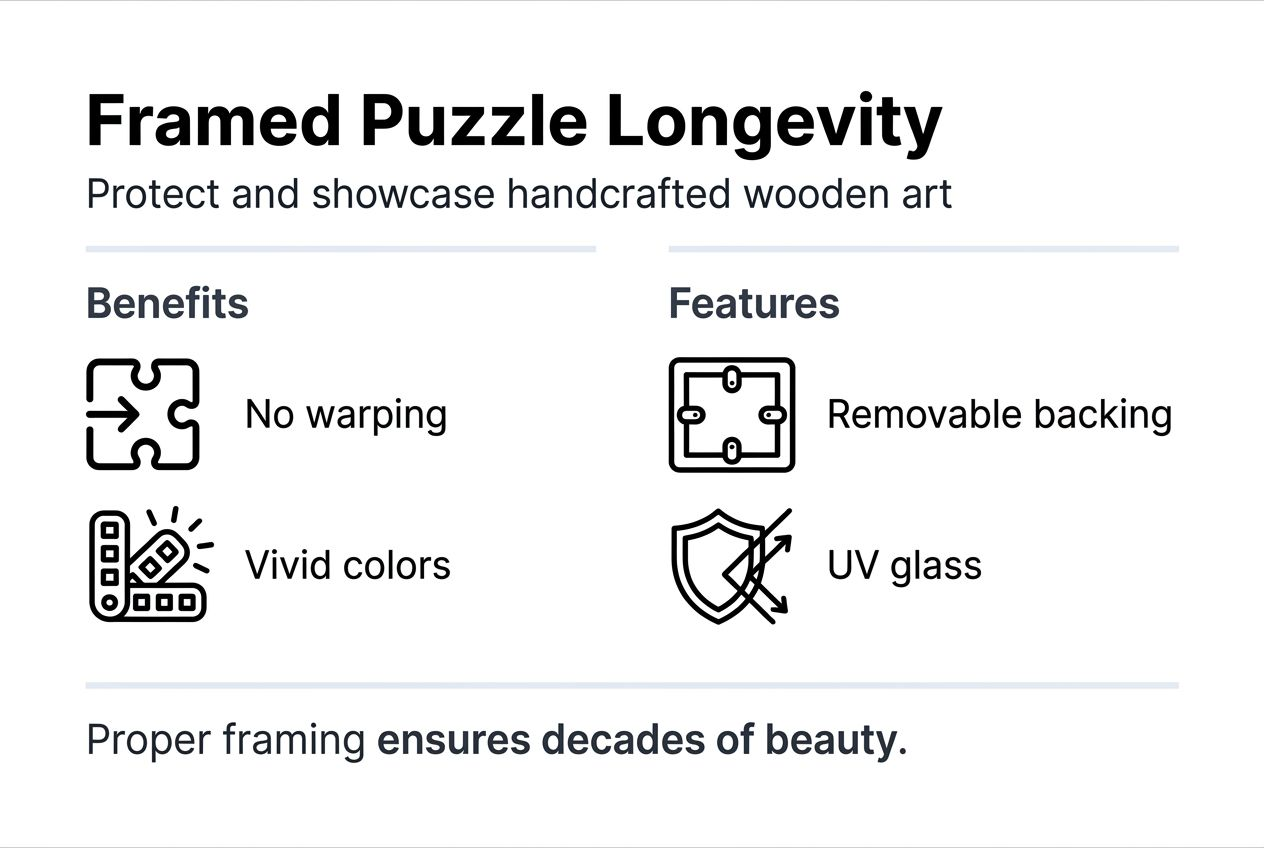
Framed puzzles transform into unique artwork centerpieces that anchor room design. The three-dimensional quality of wooden puzzles under shadow box glass creates depth and interest impossible with prints or paintings. Guests consistently notice and comment on these distinctive decorative elements.
Maintenance simplifies dramatically with removable backing designs. Annual cleaning takes minutes when you can access the puzzle without disassembling the entire frame. Check the framing longevity and outcomes guide for maintenance schedules based on display environment.
| Mounting Method | Longevity | Repositioning | Maintenance Access | Best For |
|---|---|---|---|---|
| Permanent adhesive | 50+ years | No | Difficult | Museum-quality permanent display |
| Archival tape | 30+ years | Limited | Moderate | Semi-permanent home display |
| Mounting putty | 10+ years | Yes | Easy | Temporary or rotating displays |
| No adhesive (backing pressure) | 5-10 years | Yes | Very easy | Frequently changed displays |
Comparison of mounting approaches reveals trade-offs between permanence and flexibility. Permanent methods offer maximum security for valuable puzzles in high-traffic areas. Removable options suit renters, frequent movers, or collectors who rotate displays seasonally.
Estimated framing duration for best results spans approximately 3 hours including adhesive drying and testing phases. Rushing this process increases error risk exponentially. Plan for an afternoon project when you can work methodically without time pressure.
Expected benefits include:
- Zero warping or structural damage over the frame’s lifetime
- Color preservation maintaining original vibrancy for 50+ years
- Dust protection eliminating cleaning needs beyond annual maintenance
- Enhanced artistic presentation elevating puzzle to fine art status
- Increased puzzle lifespan from years to generations
Explore handcrafted wooden puzzles and framing solutions at Lubiwood
Now that you understand proper framing techniques, explore Lubiwood’s collection of eco-friendly handcrafted wooden jigsaw puzzles designed specifically for artistic display. Each puzzle features laser-cut precision and premium wood that rewards careful framing with stunning visual impact.
The 3D wooden puzzles collection offers dimensional designs perfect for shadow box framing techniques covered in this guide. These sculptural puzzles create dramatic depth effects that transform wall space into gallery-quality displays.
Consult the wooden puzzle size guide to select frame dimensions before purchasing materials. Accurate measurements prevent costly returns and ensure your first framing attempt succeeds. Lubiwood’s commitment to sustainable craftsmanship extends to helping customers preserve their puzzle investments through proper presentation techniques.
FAQ
How do I prevent warping when framing wooden puzzles?
Use minimal tested adhesives applied in small dots rather than continuous beads to control moisture exposure. Include 1/8-inch spacers between the puzzle and both glass and backing to prevent compression pressure. Choose UV-protective glass that also provides temperature stability, reducing expansion and contraction cycles that cause warping.
Can I reuse mounting putty to reposition my puzzle later?
Yes, mounting putty supports repositioning multiple times without leaving residue or damaging wood surfaces. Gently peel the puzzle from the mounting board, roll the putty into fresh balls, and reapply to the new position. This method is ideal for gifts or temporary displays where flexibility matters more than permanent attachment.
What’s the best frame style for a thick handcrafted wooden puzzle?
Shadow box frames provide the necessary depth to accommodate thick wooden puzzles without compression damage. These frames typically range from 1 to 3 inches deep, protecting puzzles from glass pressure while enhancing three-dimensional display aesthetics. Combine shadow boxes with UV-protective glass for complete preservation and visual impact.
How long does it take to frame a wooden puzzle properly?
Framing typically requires about 3 hours including adhesive drying, testing, and careful assembly steps. This duration allows for methodical mounting, proper spacer placement, and quality verification before final sealing. Timing varies with puzzle size and chosen mounting method, with larger puzzles or permanent adhesive applications requiring additional curing time before handling.
