





Blog
Unlock the role of puzzles for all ages: benefits

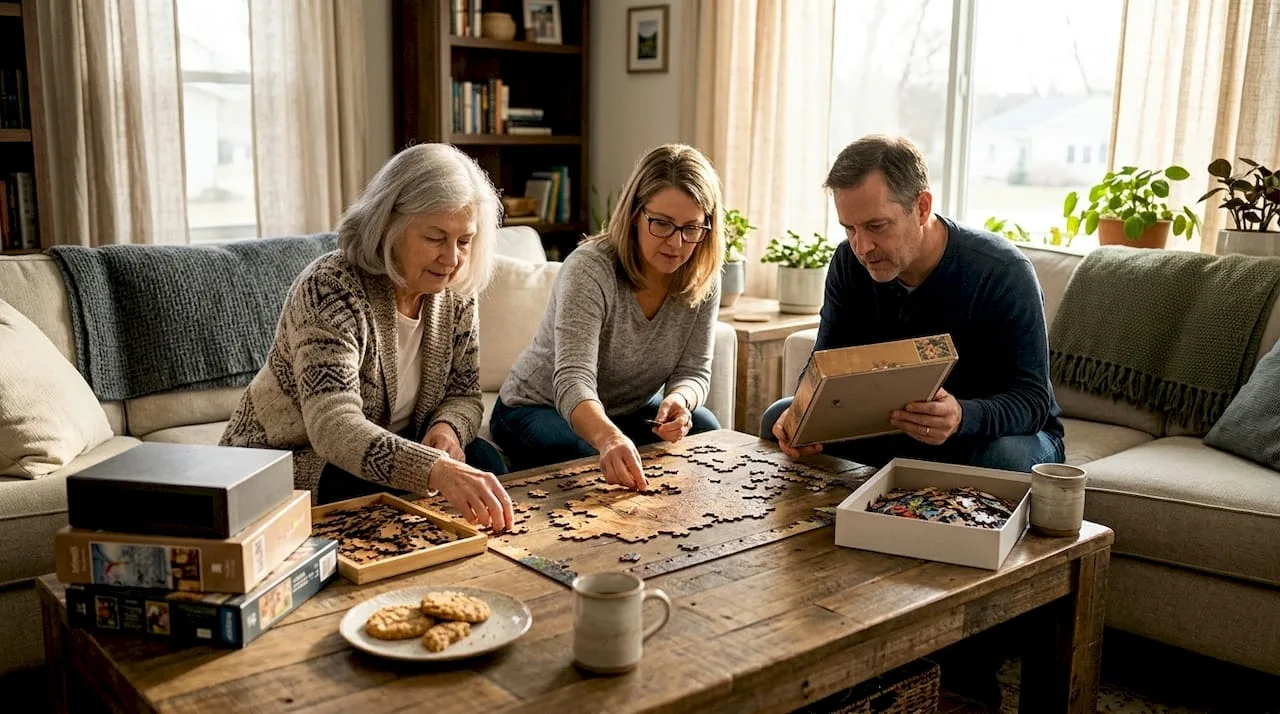
Many people assume puzzles are just simple toys for kids or time-fillers for retirees. Research reveals a far more nuanced picture: puzzle-based learning significantly improves cognitive abilities in young children, while high-level participation slows cognitive decline in elderly adults with mild cognitive impairment. Yet effectiveness depends heavily on age-appropriate design, difficulty, and guidance. This article explores evidence-based insights into how puzzles support cognitive and emotional health across the lifespan, helping families and individuals choose handcrafted wooden puzzles that deliver genuine benefits for entertainment, mindfulness, and home decor.
Table of Contents
- Key takeaways
- How puzzles boost cognitive development in children
- The role of puzzles in sustaining cognitive health in older adults
- Understanding puzzle strategies and design for all ages
- Choosing and using handcrafted wooden puzzles for mindful entertainment
- Explore handcrafted wooden puzzles for every age
- Frequently asked questions
Key Takeaways
| Point | Details |
|---|---|
| Child cognitive gains | Structured puzzle engagement supports memory, problem solving, and spatial reasoning in children aged five to six. |
| Guided instruction matters | Adults facilitating puzzle sessions with open ended questions boost metacognition and engagement. |
| Wooden puzzle advantages | Handcrafted wooden puzzles provide tactile feedback, durable construction, and unique piece shapes that support fine motor development and visual discrimination. |
| Cognitive decline slowed | Regular high level puzzle participation slows cognitive decline in older adults with mild cognitive impairment when practiced multiple times per week over extended periods. |
How puzzles boost cognitive development in children
Young children experience remarkable cognitive gains from puzzle play, but not all puzzle activities deliver equal results. Puzzle-based learning significantly improves cognitive abilities in children aged 5-6, moving students from 31% Not Yet Developed to Very Well Developed across multiple cognitive domains. This dramatic shift demonstrates how structured puzzle engagement supports memory, problem-solving, and spatial reasoning during critical developmental windows.
Several factors determine whether puzzle play translates into meaningful cognitive growth. Jigsaw puzzle performance in preschoolers depends heavily on puzzle difficulty, theme relevance, and a child’s inhibitory control. Children who struggle to resist distractions or control impulses often find complex puzzles frustrating, while age-appropriate challenges paired with engaging themes keep them focused and motivated.
Structured guidance makes the difference between passive entertainment and active learning. When adults facilitate puzzle sessions by asking open-ended questions, modeling strategies, and celebrating progress, children develop metacognitive skills alongside spatial reasoning. Minimal instruction leaves kids guessing at approaches, often leading to frustration and disengagement. Wooden jigsaw puzzles boost kids skills when parents and educators use them intentionally within learning frameworks.
Handcrafted wooden puzzles offer distinct advantages for young learners:
- Tactile feedback from natural wood enhances sensory engagement and fine motor development
- Unique piece shapes created by laser cutting teach children to recognize subtle visual differences
- Durable construction withstands repeated handling, supporting mastery through repetition
- Artistic themes spark curiosity and conversation, extending learning beyond puzzle completion
Pro Tip: Match puzzle piece count to your child’s current skill level, then gradually increase complexity. A puzzle that takes 10-15 minutes to complete provides optimal challenge without overwhelming young learners.
The benefits of doing jigsaw puzzles as an adult often trace back to childhood experiences. Kids who master puzzles through structured play develop problem-solving confidence that persists into adulthood. Design elements like puzzle shapes matter handcrafted puzzles because they teach children to analyze form, color, and pattern simultaneously.
The role of puzzles in sustaining cognitive health in older adults
Cognitive decline affects millions of elderly individuals, but regular puzzle engagement offers a practical intervention. High-level participation in puzzles slows cognitive decline in elderly with mild cognitive impairment, improving memory and attention through consistent mental stimulation. These benefits emerge most strongly when seniors engage with puzzles multiple times weekly over extended periods.
Puzzles support three critical cognitive functions in aging adults:
- Working memory: Holding piece shapes and color patterns in mind while scanning for matches
- Visual attention: Maintaining focus on relevant details while filtering distractions
- Processing speed: Making quick decisions about piece placement and strategy adjustments
Structured puzzle activities produce better outcomes than casual, unguided play. [Minimal guidance limits puzzle benefits](https://research.ou.nl/ws/files/1015152/Why minimal guidance during instruction does not work.pdf) because learners of all ages need scaffolding to develop effective strategies. Seniors benefit from group puzzle sessions where facilitators encourage discussion, celebrate progress, and adjust difficulty as needed.
Social interaction amplifies cognitive benefits significantly. When elderly adults work on puzzles together, they combine mental stimulation with conversation and emotional connection. This dual engagement supports both cognitive health and emotional wellbeing, reducing isolation while maintaining neural pathways.
“Puzzles help reduce frustration and maintain focus in individuals experiencing cognitive challenges, especially when difficulty levels match current abilities and interests.”
Pro Tip: Choose puzzles with larger pieces and high-contrast images for seniors with visual impairments. The best puzzles archives feature designs optimized for different ability levels and interests.
Handcrafted wooden puzzles offer specific advantages for elderly users. Natural wood provides better grip than cardboard, making pieces easier to manipulate for those with arthritis or reduced dexterity. Laser-cut edges create distinct shapes that help seniors distinguish pieces through touch, supporting multi-sensory engagement. The aesthetic quality of wooden puzzles transforms them from therapeutic tools into decorative objects, allowing seniors to display completed works as home decor.
The benefits of doing jigsaw puzzles as an adult extend beyond cognitive maintenance to include stress reduction and improved mood. Regular puzzle engagement creates predictable, achievable goals that build confidence and provide structure to daily routines. For elderly adults facing uncertainty about cognitive health, puzzles offer measurable progress and tangible accomplishments.
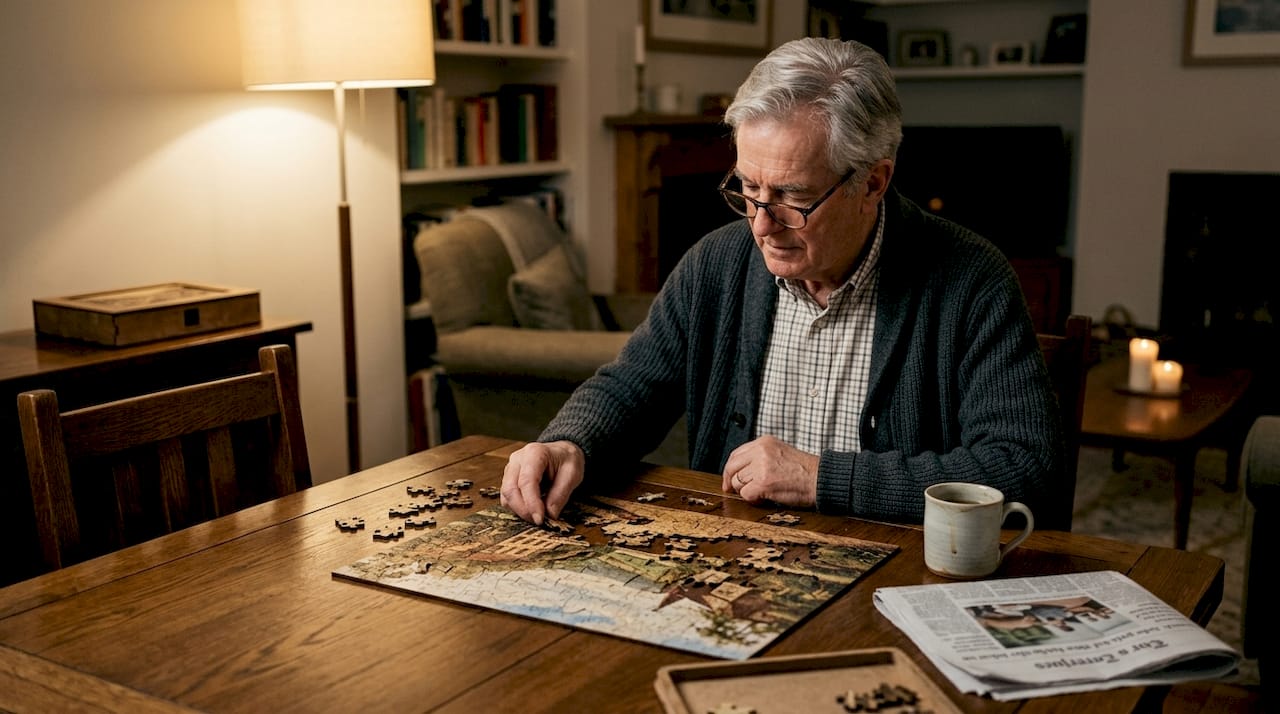
Understanding puzzle strategies and design for all ages
Puzzle solving involves backward reasoning and strategy selection influenced by task representation and individual differences. Solvers mentally construct AND/OR trees representing subgoals, working backward from the completed image to determine which pieces fit where. This cognitive process engages executive function, spatial reasoning, and pattern recognition simultaneously.
Task representation shapes how effectively someone approaches puzzle challenges. A person who visualizes the completed image clearly can work more efficiently than someone who focuses only on individual pieces. Inductive reasoning ability affects how quickly solvers recognize patterns and develop effective strategies. These puzzle reasoning processes explain why some people naturally excel at puzzles while others need explicit strategy instruction.
Design elements dramatically influence cognitive engagement across age groups:
- Theme selection: Familiar subjects help children connect prior knowledge; abstract designs challenge adult pattern recognition
- Piece count: Fewer pieces suit beginners and elderly; higher counts engage experienced solvers
- Color complexity: High contrast supports visual processing; subtle gradients increase difficulty
- Shape variety: Unique piece shapes created through intricate puzzle design wooden craftsmanship teach visual discrimination
- Edge definition: Clear borders provide starting points; borderless designs demand advanced spatial skills
| Design Element | Children (4-8) | Adults (18-65) | Seniors (65+) |
|---|---|---|---|
| Optimal piece count | 24-100 | 500-2000 | 100-500 |
| Theme preference | Animals, characters | Landscapes, art | Nature, nostalgia |
| Color contrast | High | Variable | High to medium |
| Piece size | Large | Standard | Large |
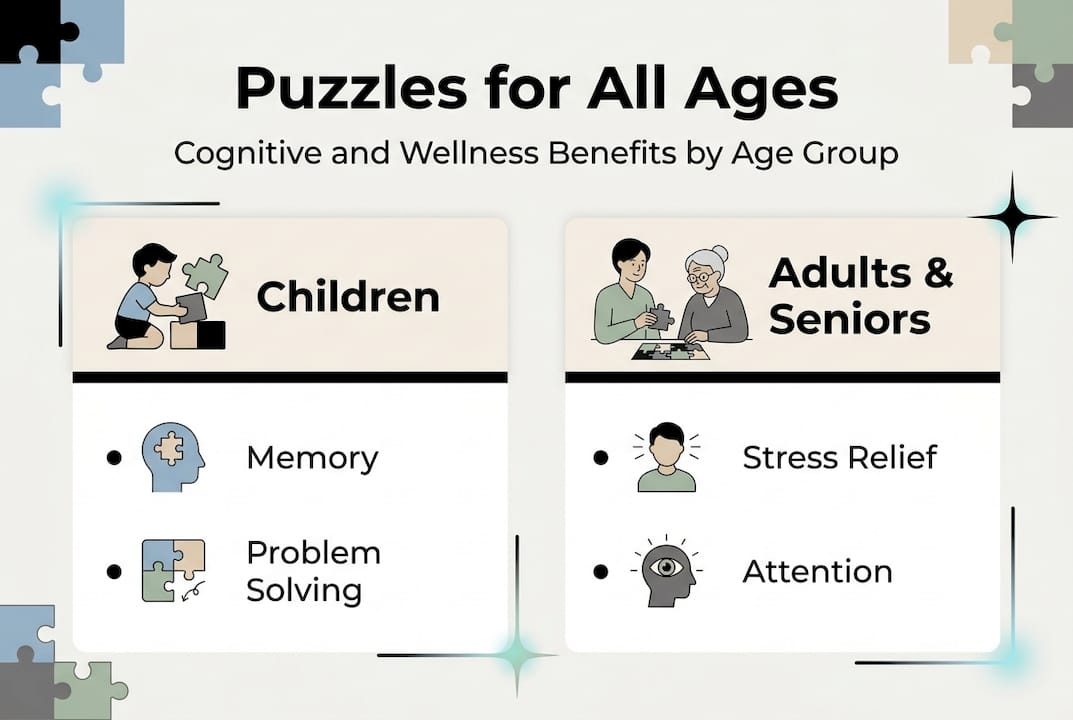
The custom puzzle design workflow demonstrates how thoughtful design choices enhance user experience. Puzzle creators consider cognitive load, visual appeal, and tactile engagement when selecting images and determining cutting patterns. Handcrafted wooden puzzles allow for design customization that mass-produced cardboard versions cannot match.
Mindful puzzle play transforms cognitive exercise into stress reduction. Wooden puzzles reduce cortisol mindfulness by creating focused attention states similar to meditation. The repetitive actions of sorting, comparing, and placing pieces activate the parasympathetic nervous system, lowering stress hormones and promoting relaxation.
Pro Tip: Start new puzzles by sorting pieces into categories like edge pieces, similar colors, or distinctive patterns. This organizational step reduces cognitive load and creates manageable subgoals.
Comparing minimal versus structured guidance reveals why facilitation matters. Unguided puzzle play allows for exploration but may reinforce ineffective strategies. Structured guidance teaches metacognitive skills like planning, monitoring progress, and adjusting approaches based on feedback. These transferable skills benefit problem-solving across domains, not just puzzle completion.
Choosing and using handcrafted wooden puzzles for mindful entertainment
Selecting the right puzzle requires matching design elements to cognitive needs and personal interests. Age provides a starting point, but individual skill levels and preferences matter more than chronological years. A cognitively sharp 75-year-old may prefer 1000-piece landscapes, while a distracted 10-year-old might need 100-piece themed puzzles with clear visual anchors.
Consider these factors when choosing puzzles for different users:
- Current skill level: Start slightly below perceived ability to build confidence, then increase complexity
- Visual preferences: Match themes to personal interests for sustained engagement
- Physical considerations: Larger pieces suit those with vision or dexterity challenges
- Time availability: Estimate completion time to ensure puzzles fit into daily routines without causing frustration
- Display intentions: Choose artistic designs worthy of framing if puzzles will become home decor
Sustainability and craftsmanship enhance both the leisure experience and environmental impact. Handcrafted wooden puzzles use renewable materials, produce minimal waste, and last for generations with proper care. The tactile quality of natural wood creates a more satisfying sensory experience than cardboard alternatives. Laser-cut precision ensures pieces fit together smoothly, reducing frustration and supporting flow states.
Incorporating puzzles into mindful daily routines requires intentional planning:
- Designate a puzzle space: Create a dedicated surface where partially completed puzzles can remain undisturbed
- Set time boundaries: Commit to 15-30 minute sessions rather than marathon efforts that cause fatigue
- Practice present-moment awareness: Notice colors, shapes, and the physical sensation of handling pieces
- Celebrate progress: Acknowledge completed sections rather than focusing solely on the final image
- Engage socially: Invite family members or friends to join puzzle sessions for connection and conversation
The wooden puzzle size guide helps match puzzle dimensions to available space and framing options. Smaller puzzles suit apartments and gift-giving, while larger formats create statement pieces for spacious homes.
Different wooden puzzle types serve distinct cognitive goals and interests:
- 3D wooden puzzles develop spatial reasoning and mechanical understanding through assembly
- Wooden jigsaw puzzles support pattern recognition and sustained attention through traditional formats
- Themed collections allow enthusiasts to explore specific subjects like wildlife, architecture, or abstract art
- Multi-puzzle sets enable progression from simpler to more complex designs
Contrasting perspectives on puzzles’ cognitive benefits emphasize that some studies show no consistent association between play materials like puzzles and cognitive outcomes. This highlights the critical importance of age-appropriate design and facilitation. Simply providing puzzles without guidance or matching difficulty to ability produces minimal benefits. The quality of engagement matters more than mere exposure to puzzle materials.
Understanding that facilitation and guidance improve cognitive outcomes helps families and educators use puzzles more effectively. Rather than leaving children or seniors to struggle independently, active participation and strategic coaching transform puzzles from entertainment into developmental tools. This approach applies across ages and ability levels, making puzzles valuable for lifelong cognitive health.
Explore handcrafted wooden puzzles for every age
Now that you understand how puzzles support cognitive health and mindful leisure across the lifespan, explore collections designed for your specific needs and interests. Lubiwood’s handcrafted wooden puzzles combine sustainable materials, artistic design, and precision craftsmanship to deliver entertainment that doubles as home decor.
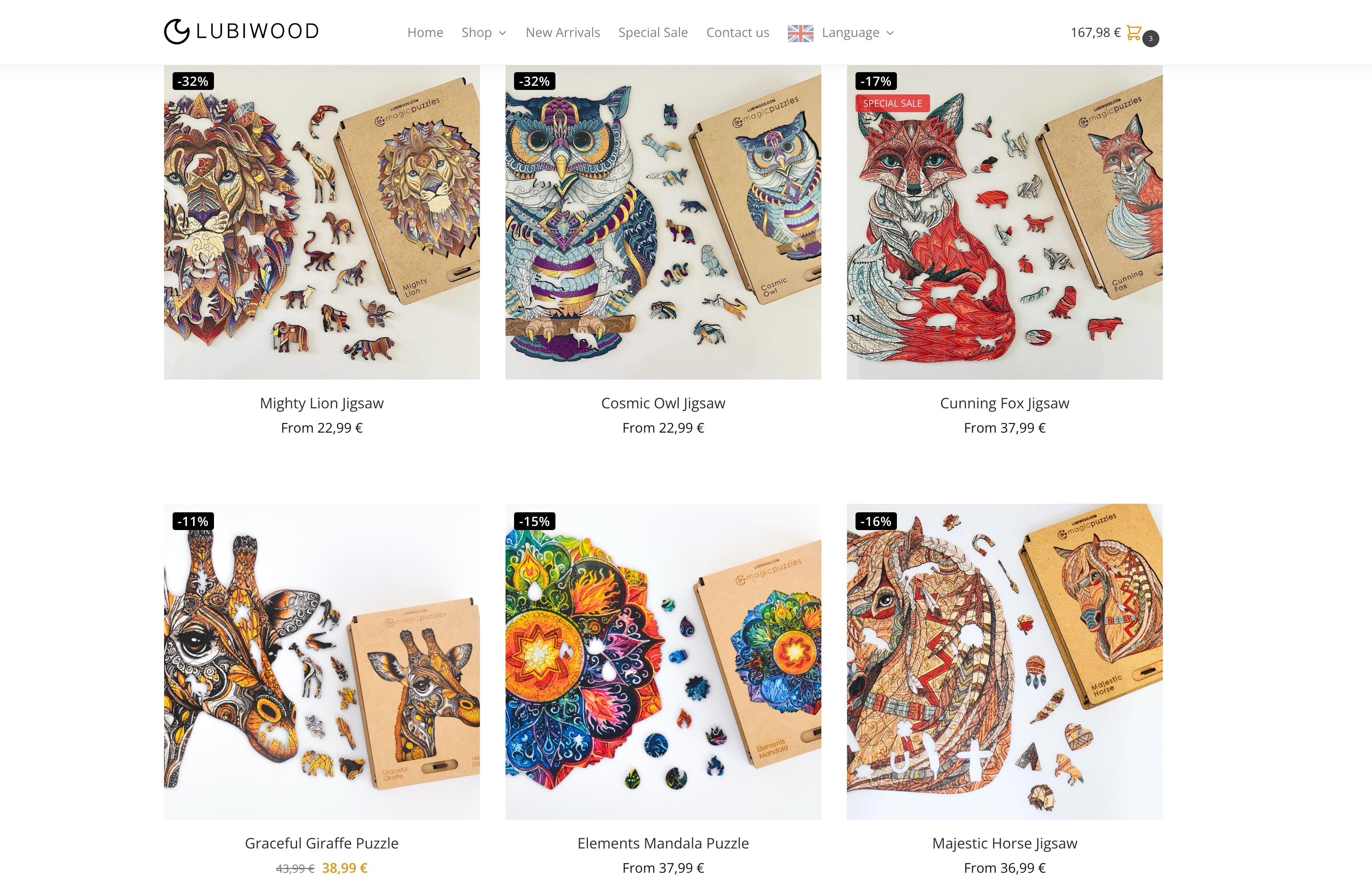
Whether you’re seeking engaging activities for children, stress-reducing hobbies for yourself, or cognitive support for elderly family members, thoughtfully designed wooden puzzles offer solutions that align with your values. Browse 3D wooden puzzles for spatial challenges or explore wooden jigsaw puzzles featuring artistic themes suitable for all ages. The wooden puzzle size guide helps you select dimensions perfect for your space and framing plans. Each puzzle represents hours of focused, screen-free engagement that benefits mind, mood, and home aesthetics.
Frequently asked questions
What ages benefit most from puzzle play?
Puzzle play supports cognitive growth in children aged 4-8 by developing problem-solving skills and spatial reasoning, while helping elderly adults aged 65 and older maintain memory and attention. Research shows benefits across the entire lifespan when puzzles match age-appropriate difficulty levels. Effectiveness depends heavily on proper design choices and guided facilitation rather than age alone.
How do handcrafted wooden puzzles support mindfulness?
Engaging with wooden puzzles reduces cortisol mindfulness by creating focused attention states that lower stress hormones. The tactile experience of handling natural wood pieces enhances sensory engagement and present-moment awareness. Mindful puzzle play fosters relaxation and enjoyment that extend beyond cognitive benefits, making puzzles valuable tools for stress management.
Can puzzles help with cognitive decline?
Frequent puzzle playing slows symptoms of mild cognitive impairment by improving memory and attention in elderly adults. High-level participation, meaning multiple sessions weekly over extended periods, produces the strongest protective effects. Choosing suitable puzzles with appropriate difficulty enhances focus and reduces frustration, maximizing cognitive benefits.
What factors influence puzzle effectiveness across ages?
Puzzle difficulty, theme relevance, and guided play significantly increase cognitive benefits compared to unguided activity. Minimal guidance may reduce effectiveness, especially for children developing strategies and seniors managing cognitive challenges. Handcrafted puzzle design elements like piece shape variety and color complexity must match user abilities to optimize engagement and learning outcomes.