




Blog
What is jigsaw puzzle decor and how to use it creatively

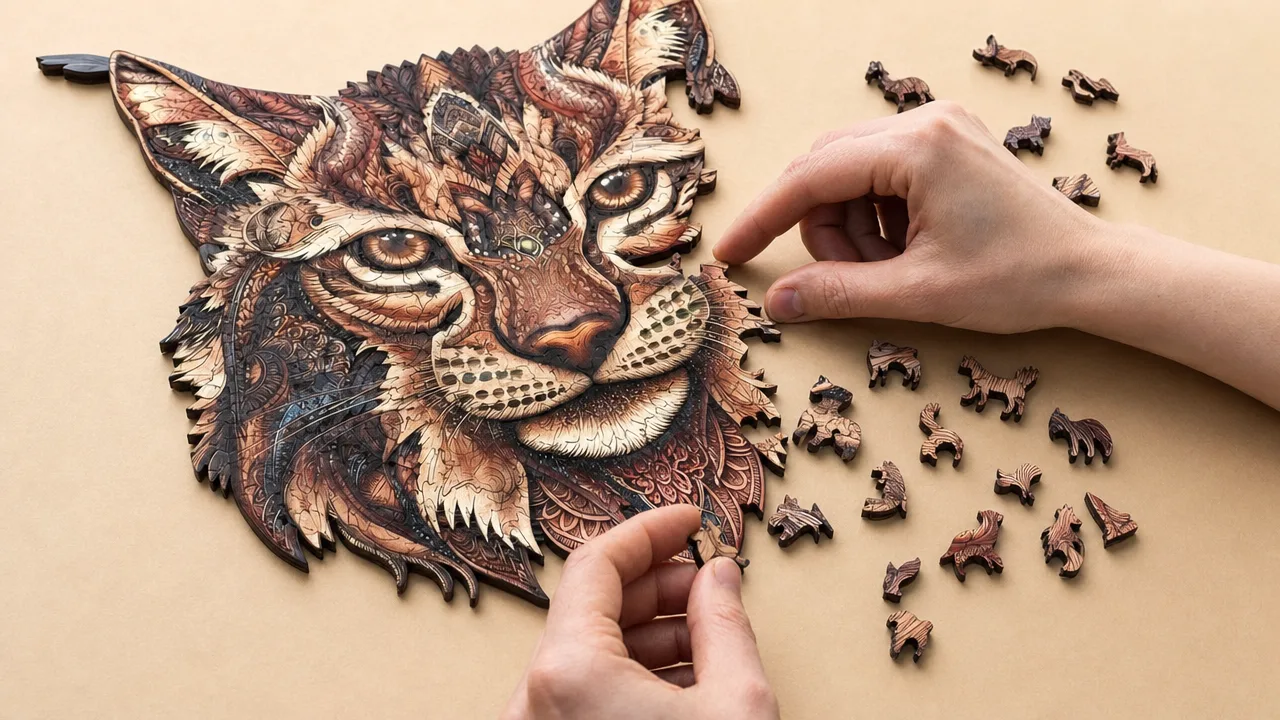
Most people finish a jigsaw puzzle, admire it briefly, then dismantle it back into the box. What if that completed image could become a permanent piece of wall art that reflects your personality and values? Jigsaw puzzle decor transforms finished puzzles into lasting decorative pieces through gluing, mounting, and framing techniques. This approach merges artistic expression with mindful leisure, offering a sustainable way to personalize your living space. Whether you’re drawn to handcrafted wooden designs or intricate cardboard scenes, puzzle decor allows you to celebrate the hours spent assembling while adding unique character to your home.
Table of Contents
- Key takeaways
- Understanding jigsaw puzzle decor: definition and appeal
- How to create and display jigsaw puzzle decor
- Materials and design nuances in handcrafted jigsaw puzzle decor
- Benefits and mindful enjoyment of jigsaw puzzle decor
- Discover handcrafted wooden puzzles for your home decor
- Frequently asked questions
Key Takeaways
| Point | Details |
|---|---|
| Definition and appeal | Jigsaw puzzle decor preserves a completed puzzle as framed wall art that reflects personal interests. |
| Gluing and mounting | The process involves applying puzzle glue, letting it dry, mounting on backing, and framing to prevent warping. |
| Sustainable materials | Sustainable materials such as FSC certified wood and non toxic finishes are favored for durability and environmental responsibility. |
| Mindfulness benefits | Displaying finished puzzles can support focus, stress reduction, and ongoing cognitive engagement. |
Understanding jigsaw puzzle decor: definition and appeal
Jigsaw puzzle decor represents a creative intersection where hobby meets home design. Instead of breaking down your hard work after completion, you preserve the finished image as a framed art piece that hangs on your wall. This concept has gained momentum among individuals seeking personalized decoration that tells a story about their interests and values.
The appeal extends beyond simple aesthetics. When you choose to display a completed puzzle, you’re showcasing a tangible record of time invested in a mindful activity. Each piece represents patience, problem solving, and the satisfaction of watching scattered fragments become a cohesive whole. For families, these displays can commemorate shared evenings around the dining table, creating visual reminders of quality time spent together.
Sustainability plays a central role in this trend’s growing popularity. Many puzzle enthusiasts now prioritize decorative puzzle uses that incorporate eco-friendly materials like FSC-certified wood and non-toxic finishes. Handcrafted puzzles made from premium birch plywood offer durability and visual warmth that mass-produced cardboard versions cannot match. The laser-cut precision creates unique shapes and whimsical figures within each piece, adding layers of artistic detail that become conversation starters when displayed.
Why this matters for your home:
- Personalization: Choose images that reflect your passions, from landscapes to abstract art to family photos
- Sustainability: Wooden puzzles offer recyclable, long-lasting materials that align with eco-conscious values
- Mindfulness: The creation process encourages focus and stress reduction before the piece ever reaches your wall
- Uniqueness: No two handcrafted wooden puzzles are identical due to natural wood grain variations
- Versatility: Puzzle decor suits multiple rooms, from living areas to home offices to bedrooms
The shift toward puzzle decor also reflects broader cultural movements favoring slow living and intentional consumption. Rather than purchasing generic prints, you invest time creating something meaningful. This approach resonates particularly with individuals who value experiences over possessions and seek home environments that nurture mental wellness.
How to create and display jigsaw puzzle decor
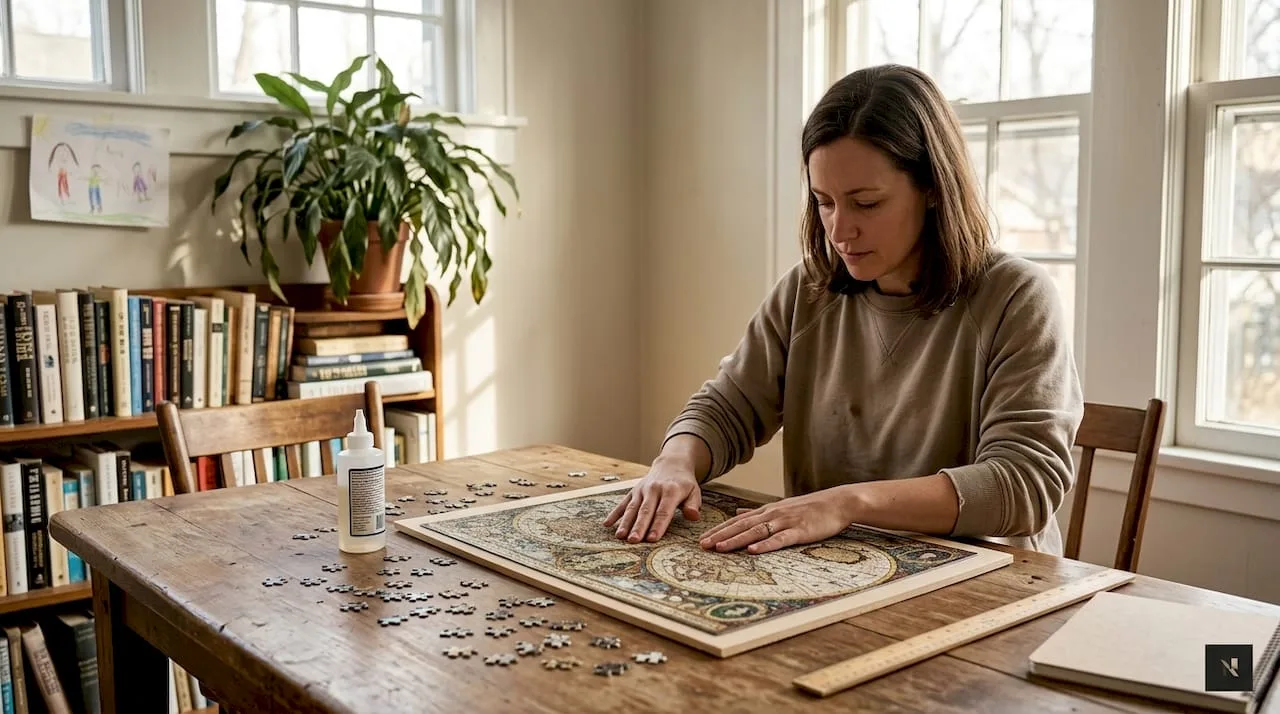
Transforming a completed puzzle into permanent decor requires careful technique and the right materials. The process involves assembling the puzzle, applying puzzle-specific glue, drying, mounting on backing, then framing. Rushing any step can result in warping, gaps between pieces, or adhesive damage that ruins your finished work.
Follow this sequence for professional results:
- Complete your puzzle on a flat, stable surface you can leave undisturbed for 24 to 48 hours
- Slide wax paper or parchment underneath to prevent sticking to your work surface
- Apply puzzle glue evenly across the entire surface using a foam brush or spreader, working from center outward
- Allow the first coat to dry completely, typically 2 to 4 hours depending on humidity
- Apply a second coat for added strength, ensuring you cover all seams between pieces
- Let the puzzle cure fully overnight before attempting to move or mount it
- Trim a foam board, sturdy cardboard, or thin plywood backing to match your puzzle dimensions
- Apply craft adhesive to the backing and carefully position your dried puzzle onto it
- Place books or weights evenly across the surface while the mounting adhesive sets
- Once mounted, apply a clear acrylic sealer or puzzle varnish to protect against dust and moisture
Mounting options vary based on your budget and desired aesthetic. Foam board offers lightweight support ideal for smaller puzzles under 1000 pieces. For larger or heavier wooden puzzles, consider thin plywood backing that provides structural integrity without excessive weight. Some enthusiasts prefer museum board for archival quality, especially when preserving puzzles with sentimental value.
Framing choices significantly impact the final presentation. Standard picture frames work well if your puzzle dimensions match common sizes like 16×20 or 18×24 inches. Custom framing allows perfect sizing but increases cost. Shadow box frames add depth and dimension, particularly effective for wooden puzzles where the material thickness becomes part of the visual appeal. Floating frames create a modern look by suspending the puzzle slightly away from the wall.

Pro Tip: Test your chosen glue on a spare puzzle piece first to ensure it doesn’t create cloudiness or discoloration. For valuable or intricate wooden puzzles, invest in UV-protective glass that prevents fading from sunlight exposure over time.
Preservation extends the life of your puzzle decor significantly. Sealing with a quality varnish creates a protective barrier against humidity and dust accumulation. Position framed puzzles away from direct sunlight, heating vents, and areas prone to moisture like bathrooms or kitchens. Regular dusting with a soft cloth maintains clarity without scratching the sealed surface.
For those interested in rotating displays, consider how to display jigsaw puzzles using easel stands or gallery walls that accommodate multiple pieces. This approach lets you showcase different puzzles seasonally or swap out completed works as your collection grows. Some families dedicate entire walls to puzzle galleries that document years of creative puzzling activities and shared memories.
Materials and design nuances in handcrafted jigsaw puzzle decor
The materials and cutting techniques used in puzzle manufacturing dramatically influence the final decor value. Handcrafted jigsaw puzzles often use sustainable FSC-certified birch plywood, precision laser-cut with whimsical pieces that add artistic flair beyond the printed image. Understanding these elements helps you select puzzles that will look exceptional when framed and displayed.
Sustainable wood sourcing ensures your decor choice aligns with environmental values. Finnish birch plywood ranks among the most popular materials due to its tight grain, smooth surface, and durability. The wood accepts laser cutting cleanly, producing crisp edges without splintering or charring. Natural variations in grain pattern mean each puzzle carries subtle uniqueness that mass-produced cardboard versions lack.
Cut styles determine both assembly difficulty and visual interest:
- Grid cut: Regular interlocking pattern, predictable assembly, clean geometric look when displayed
- Victorian cut: Irregular curves and varied piece shapes, traditional aesthetic, more challenging assembly
- Random cut: Unpredictable shapes with themed whimsies, highest artistic value, ideal for decor display
- Porthole cut: Circular or oval interior sections, modern architectural feel, striking wall presence
Piece anatomy contributes to the overall texture and appearance of displayed puzzles. Standard components include edge pieces with one straight side, corner pieces with two straight sides, tabs that protrude, knobs that receive tabs, and false edges that mimic straight sides internally. Wooden puzzles often incorporate whimsies, which are specially shaped pieces resembling animals, objects, or symbols that relate to the puzzle’s theme.
| Cut style | Best for decor | Assembly difficulty | Visual texture |
|---|---|---|---|
| Grid cut | Modern minimalist spaces | Easy | Uniform, geometric |
| Victorian cut | Traditional or classic interiors | Moderate | Flowing, organic |
| Random with whimsies | Eclectic or artistic settings | Challenging | Highly detailed, playful |
| Porthole cut | Contemporary or gallery walls | Moderate to hard | Architectural, striking |
The relationship between puzzle shapes and decor impact becomes clear when you examine framed pieces closely. Whimsies create visual anchors that draw the eye across the image, encouraging viewers to study the artwork more carefully. This interaction transforms a static picture into an engaging piece that rewards closer inspection.
When selecting puzzles specifically for decor purposes, consider image resolution and color saturation. High-quality printing on wood produces vibrant, fade-resistant colors that maintain visual impact for years. Abstract designs and nature scenes tend to photograph well and complement various interior styles. Portraits and text-heavy images require more careful placement to avoid looking cluttered on your wall.
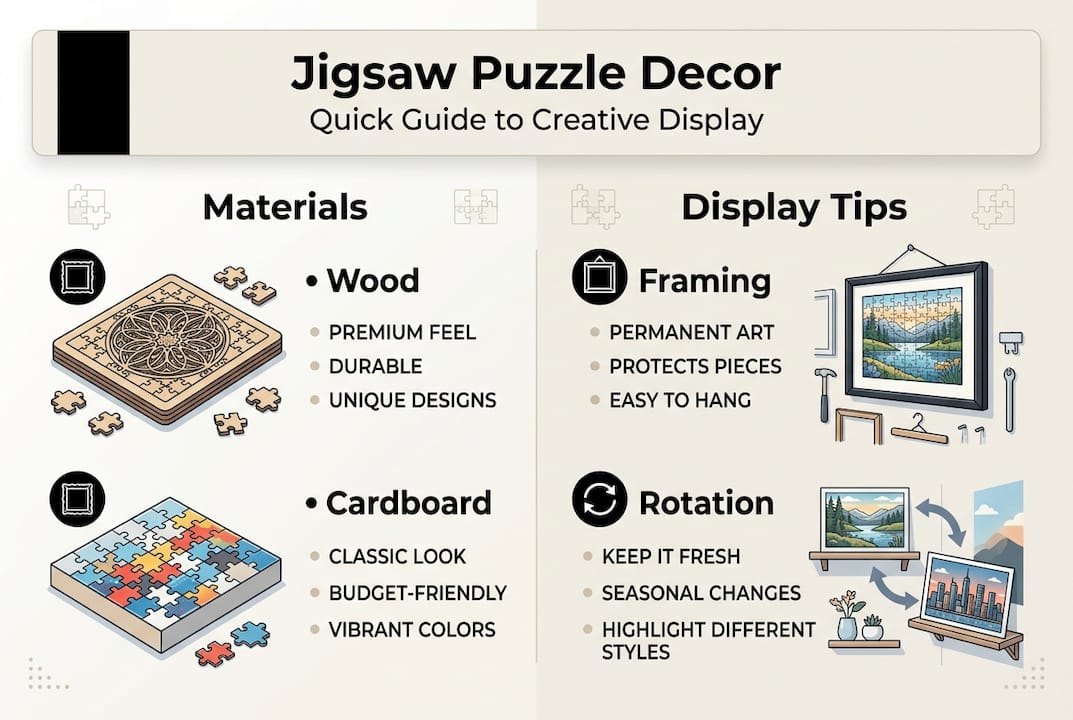
Pro Tip: Choose puzzles with circular or porthole interior sections when creating modern wall art arrangements. These shapes break up rectangular monotony in gallery walls and create dynamic focal points that complement contemporary furniture and architectural elements.
Exploring wooden jigsaw puzzles from artisan makers reveals the craftsmanship that elevates puzzle decor beyond simple hobby output. Hand-selected wood, precision cutting, and thoughtful design combine to produce pieces worthy of prominent display in your home.
Benefits and mindful enjoyment of jigsaw puzzle decor
The act of creating and displaying puzzle decor offers measurable cognitive, psychological, and social benefits supported by research. Beyond the aesthetic value, this practice engages your brain in ways that promote mental wellness and create opportunities for meaningful family connection.
Viewing art reduces cortisol and triggers dopamine response, the same neurochemical reward system activated during puzzle assembly. When you look at a completed puzzle on your wall, you’re not just seeing an image. Your brain recalls the problem-solving process, the satisfaction of finding difficult pieces, and the gradual emergence of the complete picture. This memory reinforcement creates positive associations with your living space.
Cognitive benefits accumulate with regular puzzling practice. Research shows that 25 minutes daily puzzling improves visual-spatial memory by 4-6%, a significant enhancement for maintaining mental sharpness. The skills developed during assembly, including pattern recognition, color differentiation, and spatial reasoning, transfer to other areas of life requiring visual processing and attention to detail.
For older adults, the protective effects prove particularly valuable. Studies indicate that puzzling slows dementia onset by 2.5 years in seniors who engage regularly. This delay represents substantial preservation of independence and quality of life. Displaying completed puzzles serves as both accomplishment record and motivation to continue the practice.
Key wellness advantages:
- Stress reduction through focused, meditative activity that quiets mental chatter
- Improved fine motor skills and hand-eye coordination from manipulating small pieces
- Enhanced short-term memory from holding piece shapes and colors in working memory
- Delayed cognitive decline through consistent mental stimulation and challenge
- Increased self-efficacy and confidence from completing progressively difficult puzzles
Family dynamics benefit when puzzle assembly becomes a shared ritual. Unlike passive entertainment, collaborative puzzling requires communication, cooperation, and patience. Parents and children work as equals, each contributing unique strengths to the shared goal. These interactions build emotional bonds while teaching valuable lessons about persistence and teamwork.
The mindfulness aspect deserves particular attention in our distraction-filled culture. Wooden puzzles reduce cortisol by demanding present-moment focus that crowds out anxious thoughts about past or future. The tactile experience of handling wooden pieces adds sensory richness that cardboard cannot match, deepening the meditative quality of the activity.
Displaying your completed work extends these benefits beyond the assembly period. Each glance at a framed puzzle on your wall serves as a micro-meditation, a brief moment of appreciation for beauty and accomplishment. This regular positive reinforcement supports mental health in subtle but meaningful ways throughout your day.
Creating puzzle decor transforms hours of focused leisure into lasting art that nurtures your space and reminds you of time well spent in mindful creation.
The role of puzzles for all ages continues expanding as more people recognize these multifaceted benefits. What begins as simple entertainment evolves into a practice supporting cognitive health, family connection, and personal expression through the art you choose to display.
Discover handcrafted wooden puzzles for your home decor
If you’re ready to create your own puzzle decor, starting with quality materials makes all the difference. Lubiwood specializes in handcrafted wooden jigsaw puzzles that combine sustainable sourcing, precision laser cutting, and artistic design perfect for permanent display. Each puzzle features unique whimsies and natural wood grain variations that ensure your finished piece truly stands out.
The collection includes both traditional flat designs and 3D wooden puzzles that add sculptural dimension to your decor options. Whether you prefer landscapes, animals, abstract patterns, or architectural themes, you’ll find images that resonate with your personal style. All puzzles use FSC-certified birch plywood and non-toxic finishes safe for family use.
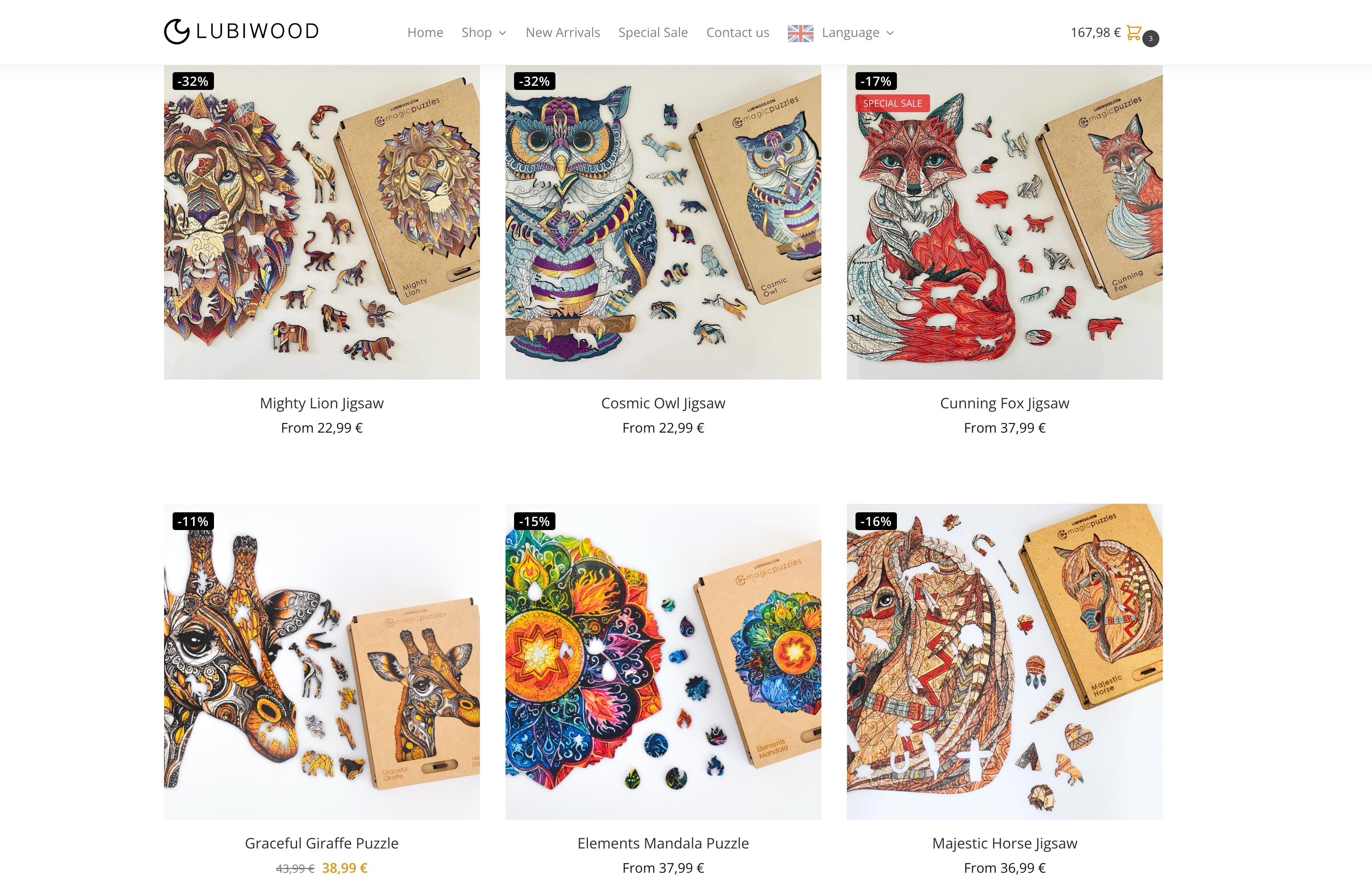
Choosing the right size ensures your finished decor fits your intended space perfectly. The wooden puzzle size guide helps you match piece count to display area and assembly time commitment. Smaller puzzles work well for gallery wall arrangements, while larger pieces create stunning focal points above furniture or in entryways.
Beyond individual puzzles, Lubiwood offers care instructions and display tips that help preserve your investment. The emphasis on craftsmanship means you’re not just buying a puzzle, you’re acquiring a piece of functional art designed to last for years. This approach aligns perfectly with the values of mindful consumption and sustainable living that draw many people to puzzle decor in the first place.
Explore the full range of wooden jigsaw puzzles to find designs that speak to your aesthetic preferences and decor goals. Each completed puzzle becomes a conversation piece that reflects your patience, creativity, and appreciation for handcrafted quality.
Frequently asked questions
Can I use any jigsaw puzzle for decor?
Not all puzzles suit permanent display equally well. Sturdy, flat puzzles with high-quality printing work best for decor purposes. Cardboard puzzles can warp over time even when properly sealed, while wooden puzzles maintain their shape and color vibrancy for decades. Consider the image quality, personal meaning, and material durability before investing time in the preservation process.
How do I avoid warping or damage in jigsaw puzzle displays?
Use UV protective glass in your frame to prevent fading from sunlight exposure. Apply a quality sealing varnish after mounting to protect against humidity and dust. Avoid hanging puzzle decor in bathrooms, kitchens, or other high-moisture areas where temperature fluctuations can cause expansion and contraction. Regular dusting with a soft, dry cloth maintains appearance without scratching the sealed surface.
What are whimsies and why do they matter in puzzle decor?
Whimsies are specially shaped puzzle pieces designed to resemble animals, objects, or symbols related to the puzzle’s theme. They add artistic detail and visual interest that becomes apparent when viewing the completed, framed puzzle up close. These unique shapes create conversation starters and reward careful observation, transforming a simple image into an interactive art piece. Learn more about why puzzle shapes matter in creating memorable decor.
Can assembling puzzles become a family bonding activity?
Absolutely. Puzzles offer shared storytelling opportunities and cooperative leisure time that strengthens family connections. Working together toward a common goal teaches patience, communication, and mutual support in a low-pressure environment. Creating decor together adds lasting value, as the finished piece serves as a tangible reminder of quality time spent as a family. Explore creative puzzling activities that enhance these bonding experiences.