
Most puzzle enthusiasts assume intricacy means more pieces or larger dimensions. That’s a surface level view. True intricacy in handcrafted wooden puzzles emerges from precise craftsmanship, thoughtful material selection, and ingenious mechanism design. A 50-piece puzzle box can challenge you more deeply than a 1,000-piece jigsaw if its creator has embedded multi-stage solutions, varied wood thicknesses, and hidden interactions. This article reveals the specific elements that separate basic wooden puzzles from masterworks of design, giving you the knowledge to recognize and appreciate genuine puzzle artistry.
Table of Contents
- Understanding The Structural Foundation Of Intricate Puzzles
- Material Choice And Tactile Aesthetics In Intricate Wooden Puzzles
- Mechanisms And Multi-Stage Solutions That Elevate Puzzle Complexity
- The Artistic Touch: Signatures And The Emotional Impact Of Intricate Design
- Explore Handcrafted Intricate Puzzles At Lubiwood
- What Defines Intricate Puzzle Design? Frequently Asked Questions
Key takeaways
| Point | Einzelheiten |
|---|---|
| Structural complexity | Varied wood thicknesses and precise dimensions create functional movement and aesthetic balance in puzzle construction. |
| Material artistry | Specific wood types like Figured Waterfall Sapele enhance both visual appeal and tactile experience during solving. |
| Mechanism depth | Magnets, multi-stage unlocking sequences, and hidden cavities demand sequential problem-solving skills from solvers. |
| Emotional layers | Integrated signatures and artistic details add discovery elements that enhance solver satisfaction beyond physical challenge. |
| Craftsmanship precision | Tight tolerances and meticulous part consideration distinguish exceptional puzzles from ordinary wooden boxes. |
Understanding the structural foundation of intricate puzzles
The foundation of puzzle intricacy starts with something deceptively simple: wood thickness. Japanese Himitsu-bako secret boxes demonstrate this principle perfectly. These puzzles require boards of many different thicknesses for each specific part, making construction far more complex than regular boxes.
Using uniform thickness throughout a puzzle creates awkward movement and poor aesthetics. Imagine trying to slide a panel that’s too thick for its groove or too thin to maintain structural integrity. The puzzle either jams or rattles, destroying the satisfying tactile experience that defines quality craftsmanship.
Himitsu-bako typically incorporate seven distinct material types, each serving a specific structural purpose:
- Structural panels that form the box frame and bear weight
- Aruki panels designed for smooth sliding movement
- Internal dividers creating hidden compartments
- Decorative veneer adding visual complexity
Craftsmen must calculate each dimension meticulously. A sliding panel might need 3mm thickness for smooth gliding, while the frame requires 6mm for stability. This puzzle piece intricacy extends beyond visual design into functional engineering.
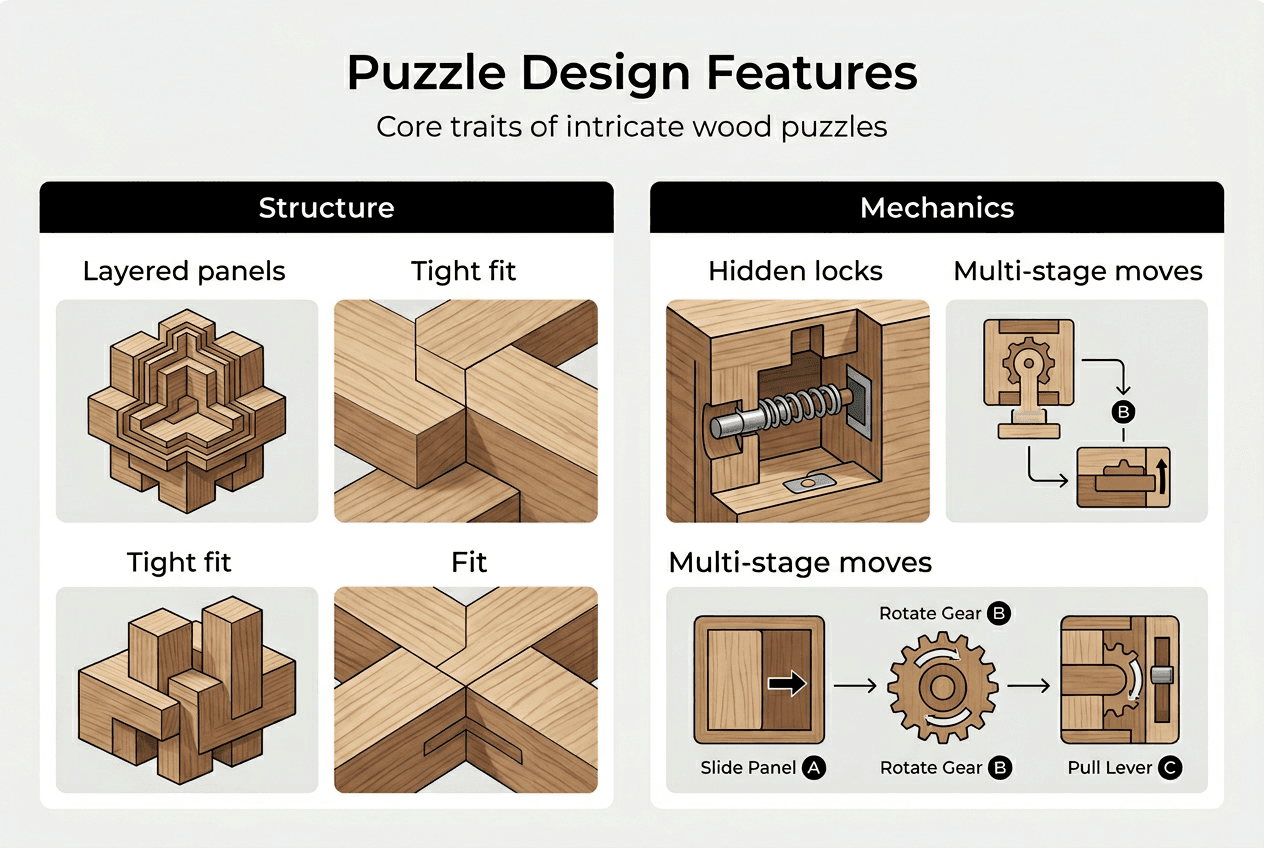
The interplay between these varied thicknesses creates the mechanical precision that separates masterful puzzles from amateur attempts. When you slide a panel in a well-crafted puzzle box, you feel resistance calibrated to provide feedback without frustration. That sensation results from dimensional accuracy measured in fractions of millimeters.
Pro Tip: When examining a Holzpuzzle, gently test any moving parts. Premium craftsmanship produces smooth, consistent movement without gaps or binding, indicating precise thickness calculations throughout the design.
Material choice and tactile aesthetics in intricate wooden puzzles
Wood selection transforms functional puzzles into artistic experiences. The Lock Box puzzle demonstrates this principle through its use of Figured Waterfall Sapele, prized for striking visual appeal. The wood’s cascading grain pattern creates depth that draws solvers into the experience before they attempt a single move.
Different wood species offer distinct tactile signatures. Walnut provides smooth, cool surfaces that feel luxurious. Maple delivers brightness and hardness that withstands repeated handling. Cherry develops a rich patina over time, rewarding long-term ownership with evolving beauty.
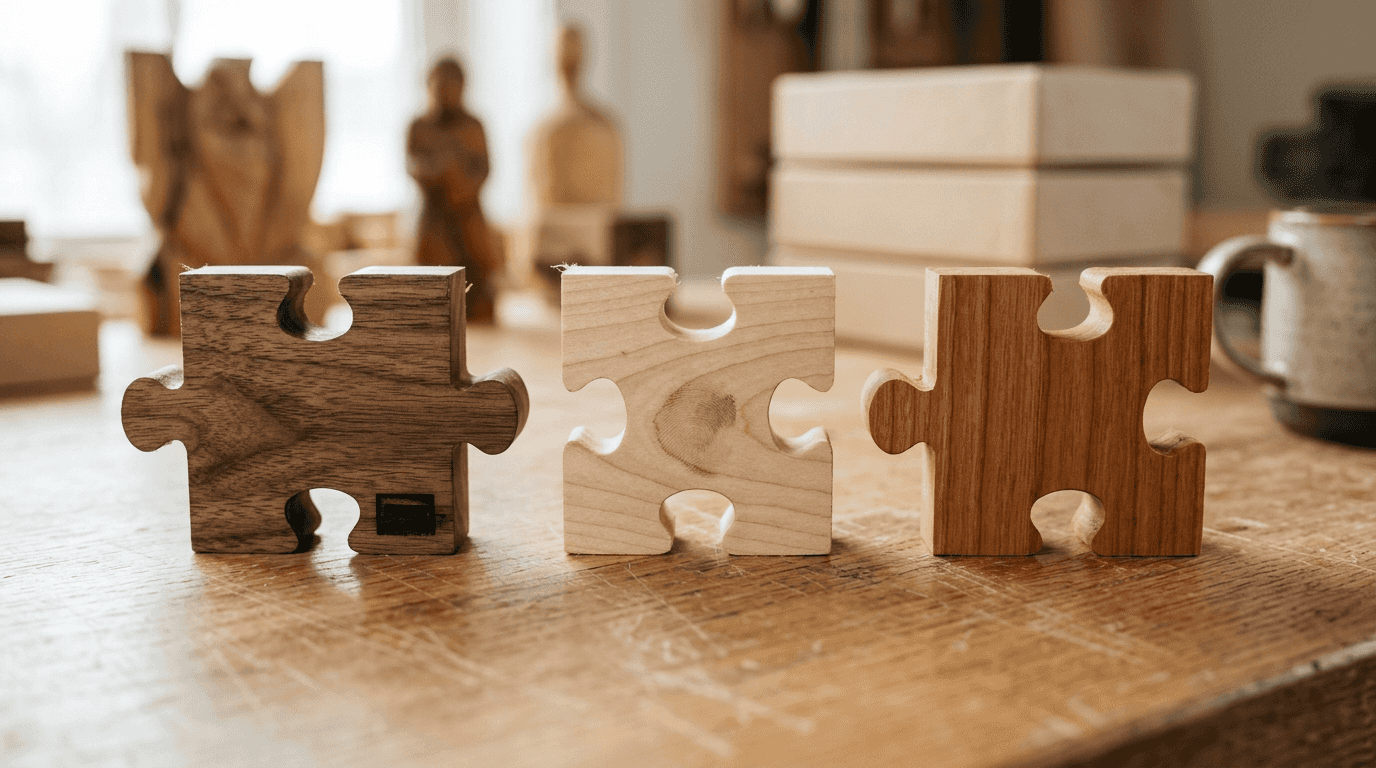
These aesthetic choices serve functional purposes too. Harder woods like maple maintain tight tolerances longer, while softer woods like cedar offer aromatic experiences that engage multiple senses. Density affects weight distribution, influencing how the puzzle feels in your hands during manipulation.
Proper finishing techniques preserve these qualities:
- Oil finishes penetrate wood fibers, enhancing grain visibility
- Wax applications create protective barriers while maintaining natural texture
- Lacquer coatings provide durability for frequently handled puzzles
- Unfinished surfaces offer pure wood contact for tactile purists
The visual appeal of figured woods creates emotional connections before cognitive challenge begins. When you pick up a puzzle featuring book-matched walnut panels or burl accents, you’re experiencing design decisions that honor both form and function. This attention to Lubiwood’s wood selection elevates puzzles from toys to collectible art objects.
Material selection also influences durability. A puzzle crafted from premium hardwoods withstands decades of solving without degrading. Cheaper alternatives show wear quickly, with edges rounding and surfaces dulling after minimal use. Investment in quality materials pays dividends in longevity and sustained aesthetic pleasure.
Pro Tip: Examine wood grain direction on moving parts. Master craftsmen align grain to maximize strength where stress occurs, preventing splits and ensuring smooth operation across years of use.
Mechanisms and multi-stage solutions that elevate puzzle complexity
Hidden mechanisms separate basic puzzles from mind-bending challenges. The Lock Box incorporates magnets that add complexity invisible to visual inspection. You manipulate the puzzle feeling resistance and release without understanding the magnetic forces orchestrating each interaction.
Multi-stage solutions demand sequential thinking that mirrors real problem-solving. The Karakuri Secret Box Box exemplifies this approach through its hidden mechanisms and precise tolerances. Solvers must complete each stage before accessing the next, creating a narrative progression that builds satisfaction.
Typical multi-stage puzzle solving follows this sequence:
- Initial exploration identifies obvious moving parts and visual clues
- First-level manipulation reveals secondary mechanisms or hidden panels
- Intermediate stages require combining earlier discoveries in novel ways
- Final solution often involves counterintuitive moves that challenge assumptions
- Resolution provides access to hidden compartments or signature elements
Hidden cavities within these puzzles require insane manufacturing tolerances. A secret drawer might have clearances measured in hundredths of millimeters. Too loose and it rattles, revealing its presence. Too tight and it binds, frustrating solvers who’ve correctly identified the solution path.
| Mechanism Type | Complexity Level | Solver Experience |
|---|---|---|
| Single sliding panel | Basic | Linear problem-solving, immediate feedback |
| Magnetic locks | Intermediate | Hidden forces, trial and discovery |
| Multi-stage sequential | Advanced | Narrative progression, cumulative learning |
| Signature integration | Expert | Meta-puzzle elements, complete resolution |
These mechanisms transform static objects into dynamic challenges. Understanding custom puzzle design workflows reveals how designers plan interaction sequences that guide without patronizing, challenge without frustrating.
“The joy of a well-designed puzzle box lies not in difficulty for its own sake, but in the elegant logic of its solution path. Each move should feel inevitable in retrospect, yet surprising in discovery.”
The integration of these elements requires designers to think like both engineers and psychologists. They must anticipate solver behavior, plant subtle clues, and reward persistence with satisfying discoveries. This intricate mechanism design represents the pinnacle of puzzle craftsmanship.
Pro Tip: When stuck on a multi-stage puzzle, revisit earlier stages. Designers often hide clues in plain sight that only make sense after you’ve progressed further, creating “aha” moments when you circle back.
The artistic touch: signatures and the emotional impact of intricate design
The moment you discover a hidden signature transforms a solved puzzle into a complete experience. The Secret Box Box demonstrates how integrating a hanko signature creates a whole other puzzle element, adding layers beyond mechanical challenge.
These artistic elements serve multiple purposes:
- Verification of authenticity for collectors
- Additional discovery that extends solving satisfaction
- Personal connection between craftsman and solver
- Metaphorical completion that mirrors physical resolution
Signatures typically hide in compartments accessible only after completing all puzzle stages. This placement ensures solvers experience the full designed sequence before receiving the craftsman’s acknowledgment. It’s a handshake across time and space, the maker congratulating you for understanding their creation.
Designers embed these elements carefully to enhance rather than frustrate. A signature that requires destructive methods to access defeats its purpose. The best implementations make discovery feel like a natural extension of the solving process, rewarding thoroughness without demanding obsessive searching.
This attention to emotional payoff distinguishes puzzles as art objects from mere mechanical challenges. You’re not just manipulating wood and magnets. You’re engaging in a dialog with someone who spent hours, perhaps days, perfecting tolerances and planning your journey through their creation.
“Finding the maker’s mark after solving a complex puzzle box feels like receiving approval from a mentor. It validates your persistence and acknowledges the shared language of craftsmanship between creator and solver.”
The integration of artistic details extends beyond signatures to include decorative inlays, symbolic imagery, and thematic coherence. A puzzle depicting ocean Wellen might incorporate shell inlays or blue-stained accents that reinforce its conceptual foundation. These choices demonstrate custom Holzpuzzle creation as a holistic artistic practice.
Collectors prize puzzles with integrated signatures because they represent complete artistic statements. The puzzle isn’t finished when you open the box. It’s finished when you’ve discovered every layer the craftsman embedded, including their personal mark of completion.
Explore handcrafted intricate puzzles at Lubiwood
Now that you understand what defines genuine puzzle intricacy, you’re ready to experience it firsthand. Lubiwood specializes in handcrafted wooden puzzles that embody the craftsmanship principles explored throughout this article. Each piece features laser-cut precision, premium wood selection, and artistic design that transforms puzzle solving into aesthetic appreciation.
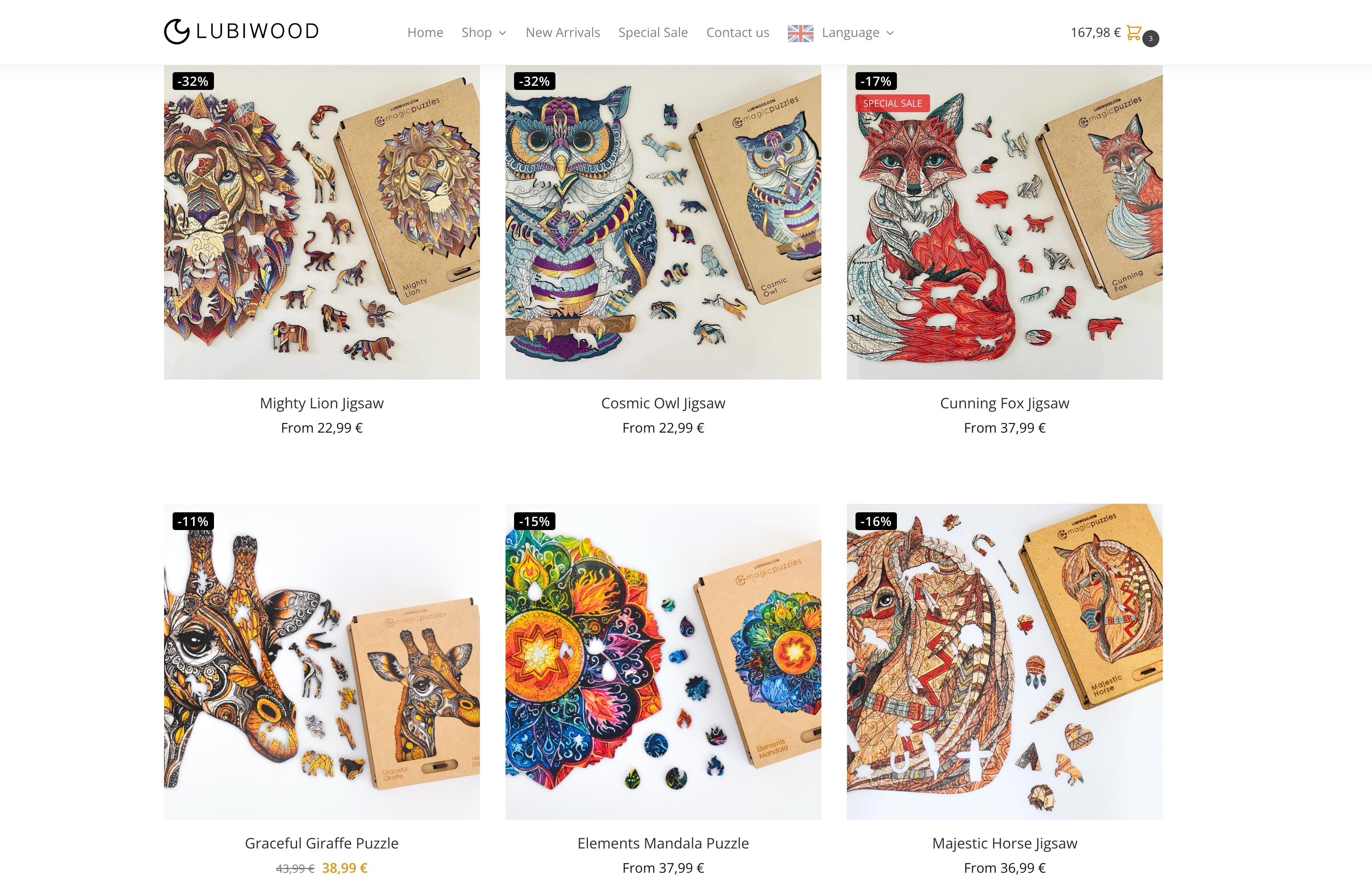
Their collection spans multiple categories for different preferences. 3D wooden puzzles offer spatial challenges that engage mechanical thinking. Holzpuzzle combine traditional solving with artistic imagery and unique piece shapes. Browse the best wooden puzzles collection to discover curator-selected options showcasing exceptional craftsmanship and design innovation. Each puzzle represents the intersection of functional challenge and decorative art, perfect for enthusiasts who value quality materials and meticulous construction.
What defines intricate puzzle design? Frequently asked questions
How do thickness variations affect puzzle function and intricacy?
Thickness variations enable smooth mechanical movement while maintaining structural integrity. Sliding panels require thinner dimensions for fluid motion, while frame components need greater thickness for stability. This dimensional diversity creates the precise tolerances that define quality puzzle craftsmanship.
Why are multi-stage mechanisms important in enhancing puzzle challenge?
Multi-stage mechanisms create narrative progression that builds solver engagement through sequential discovery. Each completed stage provides information necessary for the next, rewarding pattern recognition and systematic thinking. This approach transforms simple manipulation into strategic problem-solving that maintains interest across extended solving sessions.
What role do specific woods play beyond aesthetics in puzzle design?
Wood species selection influences tactile experience, durability, and mechanical performance. Harder woods like maple maintain tight tolerances longer, while figured woods like Waterfall Sapele provide visual depth that enhances emotional connection. Density affects weight distribution and handling characteristics, making material choice both functional and aesthetic.
How can signatures and hidden details increase solver engagement?
Integrated signatures create additional discovery layers that extend satisfaction beyond mechanical solution. Finding a craftsman’s mark validates the solving journey and establishes personal connection with the maker. These elements transform puzzles from anonymous objects into signed artworks, increasing collectible value and emotional resonance.
What distinguishes handcrafted wooden puzzles from mass-produced alternatives?
Handcrafted puzzles feature individual attention to tolerances, material selection, and finish quality impossible in mass production. Craftsmen adjust dimensions based on specific wood characteristics, ensuring optimal performance. This personalized approach produces unique pieces with superior tactile feedback and longevity compared to factory-made alternatives.
