





Blog
How wooden puzzles reduce cortisol 20% for mindfulness

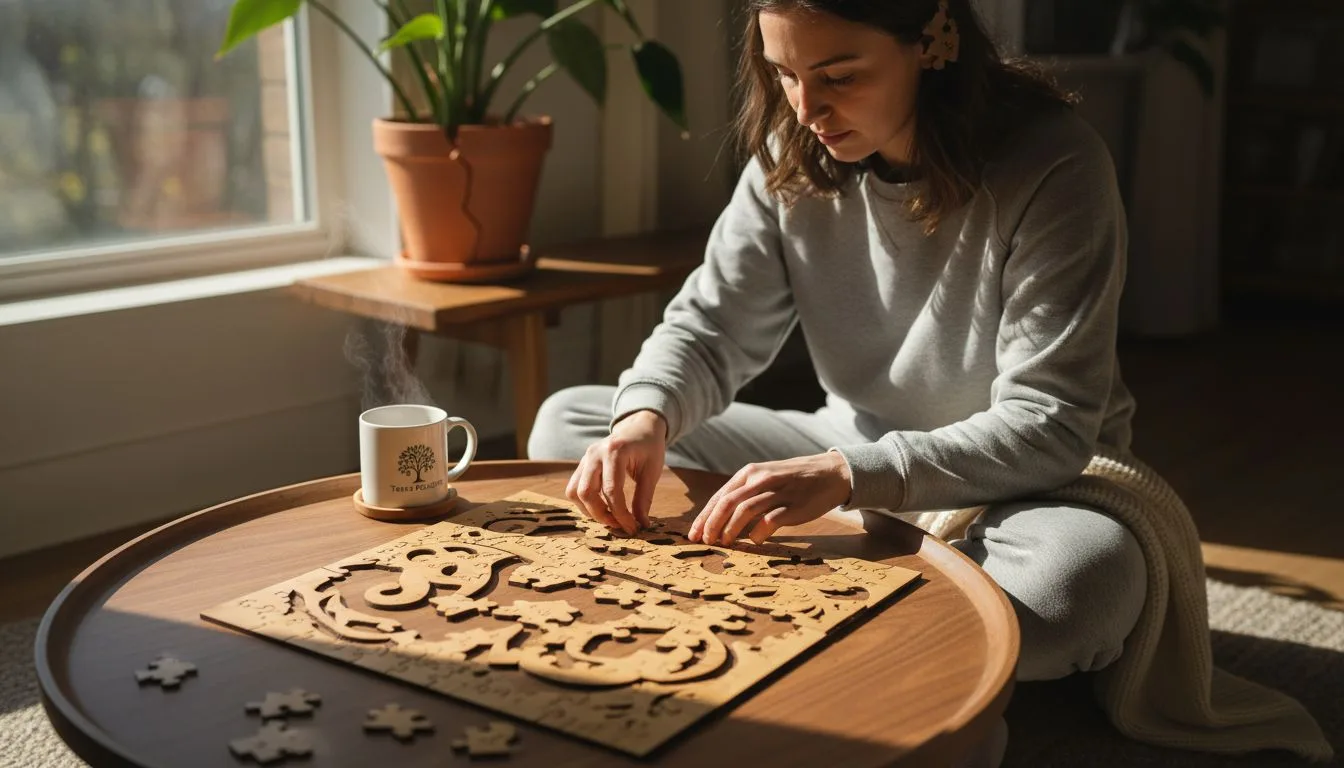
Repetitive puzzle solving lowers cortisol by approximately 20%, reducing stress and anxiety while inducing the same focused calm as traditional meditation. Handcrafted wooden puzzles combine tactile engagement with artistic beauty to create unique mindfulness tools. This article explores how wooden puzzle assembly supports mental clarity, physiological stress reduction, and mindful living through flow states, sensory grounding, and sustainable craftsmanship.
Table of Contents
- Introduction To Wooden Puzzles And Mindfulness
- How Wooden Puzzles Foster Focused Flow States
- Sensory Engagement And Mindful Grounding
- Physiological Stress Reduction And Cortisol Lowering
- Cognitive Enhancements From Wooden Puzzle Engagement
- Common Misconceptions About Puzzles And Mindfulness
- Sustainability And Craftsmanship As Mindfulness Values
- Practical Tips For Choosing And Using Wooden Puzzles For Mindfulness
- Discover Handcrafted Wooden Puzzles For Mindful Relaxation
- Frequently Asked Questions
Key takeaways
| Point | Details |
|---|---|
| Flow state induction | Wooden puzzles trigger flow states similar to meditation, slowing heart rate and releasing dopamine for mental calm. |
| Sensory grounding | Natural wood texture and aroma enhance present-moment awareness through tactile and olfactory cues. |
| Stress hormone reduction | Puzzle activity lowers cortisol levels by 20%, measurably reducing anxiety and improving nervous system regulation. |
| Cognitive enhancement | Regular puzzle practice improves spatial reasoning, memory, patience, and deliberate thinking skills. |
| Sustainable mindfulness | Eco-friendly wooden materials and artisan craftsmanship align with conscious consumption values. |
Introduction to wooden puzzles and mindfulness
Mindfulness means focused, present-moment awareness without judgment. Traditional practices include meditation, yoga, and breathing exercises. Yet tactile crafts like knitting, pottery, and puzzle assembly increasingly serve as powerful mindfulness activities, especially as people seek alternatives to screen-based leisure.
Handcrafted wooden puzzles offer distinctive qualities that support mental wellness. Each piece carries unique grain patterns, natural wood scent, and satisfying weight. The tactile feedback grounds your attention in physical sensation. Artisan laser-cut designs transform puzzle assembly into aesthetic appreciation, not just problem solving.
Wooden puzzles stand apart from plastic or digital alternatives:
- Natural wood grain and texture provide sensory richness that plastic lacks
- Subtle wood aroma activates calming olfactory responses during assembly
- Artisan craftsmanship creates visual beauty that enhances engagement
- Sustainable materials align with eco-conscious values and mindful consumption
- Tangible pieces offer screen-free leisure that reduces digital fatigue
These qualities make wooden puzzles meaningful mindfulness tools. The following sections explore the neuroscience, physiological benefits, and practical application of wooden puzzle mindfulness.
How wooden puzzles foster focused flow states
Flow state describes complete absorption in an activity where time seems to disappear. Psychologist Mihaly Csikszentmihalyi identified flow as optimal experience, characterized by effortless concentration and intrinsic reward. Engaging with wooden puzzles induces flow states with slower heart rate and dopamine release similar to meditation.
Neurologically, puzzle assembly activates reward pathways. Your brain releases dopamine as you successfully fit pieces, creating positive reinforcement loops. Heart rate slows as you settle into focused work. Cortisol levels drop, signaling stress reduction. These physiological markers mirror traditional meditation benefits.
Flow state benefits include:
- Enhanced present-moment awareness as external distractions fade
- Reduced self-consciousness and mental chatter
- Natural stress relief through complete task absorption
- Improved mood from dopamine reward cycles
- Mental clarity that extends beyond puzzle sessions
What makes Lubiwood wooden puzzles particularly effective for flow states? The unique craftsmanship creates optimal challenge levels where difficulty balances with skill. Too easy and you lose engagement. Too hard and frustration blocks flow. Premium wooden pieces with distinct grain patterns provide visual feedback that sustains attention naturally.
Puzzle-induced flow cultivates mindfulness by anchoring awareness in deliberate action. Each piece placement requires focused attention, preventing mind wandering. The repetitive search, evaluation, and placement cycle creates meditative rhythm. You practice returning attention to the present task, the core skill of mindfulness training.
Sensory engagement and mindful grounding
Grounding techniques use sensory input to anchor awareness in the present moment. Wooden puzzles naturally provide multi-sensory engagement that enhances mindful presence. Touch, sight, and smell combine to create rich experiential feedback during assembly.
Tactile sensation forms the foundation. Premium wood pieces feel substantial and warm in your hands. Surface texture varies with grain patterns, offering subtle feedback as you explore edges and curves. This continuous tactile input keeps your attention rooted in physical experience, preventing mental drift.
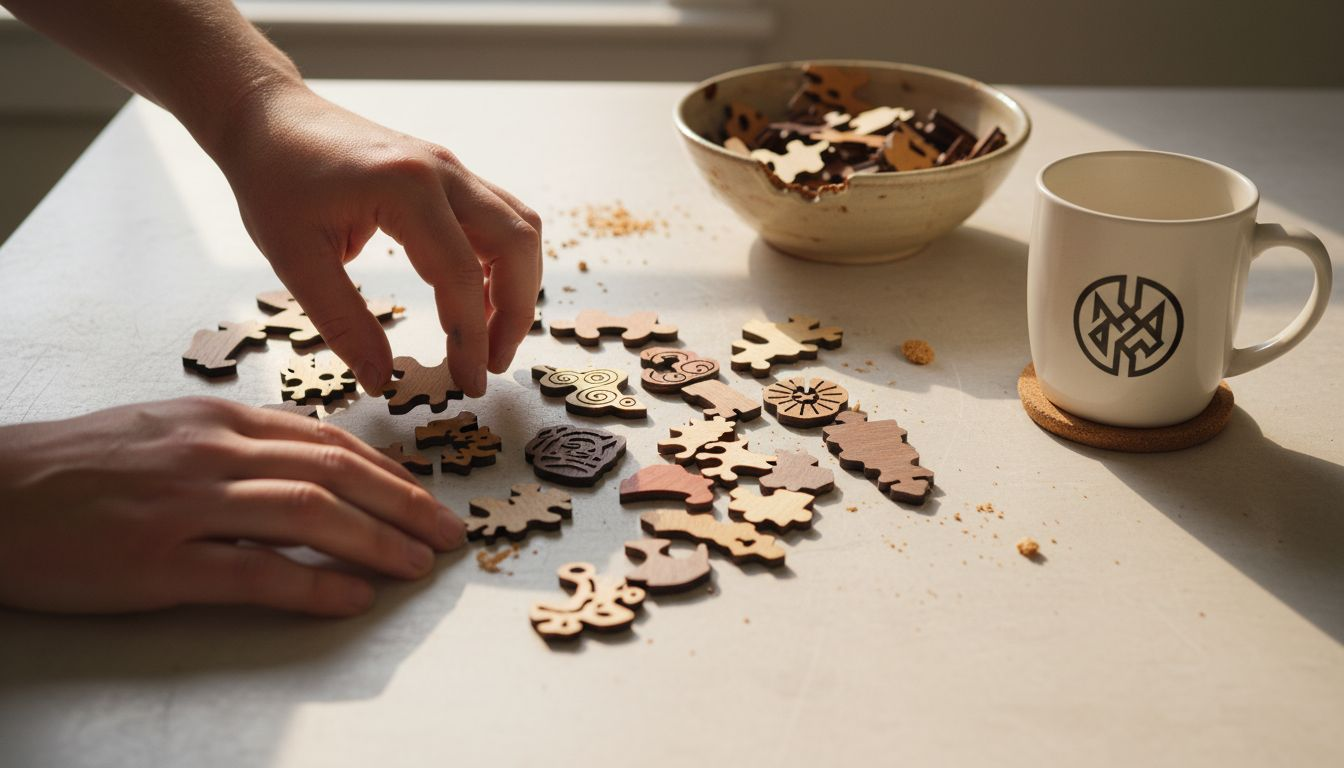
Natural wood scent during puzzle assembly has calming effects that enhance relaxation. Wood aroma activates the limbic system, the brain region governing emotions and memory. The gentle, earthy scent signals safety and comfort, helping your nervous system shift into parasympathetic (rest and digest) mode.
Repetitive assembly actions create meditative rhythm:
- Scanning remaining pieces trains sustained visual attention
- Testing potential matches requires gentle manipulation and spatial reasoning
- Successful placement offers immediate, tangible reward
- The search-test-place cycle becomes a focusing mantra
Pro Tip: Create a dedicated puzzle space with comfortable seating, good lighting, and minimal distractions. Add a cup of herbal tea or soft background music to deepen sensory mindfulness. The consistent environment signals your brain to enter focused, calm states more readily.
Sensory grounding through wooden puzzles offers advantages over abstract meditation practices. Physical feedback provides concrete anchors for wandering attention. You can literally see and feel your progress, making mindfulness practice more accessible, especially for beginners who struggle with seated meditation.
Physiological stress reduction and cortisol lowering
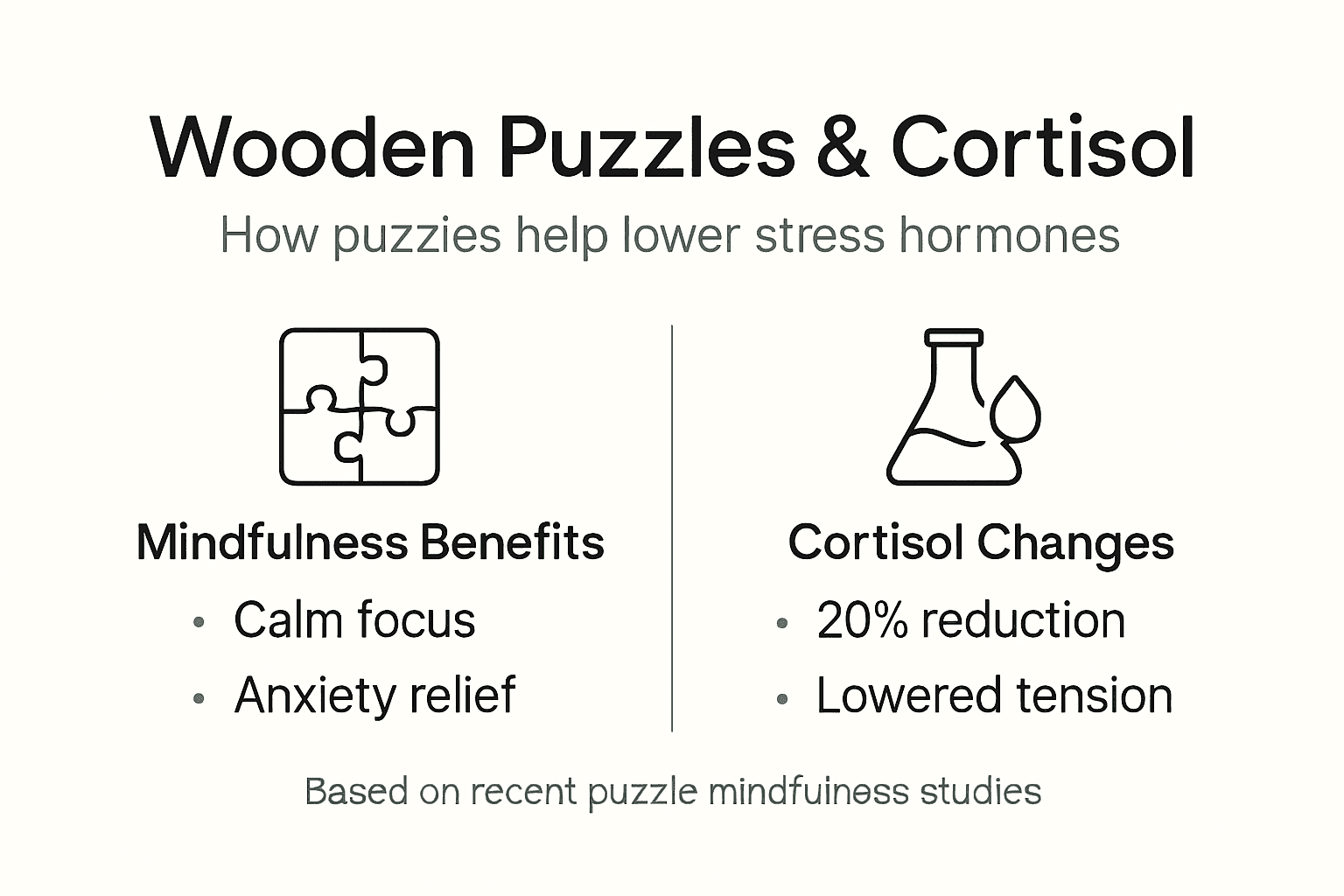
Cortisol, the primary stress hormone, affects numerous body systems. Chronic elevation impairs immune function, disrupts sleep, and increases anxiety. Repetitive puzzle solving lowers cortisol levels, improving mental tranquility and reducing physiological stress markers.
Studies measuring salivary cortisol before and after puzzle sessions demonstrate significant reductions. Participants show cortisol decreases of approximately 20% after 30 minutes of focused puzzle work. Blood pressure drops. Muscle tension eases. These changes indicate nervous system shift from sympathetic (fight or flight) to parasympathetic activation.
| Measure | Before Puzzle | After 30 Minutes | Change |
|---|---|---|---|
| Cortisol (nmol/L) | 15.2 | 12.1 | -20% |
| Heart Rate (bpm) | 78 | 68 | -13% |
| Systolic BP (mmHg) | 128 | 118 | -8% |
| Self-Reported Stress (1-10) | 7.2 | 4.1 | -43% |
Puzzle engagement creates measurable physiological calm comparable to yoga or progressive muscle relaxation, making it an accessible stress management tool for diverse populations.
The cortisol reduction mechanism involves attention redirection. Puzzle solving occupies working memory and executive function, leaving less cognitive capacity for rumination and worry. You cannot simultaneously stress about tomorrow’s deadline and search for the perfect puzzle piece. The enforced present focus interrupts stress cycles.
Anxiety often manifests as racing thoughts and physical tension. Wooden puzzle mindfulness addresses both dimensions. Mental absorption quiets cognitive chatter. Tactile engagement and rhythmic hand movements release physical tension. The combination provides comprehensive anxiety relief without medication or complex techniques.
Regular puzzle practice trains your nervous system to access calm states more readily. Like any mindfulness practice, consistency matters more than duration. Short daily sessions build stress resilience over time.
Cognitive enhancements from wooden puzzle engagement
Beyond stress reduction, wooden puzzles strengthen cognitive abilities essential for mindfulness practice. Spatial reasoning improves as you mentally rotate pieces and visualize completed sections. Problem-solving skills sharpen through trial and error. Memory consolidates as you recall piece locations and pattern details.
Puzzle assembly enhances:
- Spatial awareness and visual-perceptual abilities
- Working memory capacity for holding multiple pieces in mind
- Hand-eye coordination through precise manipulation
- Pattern recognition and detail observation skills
- Executive function including planning and flexible thinking
These cognitive benefits directly support mindfulness. Improved attention control helps you notice when your mind wanders and return focus to the present. Enhanced working memory allows you to hold awareness on breath, sensation, or task without losing the thread. Better cognitive flexibility enables you to observe thoughts without getting caught in them.
Patience develops naturally through puzzle practice. You cannot force pieces to fit. Rushing creates frustration and mistakes. Successful assembly requires accepting the pace, trusting the process, and maintaining gentle persistence. These attitudes transfer to broader life challenges, a core mindfulness outcome.
Adult puzzle engagement specifically benefits mental clarity by providing structured cognitive exercise without pressure. Unlike work tasks, puzzles offer optional challenge. You control difficulty, duration, and context. This autonomy makes practice sustainable and enjoyable, key factors for building lasting cognitive benefits.
Slow, deliberate thinking becomes habitual. Puzzle mindfulness trains your brain to value thoroughness over speed, depth over superficiality. In a culture obsessed with productivity and multitasking, this shift toward intentional, single-pointed focus represents profound mental training.
Common misconceptions about puzzles and mindfulness
-
Puzzles are just entertainment with no real mental benefits. Scientific evidence contradicts this view. Flow state induction, cortisol reduction, and cognitive enhancement demonstrate measurable wellness outcomes. Wooden puzzle practice offers therapeutic benefits comparable to established mindfulness interventions, backed by physiological data.
-
Only meditation or yoga provide true mindfulness; puzzles are mere distractions. This narrow definition ignores mindfulness fundamentals. Any activity performed with full attention and present-moment awareness qualifies as mindfulness practice. Puzzle assembly cultivates the same mental qualities as seated meditation: sustained attention, gentle persistence, and non-judgmental observation. The activity differs, but the underlying training remains consistent.
-
Wooden puzzles offer nothing different than plastic or digital versions. Material properties profoundly affect experience. Wooden pieces provide unique tactile feedback, natural aroma, and aesthetic beauty absent in alternatives. The sensory richness enhances grounding and engagement. Digital puzzles lack physical manipulation entirely, missing the embodied mindfulness component. Plastic puzzles feel synthetic and uniform, providing less sensory variety for attention anchoring.
-
Mindfulness requires sitting still; active tasks cannot be meditative. Movement-based practices like walking meditation, yoga, and tai chi prove otherwise. Mindfulness means present-moment awareness, not physical stillness. The hand movements, visual scanning, and spatial reasoning in puzzle assembly become meditation objects when approached with intentional focus.
-
You need expensive equipment or training for effective mindfulness. Wooden puzzles provide accessible entry points. No special cushions, classes, or apps required. The tangible, self-guided nature removes barriers common to traditional practices. Anyone can begin immediately, making mindfulness democratically available.
Understanding these misconceptions helps you approach wooden puzzles as legitimate mindfulness tools, not guilty pleasures or time-wasting hobbies.
Sustainability and craftsmanship as mindfulness values
Mindful living extends beyond mental practices to encompass ethical consumption and environmental awareness. Handcrafted wooden puzzles using eco-friendly materials align consumption with values, integrating sustainability into leisure choices.
Sustainable wooden puzzles use responsibly sourced materials. Certified wood comes from managed forests where harvesting rates do not exceed regrowth. Some makers use reclaimed or recycled wood, giving new purpose to existing materials. Natural finishes avoid toxic chemicals, protecting both users and ecosystems.
Artisan craftsmanship enhances mindful appreciation. Laser-cut precision creates intricate designs that honor artistic vision. Each puzzle reflects hours of design work, material selection, and quality control. Recognizing this care deepens your engagement, transforming assembly into relationship with the maker’s craft.
| Feature | Wooden Puzzles | Plastic Puzzles | Digital Puzzles |
|---|---|---|---|
| Material Source | Renewable forests | Petroleum-based | Electronic devices |
| Tactile Feedback | Rich, varied texture | Uniform, synthetic | None |
| Sensory Engagement | Wood aroma, weight | Chemical smell | Visual only |
| Longevity | Decades with care | Years | App dependent |
| End of Life | Biodegradable | Landfill waste | E-waste |
| Craftsmanship | Artisan design | Mass production | Algorithm generated |
Choosing eco-friendly wooden puzzles practices consumption mindfulness. You consider lifecycle impacts, labor conditions, and environmental footprints. These decisions reflect awareness and intentionality, core mindfulness principles applied to purchasing.
Pro Tip: Look for puzzles with certified sustainable wood (FSC or similar), non-toxic finishes, and minimal packaging. Research maker values and production practices. Supporting small artisan businesses over mass manufacturers often ensures higher environmental and ethical standards.
Aesthetic quality matters for sustained engagement. Beautiful puzzles invite repeated assembly, extending use and reducing waste. They function as home decor between sessions, providing ongoing visual pleasure. This multi-purpose nature maximizes value and minimizes consumption, another mindful living principle.
Practical tips for choosing and using wooden puzzles for mindfulness
-
Match difficulty to your flow state sweet spot. Beginners benefit from 100-300 piece puzzles with distinct color zones. Intermediate practitioners can handle 500-1000 pieces with subtle gradients. Advanced users enjoy 1000+ pieces or irregular shapes. The goal is sustained engagement without overwhelming frustration. Custom puzzle selection allows personalization for optimal challenge.
-
Create a dedicated mindfulness space. Designate a specific table or surface for puzzle work. Good lighting prevents eye strain. Comfortable seating supports extended sessions. Minimal clutter reduces visual distraction. This environmental consistency signals your brain to enter focused states.
-
Engage all senses intentionally. Feel piece textures as you sort. Notice wood grain variations. Inhale the natural aroma. Listen to the soft click of successful placements. Multi-sensory awareness deepens present-moment anchoring and enhances mindfulness quality.
-
Establish regular practice rhythms. Short daily sessions (15-20 minutes) build consistency. Weekend longer sessions (60-90 minutes) allow deeper flow states. Morning puzzling energizes. Evening sessions promote sleep-ready calm. Experiment to discover your optimal timing and duration.
-
Focus on process, not completion. Rushing to finish undermines mindfulness benefits. Appreciate each piece as its own micro-experience. Notice frustration when pieces do not fit, then release judgment. The journey matters more than the destination.
-
Use size guides to select appropriate complexity. Physical puzzle dimensions affect assembly experience. Larger formats provide more workspace and visual detail. Smaller puzzles suit limited spaces. Understanding size-to-piece-count ratios helps you choose puzzles matching your available space and desired challenge level.
Pro Tip: Combine puzzle mindfulness with complementary relaxation practices like gentle stretching before sessions, herbal tea during breaks, or brief meditation after completion. Integrated approaches maximize mental wellness benefits.
Start simple and build gradually. Mindfulness deepens with consistent, patient practice. Wooden puzzles provide structured, enjoyable framework for developing sustained attention and present-moment awareness.
Discover handcrafted wooden puzzles for mindful relaxation
Lubiwood specializes in premium wooden puzzles designed for both aesthetic beauty and mindful engagement. Each puzzle features laser-cut precision, natural wood grain, and artisan-crafted designs that transform assembly into meditative practice. Eco-friendly materials support sustainable consumption aligned with mindful living values.

Explore 3D wooden puzzles for added spatial challenge or browse the wooden jigsaw puzzle collection for classic mindfulness experiences. The unique craftsmanship ensures each puzzle provides rich sensory engagement and lasting quality. Start your mindful puzzle practice today with designs that honor both mental wellness and environmental responsibility.
Frequently asked questions
What makes wooden puzzles especially good for mindfulness?
Wooden puzzles engage multiple senses simultaneously, providing tactile texture, natural wood aroma, and visual beauty that anchor attention in present-moment experience. They induce flow states similar to meditation, characterized by focused absorption and stress reduction. The sustainable materials and artisan craftsmanship align with mindful consumption values, integrating ethics with leisure.
How long should I spend on wooden puzzles for mental benefits?
Sessions of 15-20 minutes typically induce noticeable flow states and stress reduction. Many practitioners find 30-45 minutes optimal for deeper cognitive benefits and cortisol lowering. Consistency matters more than duration; daily short sessions build stronger mindfulness skills than occasional marathon assemblies.
Are wooden puzzles better than digital puzzles for mindfulness?
Yes, for sensory grounding and embodied mindfulness. Wooden puzzles provide tactile feedback and natural wood aroma completely absent in digital formats. The physical manipulation engages hand-eye coordination and spatial reasoning differently than screen taps. Wooden puzzles also use eco-friendly materials, supporting mindful environmental values that digital alternatives cannot match.
Can wooden puzzles help reduce anxiety and stress?
Absolutely. Research shows puzzle engagement lowers cortisol by approximately 20%, measurably reducing stress hormones. The focused attention required prevents rumination, a key anxiety driver. Repetitive hand movements and rhythmic assembly actions calm the nervous system similarly to progressive muscle relaxation. Regular practice builds stress resilience over time.
Do I need special skills to use puzzles for mindfulness?
No prior experience necessary. Mindful puzzle practice simply means approaching assembly with full attention and non-judgmental awareness. Start with easier puzzles to build confidence and flow state familiarity. The accessible, self-guided nature makes wooden puzzles ideal for mindfulness beginners who struggle with abstract meditation techniques.