




Blog
What is Adult Puzzle Entertainment? 75% Value Art & Fun


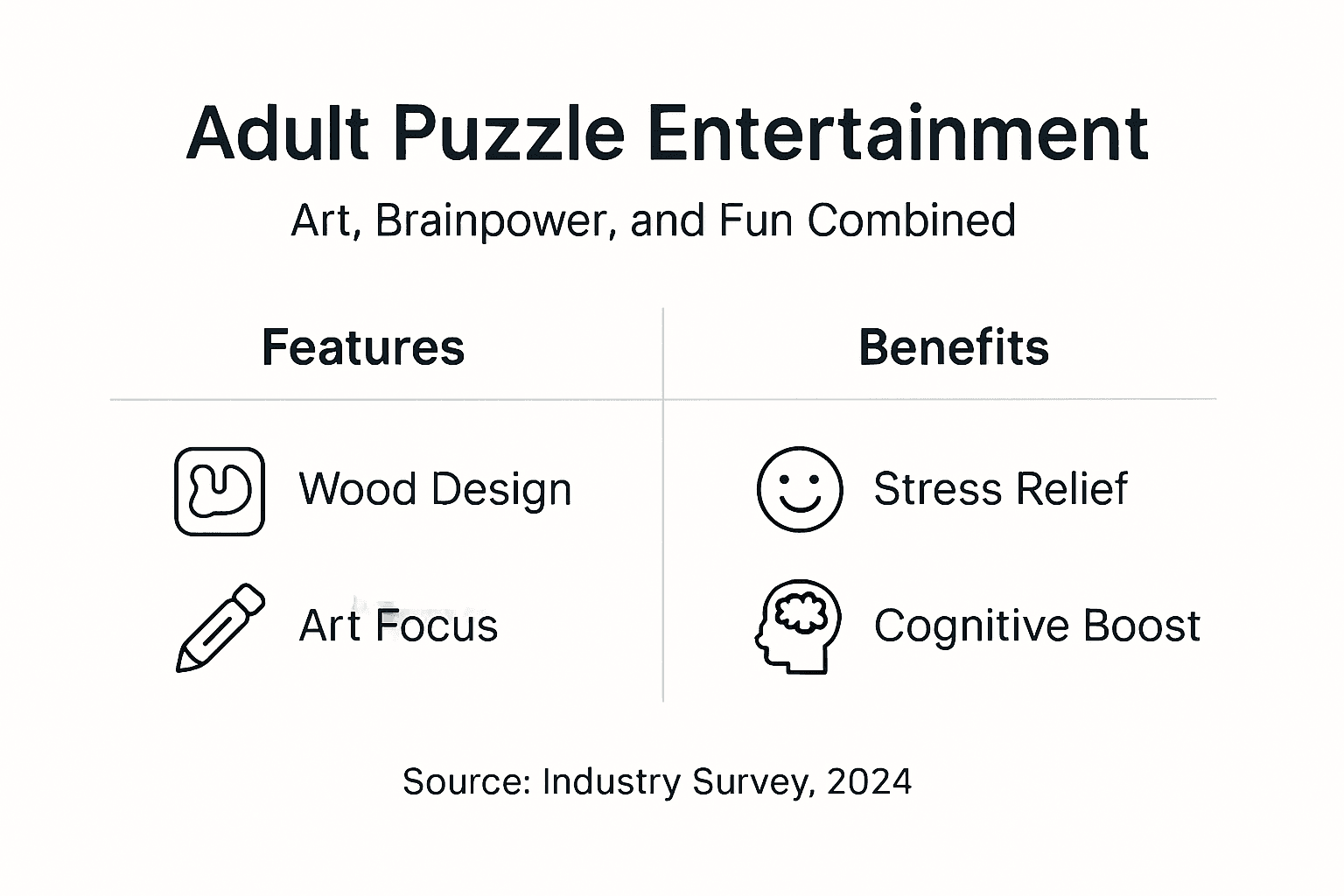
Did you know that 75% of adult puzzle buyers prioritize aesthetic design nearly as much as gameplay challenge? This surprising statistic reveals a fundamental shift in how we approach puzzle entertainment. Adult puzzles have evolved far beyond simple pastimes, merging cognitive engagement with artistic expression and sustainable craftsmanship. This guide explores everything from the definition of adult puzzle entertainment to practical selection tips, helping you understand why wooden puzzles have become essential for creative individuals seeking both mental stimulation and beautiful home decor.
Table of Contents
- Defining Adult Puzzle Entertainment
- Material and Craftsmanship Benefits of Wooden Puzzles
- Cognitive and Emotional Benefits of Adult Puzzles
- Sustainability in Puzzle Production
- Puzzles as Multipurpose Objects: Entertainment Meets Home Decor
- Gift-Giving Considerations for Adult Wooden Puzzles
- Common Misconceptions About Adult Puzzle Entertainment
- Choosing the Right Adult Puzzle: Practical Tips and Recommendations
- Explore Lubiwood’s Premium Wooden Puzzle Collection
- Frequently Asked Questions
Key Takeaways
| Point | Details |
|---|---|
| Definition | Adult puzzle entertainment combines cognitive challenge, artistic design, and premium materials like laser-cut wood |
| Craftsmanship | Wooden puzzles offer superior durability, unique piece shapes, and tactile sensory experiences versus cardboard |
| Benefits | Puzzles enhance memory, problem-solving, reduce stress, and serve as displayable home decor |
| Sustainability | Genuine eco-friendly puzzles use FSC-certified wood, avoid plastic packaging, and resist greenwashing |
| Selection Tips | Balance entertainment value, artistic appeal, verified sustainability credentials, and difficulty level for optimal choice |
Defining Adult Puzzle Entertainment
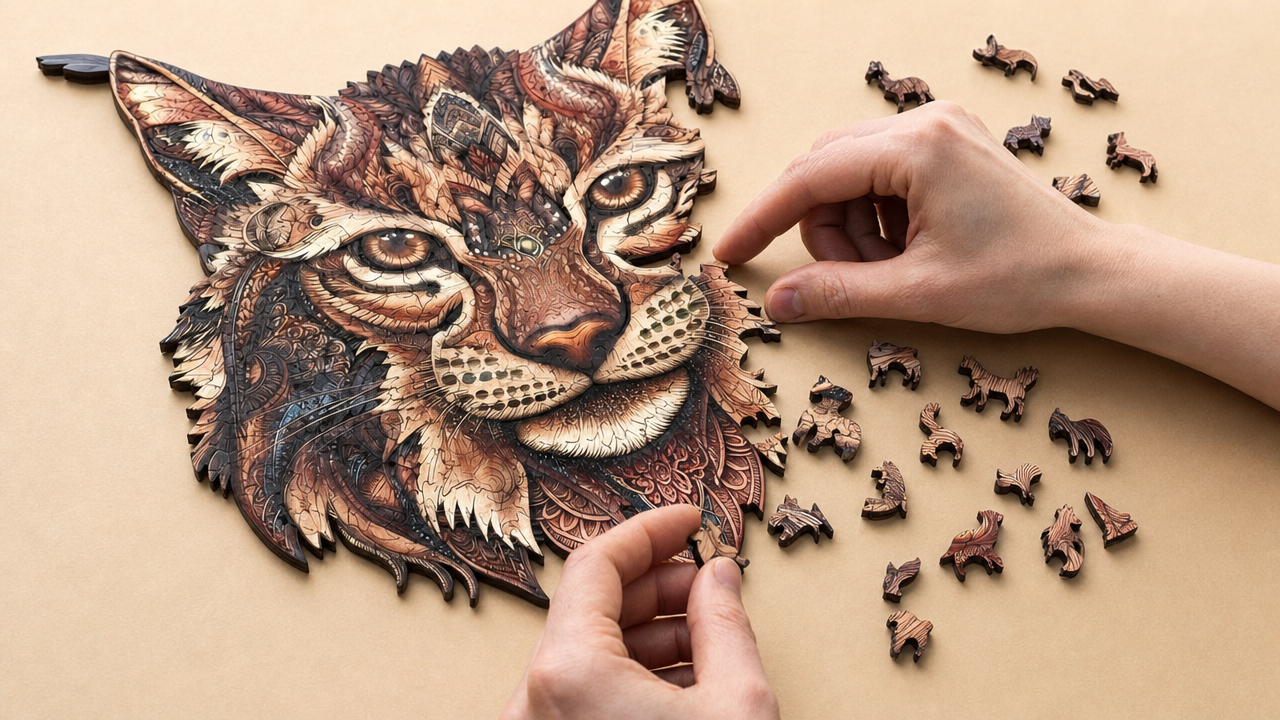
Adult puzzle entertainment represents a sophisticated intersection of cognitive engagement, artistic quality, and material excellence. Unlike children’s puzzles designed primarily for basic skill development, adult wooden puzzles combine engagement, artistic value, and material quality to create meaningful leisure experiences. These puzzles target creative individuals and families who appreciate both the meditative process of assembly and the aesthetic outcome.
The distinction from mass-market options becomes clear when examining key characteristics:
- Cognitive complexity: Designs feature intricate patterns, subtle color variations, and irregular piece shapes requiring strategic thinking
- Artistic merit: Images range from classical paintings to contemporary illustrations, selected for visual appeal
- Material superiority: Premium wood construction ensures longevity and tactile satisfaction
- Multipurpose function: Completed works transition seamlessly from entertainment to displayable art
Wooden puzzles occupy a unique space in adult entertainment because they serve multiple roles simultaneously. You might spend evenings assembling a challenging landscape, then frame it as living room decor. This dual functionality explains why the unique craftsmanship of Lubiwood puzzles resonates with buyers seeking value beyond temporary amusement.
The market has responded to this demand by elevating puzzle production standards. Retailers now curate collections emphasizing design originality and craftsmanship quality. Browse through best wooden puzzles and you’ll notice themes spanning nature photography, abstract geometry, and cultural artwork. Each piece tells a story while challenging your spatial reasoning.
Material and Craftsmanship Benefits of Wooden Puzzles
Wood fundamentally transforms the puzzle experience through tangible advantages impossible with cardboard alternatives. Wooden puzzles offer durability, unique laser-cut artistic pieces, and tactile benefits that enhance every interaction. The material choice impacts not just longevity but also your sensory engagement during assembly.
Consider these concrete benefits:
- Exceptional durability: Wood resists warping, fading, and edge wear that plague cardboard puzzles after minimal use
- Precision laser cutting: Technology enables whimsical piece shapes like animals, florals, or geometric patterns adding visual discovery
- Sensory richness: Natural wood grain textures provide satisfying tactile feedback with each piece placement
- Preservation potential: Assembled puzzles maintain structural integrity for years when protected, enabling permanent display
The laser-cutting process deserves special attention. Unlike stamped cardboard dies producing uniform shapes, laser technology creates infinite shape variations. You might find a butterfly-shaped piece nestled within a garden scene, or constellation patterns echoing the puzzle’s night sky theme. These artistic touches elevate assembly from mechanical sorting to treasure hunting.
Wood’s physical properties also support long-term enjoyment. A quality wooden puzzle withstands repeated assembly without loosening connections or deteriorating imagery. This durability makes wooden puzzles ideal for family traditions, where the same puzzle circulates through generations. The investment cost per use drops dramatically compared to disposable cardboard options.
Pro Tip: After completing an especially beautiful puzzle, apply a thin protective sealant before mounting. This preserves color vibrancy and prevents dust accumulation, ensuring your craftsmanship benefits remain visible for years.
For those seeking dimensional complexity, explore 3D wooden puzzles that add architectural assembly challenges. These models combine traditional puzzle logic with spatial construction, creating interactive sculptures.
Cognitive and Emotional Benefits of Adult Puzzles
The mental and emotional returns from puzzle engagement extend far beyond simple entertainment. Adult puzzles improve problem-solving, memory, and reduce stress through mechanisms now well-documented in cognitive research. Your brain activates multiple systems simultaneously during puzzle work, strengthening neural pathways while promoting relaxation.
Key cognitive improvements include:
- Enhanced working memory: Tracking piece locations, colors, and patterns exercises short-term memory capacity
- Improved visual-spatial reasoning: Mentally rotating pieces and predicting fits sharpens spatial intelligence
- Refined problem-solving strategies: Breaking complex images into manageable sections teaches systematic thinking
- Sustained attention practice: Maintaining focus during extended assembly sessions builds concentration stamina
Emotional benefits manifest differently but equally powerfully. The repetitive, goal-directed nature of puzzle assembly creates a meditative state psychologists call “flow.” During flow, anxiety diminishes as your mind focuses exclusively on the immediate challenge. This mental break from daily stressors provides genuine therapeutic value without requiring special training or equipment.
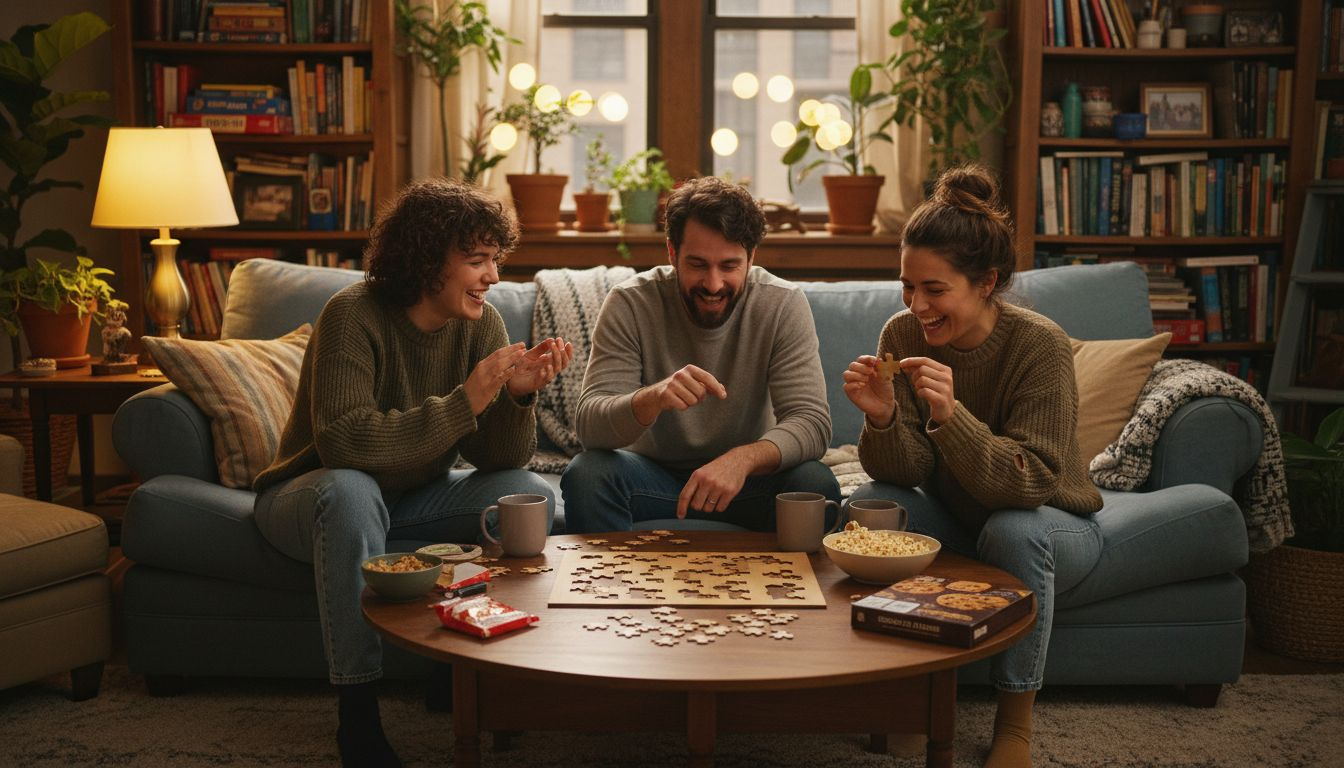
Puzzle complexity becomes a lever for customizing cognitive challenge. Beginners might start with 300-piece designs featuring distinct color zones, while experienced puzzlers tackle 1000-piece monochromatic images. This adjustability ensures puzzles remain engaging as your skills develop, preventing both frustration and boredom.
The social dimension adds another layer of emotional benefit. Collaborative puzzle assembly fosters conversation and cooperation without the competitive pressure of games. Families often report puzzles create natural opportunities for quality time, where multiple generations work toward shared goals. Learn more about the cognitive and emotional benefits of adult puzzles to understand how regular engagement supports mental wellness.
Sustainability in Puzzle Production
Eco-conscious consumers face genuine challenges distinguishing authentic sustainability from marketing spin. Genuine eco-friendly puzzles use FSC-certified wood and implement comprehensive environmental practices throughout production. Understanding these standards protects you from greenwashing while supporting companies committed to planetary health.
Legitimate sustainability indicators include:
- FSC certification: The Forest Stewardship Council verifies wood sources meet strict environmental and social standards
- Water-based finishes: Non-toxic coatings eliminate harmful chemical off-gassing present in solvent-based alternatives
- Minimal packaging: Recyclable cardboard boxes without plastic windows, foam inserts, or excessive wrapping
- Local production: Shorter supply chains reduce transportation emissions and support regional economies
Greenwashing tactics deserve scrutiny. Vague claims like “eco-friendly” or “natural” lack verification mechanisms. Genuine commitment manifests through specific certifications, transparent sourcing information, and measurable environmental initiatives. Always verify eco-labels before purchasing, checking certification databases when possible.
The packaging evaluation process matters as much as the product itself. A wooden puzzle loses sustainability credibility when wrapped in layers of single-use plastic. Examine product listings and unboxing reviews to assess packaging practices. Responsible companies highlight their packaging materials explicitly, often using it as a selling point.
Pro Tip: Before buying, search the manufacturer’s website for sustainability reports or certifications. Companies genuinely committed to environmental responsibility publish detailed information, while those engaged in greenwashing offer only vague statements. Resources like debunking wooden puzzle myths help separate fact from marketing.
Puzzles as Multipurpose Objects: Entertainment Meets Home Decor
The convergence of play and aesthetics represents wooden puzzles’ most compelling value proposition. 75% of adult puzzle buyers value decor appeal alongside challenge, recognizing completed works as legitimate art pieces. This dual functionality transforms puzzles from consumable entertainment into lasting home enhancements.
Artistic wooden puzzles excel as decor through several pathways:
- Gallery-quality imagery: Designs feature museum artwork, nature photography, and commissioned illustrations worthy of display
- Unique piece shapes: Laser-cut silhouettes create visual interest even before assembly completion
- Custom framing options: Standard puzzle dimensions align with readily available frame sizes for easy mounting
- Conversation starters: Displayed puzzles prompt guest interaction and storytelling about assembly experiences
The comparison between traditional cardboard and wooden puzzles reveals stark decor value differences:
| Feature | Cardboard Puzzles | Wooden Puzzles |
|---|---|---|
| Display longevity | Fade and warp within months | Maintain appearance for years |
| Visual texture | Flat, uniform surface | Natural wood grain adds depth |
| Structural stability | Require adhesive backing | Self-supporting when framed |
| Artistic credibility | Perceived as craft projects | Recognized as decorative art |
Consumers increasingly seek products delivering multiple functions without compromising quality in any single dimension. Wooden puzzles answer this demand by refusing the entertainment-or-decor dichotomy. You genuinely enjoy hours of engaging assembly, then transition the result into permanent display without aesthetic compromise.
Placement strategies maximize decor impact. Consider puzzle themes that complement existing room aesthetics. A botanical illustration enhances garden-themed spaces, while geometric abstracts suit modern minimalist environments. Lighting matters too, as directional illumination highlights wood grain textures and piece shape variations.
Gift-Giving Considerations for Adult Wooden Puzzles
Puzzles occupy a sweet spot in gift psychology, offering personalization potential without the pressure of clothing sizes or technology compatibility. The growing puzzle gift market capitalizes on this versatility, providing options spanning casual acquaintances to intimate family members. Wooden puzzles particularly excel because their premium materials communicate thoughtfulness and quality.
Successful puzzle gifting follows these steps:
- Identify recipient interests: Match puzzle imagery to hobbies, travel memories, or artistic preferences for personal resonance
- Assess difficulty appropriately: Consider the recipient’s experience level using the guide on wooden puzzle sizes and complexity ratings
- Explore customization options: Many retailers offer personalized imagery, monogramming, or custom piece counts
- Consider presentation: Premium packaging enhances unboxing experience and signals gift quality
- Include context: A brief note explaining your selection reasoning adds emotional value
Customization transforms generic gifts into meaningful keepsakes. Imagine gifting a puzzle featuring the recipient’s wedding venue, childhood home, or beloved pet. These personalized designs create emotional connections impossible with mass-market products. Many platforms now offer photo-to-puzzle services, though quality varies significantly.
Group puzzle activities strengthen social bonds through collaborative achievement. Unlike competitive games creating winners and losers, puzzles unite participants toward shared goals. This cooperative dynamic makes puzzles ideal for family gatherings, date nights, or friend groups seeking low-pressure interaction.
The practical aspects matter too. Explore wooden jigsaw puzzles for gifting to understand pricing tiers and design variety. Budget-conscious gifters find excellent options in the 500-piece range, while those seeking impressive statements might choose elaborate 1000+ piece designs. Additional insights on puzzle gifting help navigate occasion-specific considerations.
Common Misconceptions About Adult Puzzle Entertainment
Pervasive myths about wooden puzzles create unnecessary hesitation among potential buyers. Design complexity explains over 70% of puzzle difficulty variance, not material choice. Understanding these realities empowers confident decision-making aligned with your actual needs rather than unfounded assumptions.
Let’s examine prevalent misconceptions:
- Myth 1: Wooden puzzles always exceed cardboard difficulty: False. Difficulty stems from image complexity, color distribution, and piece count, not substrate material
- Myth 2: All eco-friendly claims deserve trust: False. Without third-party certification, sustainability claims often represent marketing rather than verified practices
- Myth 3: Puzzle entertainment lacks serious cognitive or aesthetic value: False. Research confirms measurable cognitive benefits, while artistic designs merit genuine decor consideration
The following comparison clarifies these misunderstandings:
| Myth | Reality |
|---|---|
| Wood automatically means harder | Difficulty depends on design elements like color gradients and image detail |
| Eco labels guarantee sustainability | Only verified certifications like FSC confirm environmental responsibility |
| Puzzles are mere pastimes | Puzzles provide documented cognitive training and serve as displayable art |
| Wooden puzzles cost too much | Price-per-use calculation favors durable wooden puzzles over replacement cardboard |
The difficulty misconception particularly misleads shoppers. A 500-piece wooden puzzle with distinct color zones and clear imagery proves easier than a 300-piece cardboard puzzle featuring monochromatic abstract patterns. Material affects tactile experience and longevity, not inherent challenge level. Manufacturers typically provide difficulty ratings based on actual design characteristics.
Sustainability confusion stems from unregulated terminology. Terms like “natural,” “green,” or “earth-friendly” carry no legal definitions or verification requirements. Companies exploit this ambiguity to appear environmentally conscious without meaningful practice changes. Cross-reference claims against independent certification databases and detailed sourcing information.
Browse the wooden puzzle collection with these clarifications in mind. Notice how product descriptions specify difficulty factors beyond material choice. Resources like Puzzle Master difficulty research provide evidence-based frameworks for evaluating challenge levels accurately.
Choosing the Right Adult Puzzle: Practical Tips and Recommendations
Informed selection balances entertainment value, aesthetic appeal, and environmental responsibility. The decision framework prioritizes factors most impacting your satisfaction and aligns purchases with personal values. This systematic approach prevents impulse buying while ensuring your investment delivers expected returns.
Essential selection criteria include:
- Design uniqueness: Seek original artwork or distinctive photography rather than generic stock images
- Verified sustainability: Confirm FSC certification or equivalent environmental credentials through manufacturer documentation
- Appropriate difficulty: Match complexity to your skill level and desired challenge intensity using retailer difficulty ratings
- Minimal packaging waste: Prioritize products using recyclable materials without excessive plastic components
- Size considerations: Evaluate available display space and assembly area before committing to large piece counts
The sustainability verification process requires active investigation. Visit manufacturer websites seeking detailed environmental policies, certification scans, and production transparency. Responsible companies readily share this information, often featuring it prominently in their brand story. Absence of specifics suggests sustainability represents marketing rather than operational reality.
Difficulty assessment benefits from understanding your puzzle experience. Beginners should start with 300-500 pieces featuring clear subject matter and varied colors. Intermediate puzzlers handle 500-750 pieces with moderate complexity, while experts tackle 1000+ pieces with challenging characteristics like similar tones or repetitive patterns.
Pro Tip: Balance entertainment, decor, and gifting potential for maximum value. A puzzle you enjoy assembling, proudly display afterward, and potentially gift to another enthusiast delivers triple returns on investment. This multi-function approach justifies premium pricing for quality wooden options.
Practical resources streamline selection. The guide for choosing quality puzzles explains craftsmanship indicators worth paying for. Those interested in dimensional building should review tips for selecting 3D wooden puzzles. Finally, consult wooden puzzle size considerations to match piece counts with your available time and space.
Explore Lubiwood’s Premium Wooden Puzzle Collection
Ready to experience the intersection of artistry, cognitive engagement, and sustainable craftsmanship? Lubiwood curates exceptional wooden puzzles meeting the highest standards for design originality, material quality, and environmental responsibility. Each piece reflects careful attention to the elements discussed throughout this guide.
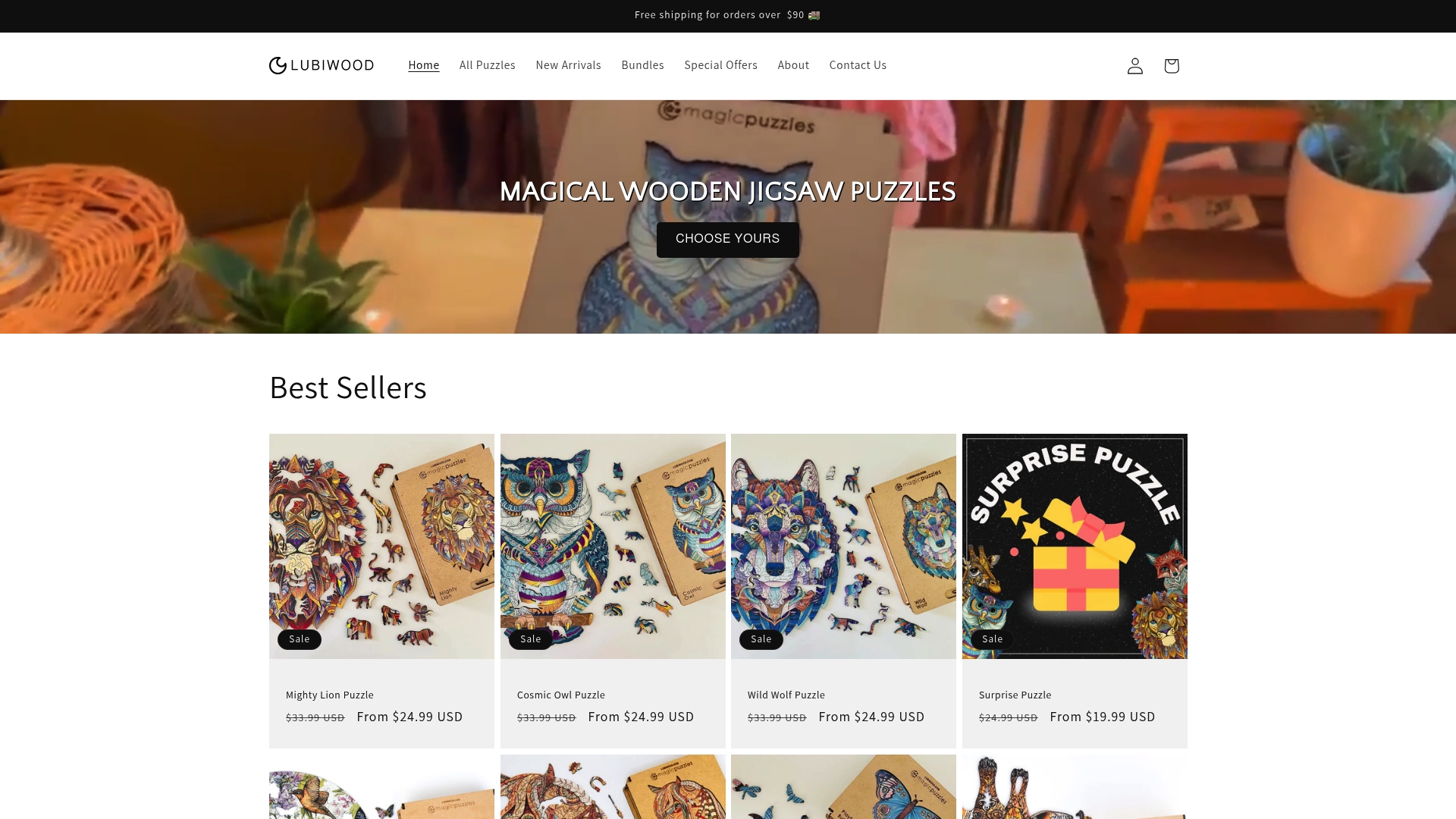
Our collection spans diverse interests and skill levels. Discover 3D wooden puzzles that transform flat assembly into architectural sculpture, or shop wooden jigsaw puzzles featuring gallery-worthy imagery perfect for framing. Uncertain about sizing? The wooden puzzle size guide matches piece counts to your experience and available space. Whether enhancing your home decor, seeking meaningful gifts, or investing in family entertainment, Lubiwood delivers premium quality aligned with your values.
Frequently Asked Questions
What makes adult puzzles different from children’s puzzles?
Adult puzzles emphasize artistic design, material quality, and cognitive complexity rather than basic skill development. They feature sophisticated imagery, premium wooden construction, and serve dual purposes as entertainment and home decor, whereas children’s puzzles focus on educational fundamentals with simpler designs.
Do wooden puzzles really improve cognitive function?
Yes, research confirms wooden puzzles enhance working memory, visual-spatial reasoning, problem-solving strategies, and sustained attention through active engagement. The tactile and visual complexity of wooden puzzles provides richer sensory input than cardboard alternatives, potentially amplifying cognitive benefits during regular use.
How can I verify a puzzle’s sustainability claims?
Check for third-party certifications like FSC, which verify wood sourcing meets environmental standards. Review manufacturer websites for detailed sustainability reports, production transparency, and specific environmental initiatives rather than vague marketing language. Examine packaging materials and prioritize brands using recyclable, plastic-free options.
Can completed wooden puzzles actually serve as home decor?
Absolutely. Quality wooden puzzles feature gallery-worthy imagery, natural wood grain texture, and structural stability suitable for framing and permanent display. Unlike cardboard puzzles that fade and warp, wooden versions maintain appearance for years, making them legitimate decorative art pieces rather than temporary craft projects.
Are wooden puzzles significantly harder than cardboard ones?
No, material doesn’t determine difficulty. Design elements like image complexity, color distribution, and piece count create challenge levels. A wooden puzzle with clear imagery proves easier than a monochromatic cardboard puzzle. Check manufacturer difficulty ratings based on actual design characteristics rather than assuming material indicates challenge level.