
Most people assume a jigsaw puzzle is just a jigsaw puzzle. You sort the pieces, find the edges, and work your way in. But the moment you pick up a handcrafted wooden puzzle with unique pieces that enhance artistry and engagement, everything changes. Suddenly you’re holding a tiny wooden fox, a crescent moon, or a miniature sailboat, and the whole experience shifts from mechanical to magical. This guide breaks down exactly what makes unique puzzle pieces special, how they change the way you solve, and why they matter so much for collectors, gift shoppers, and anyone who wants their puzzle to double as a piece of art.
Table of Contents
- What makes a puzzle piece unique?
- How unique pieces change the puzzling experience
- The artistry and sustainability behind handcrafted wooden puzzles
- Mechanics of solving: Uniqueness and puzzle logic
- Collecting, gifting, and home decor: The many roles of unique puzzles
- Bring artful puzzling home
- Frequently asked questions
Key Takeaways
| Point | Details |
|---|---|
| Unique pieces enhance artistry | Special-shaped puzzle pieces transform solving into an artistic and memorable experience. |
| Irregular cuts boost challenge | Non-standard pieces make puzzles trickier and more rewarding than standard cardboard versions. |
| Sustainable wood means heirloom quality | FSC-certified wooden puzzles offer lasting value for play, gifting, and eco-friendly decor. |
| Logical uniqueness ensures solvability | Well-designed unique pieces fit only in one spot, guiding you to the solution without guesswork. |
| Ideal for gifts and display | One-of-a-kind wooden puzzles are perfect for collectors, thoughtful gifts, and stylish home accents. |
What makes a puzzle piece unique?
Not all puzzle pieces are created equal. Standard cardboard puzzles use a repeating grid of tabs and blanks, meaning most pieces look nearly identical in shape. You rely almost entirely on color and image to find where each piece belongs. Handcrafted wooden puzzles take a completely different approach.
Unique pieces, often called whimsies, are specially shaped to match the puzzle’s theme. A nature scene might include pieces shaped like leaves, birds, or butterflies. A nautical puzzle might hide anchors and waves among the regular cuts. These aren’t decorative gimmicks. They’re intentional design choices that make every puzzle feel like a story you’re uncovering piece by piece.
Here’s what sets unique pieces apart from standard cuts:
- Whimsies: Figure-shaped pieces that represent objects, animals, or characters tied to the puzzle’s theme
- Non-figural unique cuts: Irregular shapes that don’t look like anything specific but still break the predictable tab-and-blank pattern
- Color-line cuts: Pieces cut deliberately along color boundaries to increase difficulty and visual surprise
- Theme-integrated shapes: Pieces designed to reflect the artwork’s subject matter, making the solve feel cohesive and intentional
This is part of what distinguishes luxury puzzles from mass-produced ones. The design thinking goes all the way down to the shape of every single piece.
“Discovering a whimsy mid-solve is like finding a hidden gem. It breaks the rhythm in the best possible way and reminds you that someone put real thought into every cut.” — Puzzle collector and reviewer
Understanding why puzzle shapes matter is the first step toward appreciating why enthusiasts and gift shoppers keep coming back to handcrafted wood over cardboard.
How unique pieces change the puzzling experience
Once you understand what unique pieces are, the next question is: what do they actually feel like to solve? The short answer is that they make everything more interesting, more challenging, and more rewarding.
Irregular and unique shapes increase puzzle difficulty by making piece identification and fitting more challenging. You can’t rely on the same visual shortcuts. You have to slow down, rotate pieces more carefully, and think about shape as much as color.
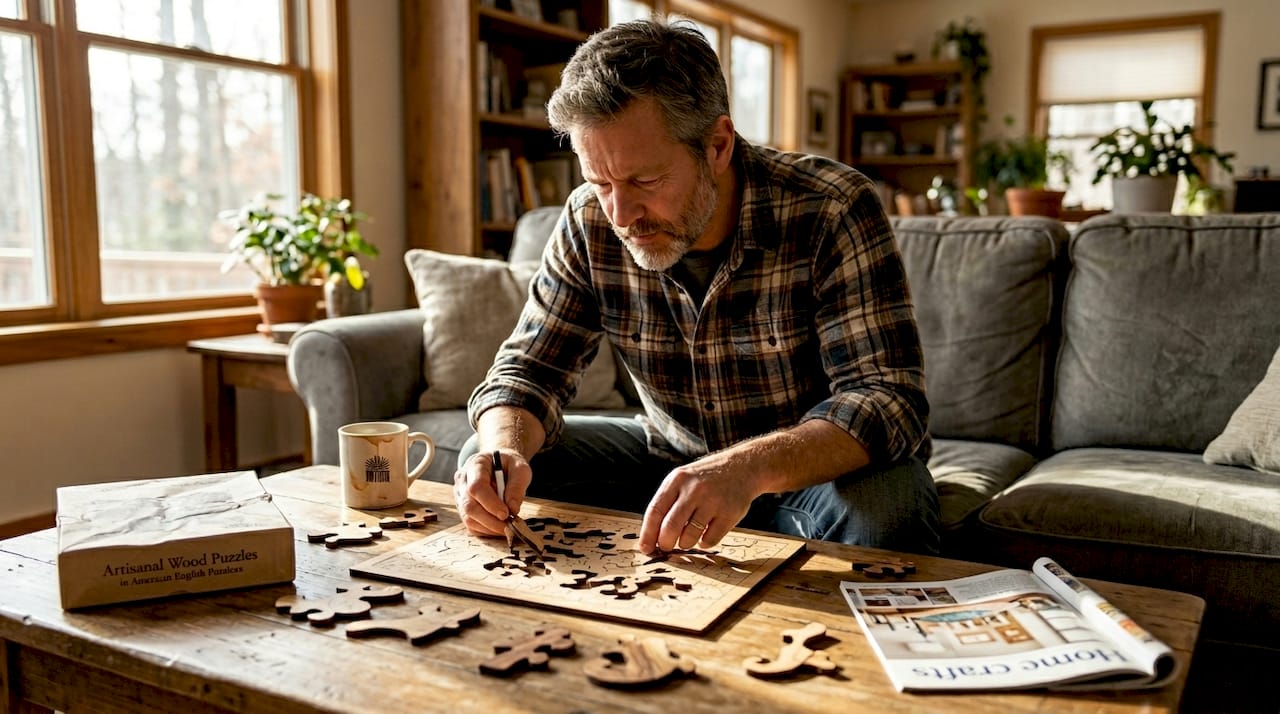
Here’s a quick comparison of the two experiences:
| Feature | Standard cardboard puzzle | Handcrafted unique-piece puzzle |
|---|---|---|
| Piece shapes | Repetitive tabs and blanks | Varied, theme-based, irregular |
| Solving strategy | Mostly color-matching | Shape, color, and theme logic |
| Difficulty level | Predictable | Layered and dynamic |
| Emotional reward | Satisfying | Surprising and memorable |
| Display value | Low | High, often framed or kept |
The solving process itself becomes a sequence of small discoveries. Here’s how it typically unfolds:
- Identify the whimsies first. Pull out any pieces that look like recognizable shapes. These are your anchors.
- Test your assumptions. A piece that looks like it belongs in one area might actually fit somewhere unexpected because of its unique edge.
- Adapt your strategy. Unique pieces force you to think about the puzzle’s theme, not just its colors. This keeps your brain engaged longer.
- Enjoy the reveal. Each whimsy you place feels like a small win, adding emotional texture to the solve.
This layered challenge is exactly why detailed designs in wooden puzzles appeal to puzzlers of all skill levels. Beginners find the whimsies fun and approachable. Experienced solvers appreciate the added complexity of non-figural cuts and color-line pieces.
Pro Tip: Don’t rush to sort by color alone. Spend a few minutes identifying all the uniquely shaped pieces first. Grouping them by theme or figure gives you a satisfying head start and makes the whole solve feel more intentional.
For top-tier puzzles like Artifact, the combination of figural and non-figural unique cuts is what separates a truly great puzzle from a merely good one. The intricate puzzle design is what keeps people coming back for more.
The artistry and sustainability behind handcrafted wooden puzzles
Unique pieces don’t exist in a vacuum. They’re part of a broader commitment to quality, artistry, and responsible making that defines the best handcrafted wooden puzzles.
Handcrafted wooden puzzles use sustainable FSC-certified birch plywood, typically 4 to 5mm thick, emphasizing durability, quality, and heirloom value. That thickness matters. It means pieces feel substantial in your hand, they don’t bend or fray, and the puzzle can be assembled, disassembled, and stored dozens of times without losing its integrity.
| Feature | Handcrafted wooden puzzle | Conventional cardboard puzzle |
|---|---|---|
| Material | FSC-certified birch plywood | Recycled or virgin cardboard |
| Durability | Decades with proper care | Often degrades after a few uses |
| Sustainability | Renewable, biodegradable wood | Mixed recyclability |
| Piece precision | Laser-cut for exact fit | Die-cut, less precise |
| Display potential | Frameable, wall-ready | Rarely displayed long-term |
For gift shoppers, this durability translates directly into value. A handcrafted wooden puzzle isn’t a one-time experience. It’s something the recipient can return to, share with others, or even frame and hang. That’s a very different proposition from a cardboard puzzle that gets recycled after one solve.
Some of the brands leading this space include:
- Artifact Puzzles: Known for intricate whimsies and artistic imagery
- Nautilus Puzzles: Celebrated for complex cuts and collector appeal
- Lubiwood: Laser-cut wooden puzzles with a strong focus on sustainability and gift-ready design
- Stave Puzzles: Legendary for handcrafted luxury and custom commissions
“A great wooden puzzle isn’t just a hobby item. It’s a luxury leisure object that earns a place on your shelf long after the last piece is placed.” — Puzzle enthusiast and heirloom puzzle collector
For eco-friendly puzzle gifts and eco-friendly decor ideas, wooden puzzles are increasingly the go-to choice for conscious consumers who want beauty without waste. Exploring creative puzzling activities with sustainably made puzzles adds another layer of meaning to the hobby.
Mechanics of solving: Uniqueness and puzzle logic
There’s a fascinating layer of logic underneath the artistry. Unique piece shapes aren’t just pretty. They serve a real mechanical purpose in how a puzzle is designed to be solved.
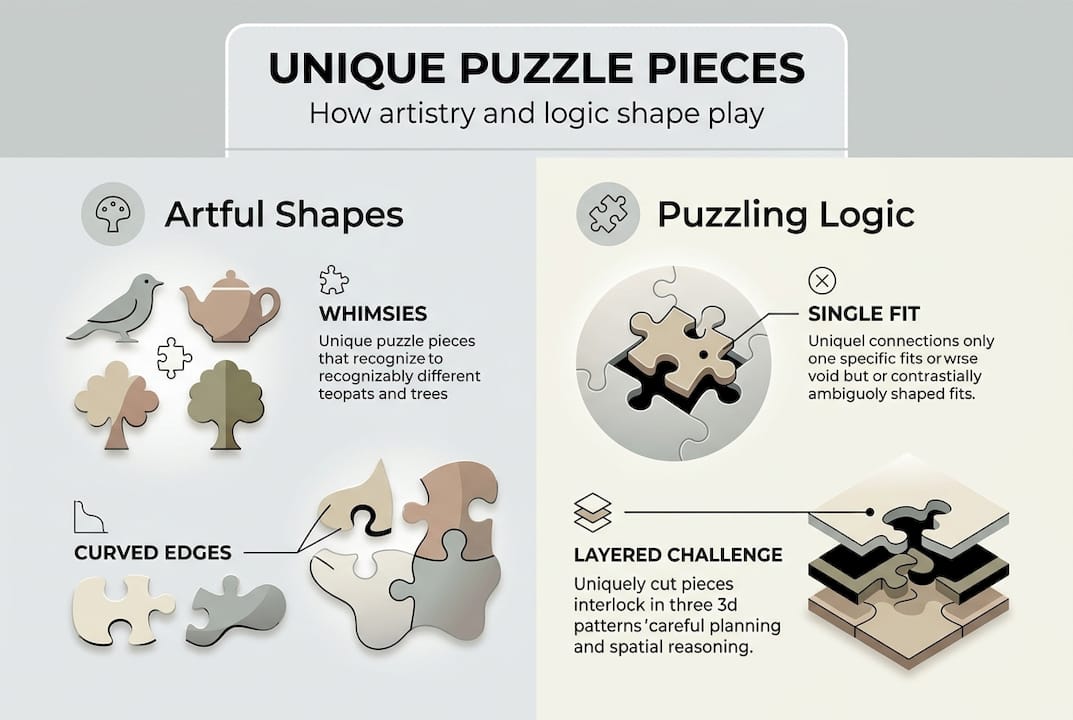
In standard puzzles, pieces are mathematically designed so that each edge fits only one neighbor. This is called logical uniqueness in puzzle design, where unique edge shapes ensure a single correct fit, enabling solving algorithms that rely on perfect matches. In handcrafted puzzles, this principle is taken further. Unique shapes add a second layer of constraint: not just edge geometry, but visual and thematic recognition.
Color-line cutting is one of the most interesting techniques. Instead of cutting through a uniform area of color, the artisan cuts along the boundary between two colors. This makes the piece harder to place by color alone, pushing you to rely more on shape and context.
Here’s how the solving process unfolds when unique pieces are involved:
- Sort by figure type. Pull out all whimsies and group them by what they represent.
- Establish the border. Use edge pieces to frame the puzzle as usual.
- Place your whimsies strategically. Use the puzzle’s theme to guess where each figure belongs before testing the fit.
- Tackle color-line pieces last. These are the trickiest and most rewarding to place.
- Step back and appreciate the design. Notice how the unique cuts align with the artwork’s composition.
Pro Tip: For the best experience, sort your pieces into three groups: whimsies, edge pieces, and interior pieces. Tackle them in that order. You’ll find the whimsies give you thematic anchors that make the interior much easier to navigate.
This is part of what makes Lubiwood puzzle design so thoughtful. Every cut is intentional, supporting both the visual experience and the logic of the solve. If you’re curious about the process from concept to finished puzzle, the custom puzzle creation workflow shows just how much craft goes into each piece.
Collecting, gifting, and home decor: The many roles of unique puzzles
Once you’ve experienced a puzzle with truly unique pieces, it’s hard to go back. But the appeal goes well beyond the solving table.
Unique pieces elevate wooden puzzles to luxury leisure items, blending challenge with thematic artistry ideal for gifting and display. Here’s where that value shows up in real life:
- Collector items: Many enthusiasts build libraries of handcrafted puzzles, treating them like art prints or books
- Premium gifts: A wooden puzzle with whimsies tailored to the recipient’s interests feels personal and considered
- Wall art: Completed puzzles can be framed and displayed, turning a hobby into home decor
- Conversation starters: A framed puzzle on the wall invites questions and stories in a way a generic print never does
- Mindful activity: The slower, more intentional pace of solving a unique-piece puzzle makes it a genuine wellness practice
Artisanal puzzle owners are significantly more likely to display their completed puzzles than standard puzzle buyers, and many report spending two to three times longer on a single solve, savoring the experience rather than rushing to finish. That extended engagement is a direct result of the unique pieces keeping the brain curious and the hands busy.
For home decor enthusiasts, the eco-friendly angle adds another reason to choose wood over cardboard. Sustainably sourced wood, precision laser cutting, and zero plastic packaging make these puzzles a natural fit for puzzling activities that align with a mindful, low-waste lifestyle.
Bring artful puzzling home
If this guide has sparked something in you, whether you’re a seasoned puzzler ready to level up or a gift shopper looking for something truly memorable, Lubiwood is the place to start. Every puzzle in the collection is laser-cut from premium sustainable wood, designed with the kind of artistry and attention to detail that makes each piece worth holding.
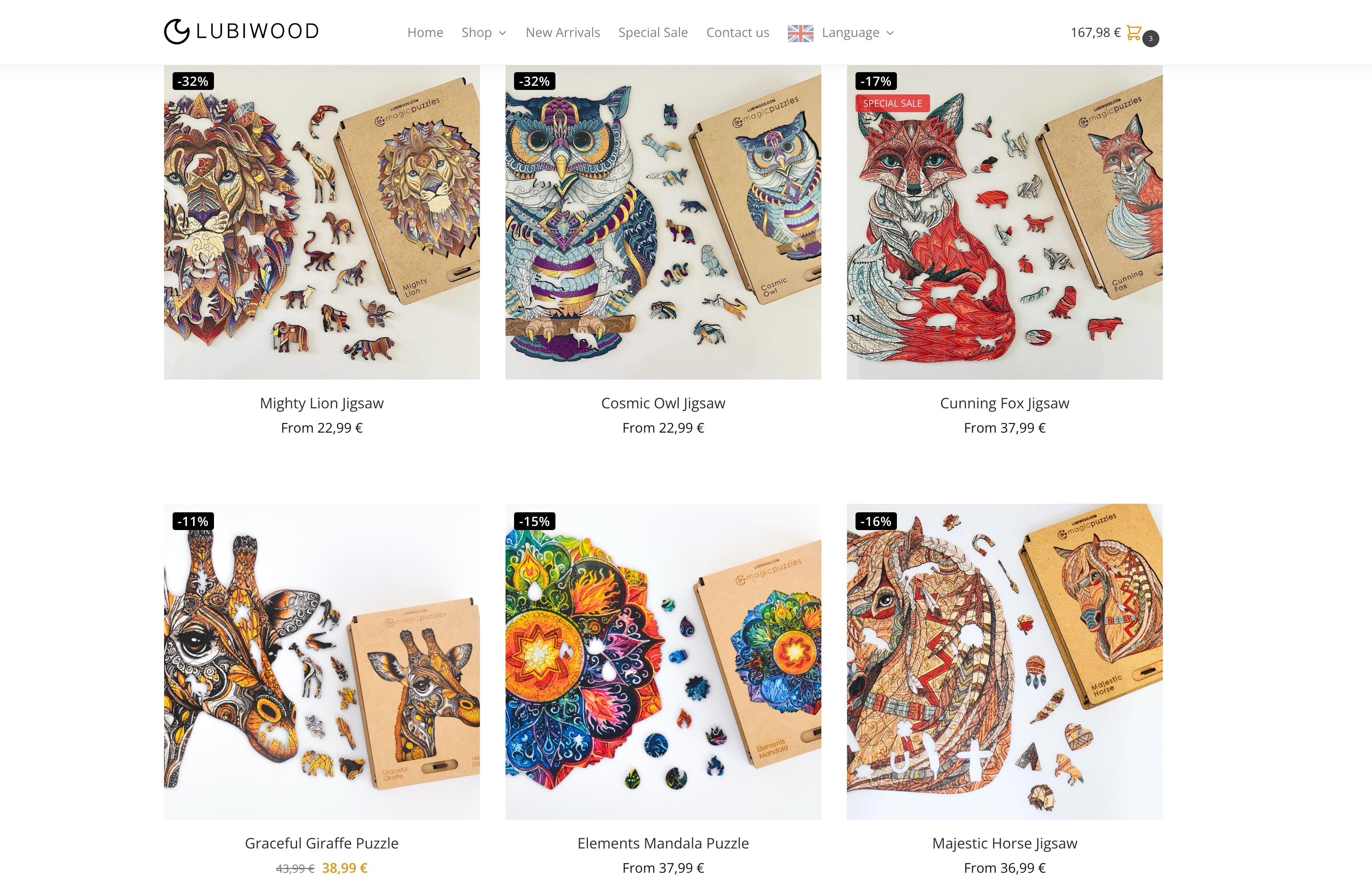
From wooden jigsaw puzzles with intricate whimsies to architectural 3D wooden puzzles that become display pieces in their own right, there’s something here for every taste and occasion. Browse the best puzzles collection to find a puzzle that matches your style, your space, or the person you’re shopping for. Gifting, decorating, or simply treating yourself to a better puzzle experience starts with one great piece.
Frequently asked questions
What is a ‘whimsy’ in a jigsaw puzzle?
A whimsy is a specially shaped puzzle piece that resembles a recognizable object, animal, or figure, adding an element of art and surprise to the solving experience. Whimsies are shaped to match the puzzle’s theme, making each one a small discovery.
Why do handcrafted wooden puzzles cost more?
They are made from durable FSC-certified wood and feature intricate, theme-based unique pieces that require skilled design and precision cutting. The materials and craftsmanship together justify the higher price point.
Do unique puzzle pieces make puzzles harder?
Yes. Irregular shapes and whimsies increase difficulty by requiring new strategies for both identifying and fitting pieces, making the solve more engaging and rewarding.
Are wooden puzzles better for the environment?
Handcrafted wooden puzzles made with FSC-certified birch plywood are a more durable, eco-conscious choice compared to most cardboard puzzles, which often end up in landfill after a single use.
How are unique puzzle pieces created?
Artisans design unique pieces using hand sketches or design software to match the puzzle’s theme, then use laser cutting or hand tools to shape them from wood. Techniques like color-line cutting add an extra layer of challenge and visual interest beyond standard whimsies.
