





Blog
Wooden Jigsaw Puzzles Boost Kids’ Skills by 45% in 2026

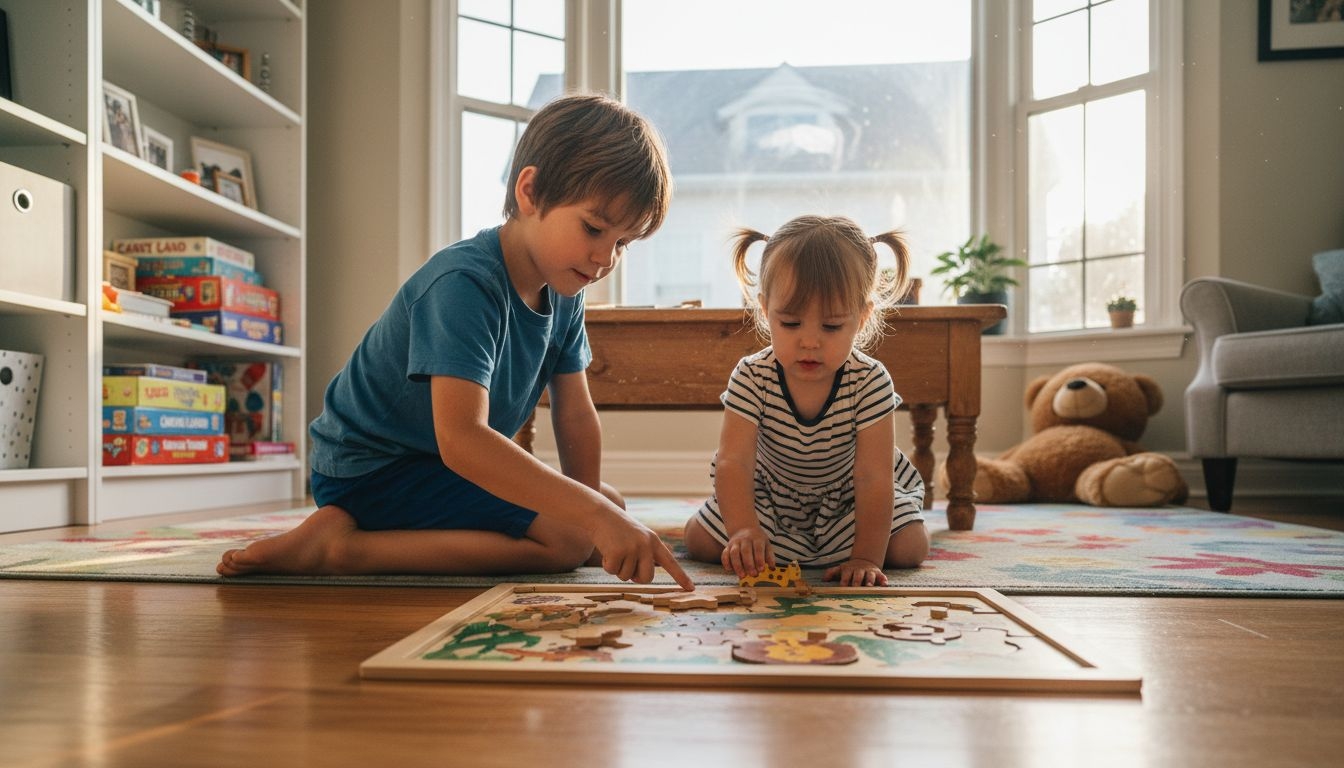
Parents and educators struggle to find tools that engage children while supporting cognitive growth and aligning with eco-friendly values. Wooden jigsaw puzzles uniquely combine developmental benefits with sustainability, offering hands-on learning that builds problem-solving, fine motor coordination, and social skills. This guide walks you through selecting, using, and benefiting from wooden puzzles in homes and classrooms, backed by research and practical recommendations for 2026.
Table of Contents
- How To Choose The Right Wooden Jigsaw Puzzle: Selection Criteria
- Cognitive And Motor Skill Benefits Of Wooden Jigsaw Puzzles
- Collaborative Learning With Jigsaw Puzzles In Classrooms
- Eco-Friendly And Sustainability Considerations In Puzzle Selection
- Price, Availability, And Accessibility Of Wooden Jigsaw Puzzles
- Summary Comparison Of Leading Wooden Jigsaw Puzzle Characteristics
- Situational Recommendations: Best Puzzles For Specific Educational Goals
- Explore Lubiwood’s Eco-Friendly Educational Wooden Puzzles
- Frequently Asked Questions About Educational Wooden Jigsaw Puzzles
Key Takeaways
| Point | Details |
|---|---|
| Developmental Impact | Wooden puzzles enhance problem-solving, fine motor skills, and spatial reasoning through tactile engagement. |
| Age Alignment | Selecting puzzles matching developmental stages and interests maximizes engagement and skill building. |
| Sustainability Matters | Eco-friendly wooden materials support environmental values while providing durability and aesthetic appeal. |
| Collaborative Benefits | Group puzzle activities foster teamwork, communication, and motivation in classroom settings. |
| Investment Value | Higher upfront costs deliver long-term durability and educational returns compared to cardboard alternatives. |
How to Choose the Right Wooden Jigsaw Puzzle: Selection Criteria
Selecting the right wooden jigsaw puzzle starts with matching complexity to your child’s developmental stage. Manufacturer guidelines typically recommend piece counts based on age, but you should also consider individual skill levels and prior puzzle experience.
Themes matter as much as difficulty. A child passionate about animals will engage far longer with wildlife puzzles than generic shapes. Interest alignment transforms puzzle time from a chore into an anticipated activity, building intrinsic motivation for learning.
Prioritize puzzles crafted from sustainably sourced, recyclable wood. Many artisan brands now certify their materials, giving eco-conscious families confidence in their purchase. Look for non-toxic paints and finishes, especially for younger children who may mouth pieces during play.
Consider these selection factors:
- Piece count appropriate for current skill level with room to grow
- Design intricacy that challenges without overwhelming
- Safety features including smooth edges and secure finish
- Theme alignment with child’s interests and learning goals
- Brand commitment to sustainable materials and craftsmanship
Pro Tip: Start with puzzles slightly below your child’s perceived skill level to build confidence, then gradually increase complexity as they master each challenge.
Price and availability factor into practical purchasing decisions. While wooden puzzles cost more upfront, their durability means they withstand years of use across multiple children. Browse specialized retailers for the widest selection, and check our puzzle size guide to match dimensions with your space constraints.
Understanding what makes special wooden puzzles unique helps you distinguish quality craftsmanship from mass-produced alternatives. Laser-cut precision and artistic design elevate puzzles from simple toys to educational investments that retain value over time.
Cognitive and Motor Skill Benefits of Wooden Jigsaw Puzzles
Wooden jigsaw puzzles deliver measurable developmental gains across multiple skill domains. The tactile weight and texture of wooden pieces provide sensory feedback that cardboard cannot match, strengthening hand-eye coordination through repeated manipulation.
Fine motor control improves as children grasp, rotate, and position puzzle pieces. These movements build the precise finger strength and dexterity required for writing, buttoning clothes, and other essential daily tasks. The three-dimensional quality of wooden pieces adds resistance that builds muscle memory.
Puzzle play builds children’s spatial vocabulary and problem-solving skills by teaching words such as turn, flip, and position sequencing. This linguistic development supports later math comprehension and geometric reasoning.
Key cognitive benefits include:
- Enhanced memory through pattern recognition and piece location recall
- Improved concentration and sustained attention during extended puzzle sessions
- Emotional regulation skills developed through managing frustration and celebrating success
- Executive function growth via planning strategies and testing hypotheses
- Spatial reasoning that transfers to STEM learning and everyday navigation
Research shows children who regularly engage with puzzles demonstrate stronger problem-solving abilities and greater persistence when facing academic challenges. The immediate feedback loop of trying a piece, seeing if it fits, and adjusting approach teaches scientific thinking without formal instruction.
Pro Tip: Keep completed puzzles intact for a few days so children can admire their work and reinforce the satisfaction of finishing difficult tasks.
The weighted texture of special wooden jigsaw puzzles supports tactile sensory development more effectively than lightweight cardboard. This sensory richness keeps children engaged longer, extending learning time naturally. Discover additional puzzle benefits that extend beyond childhood, showing how these skills compound over a lifetime.
Collaborative Learning with Jigsaw Puzzles in Classrooms
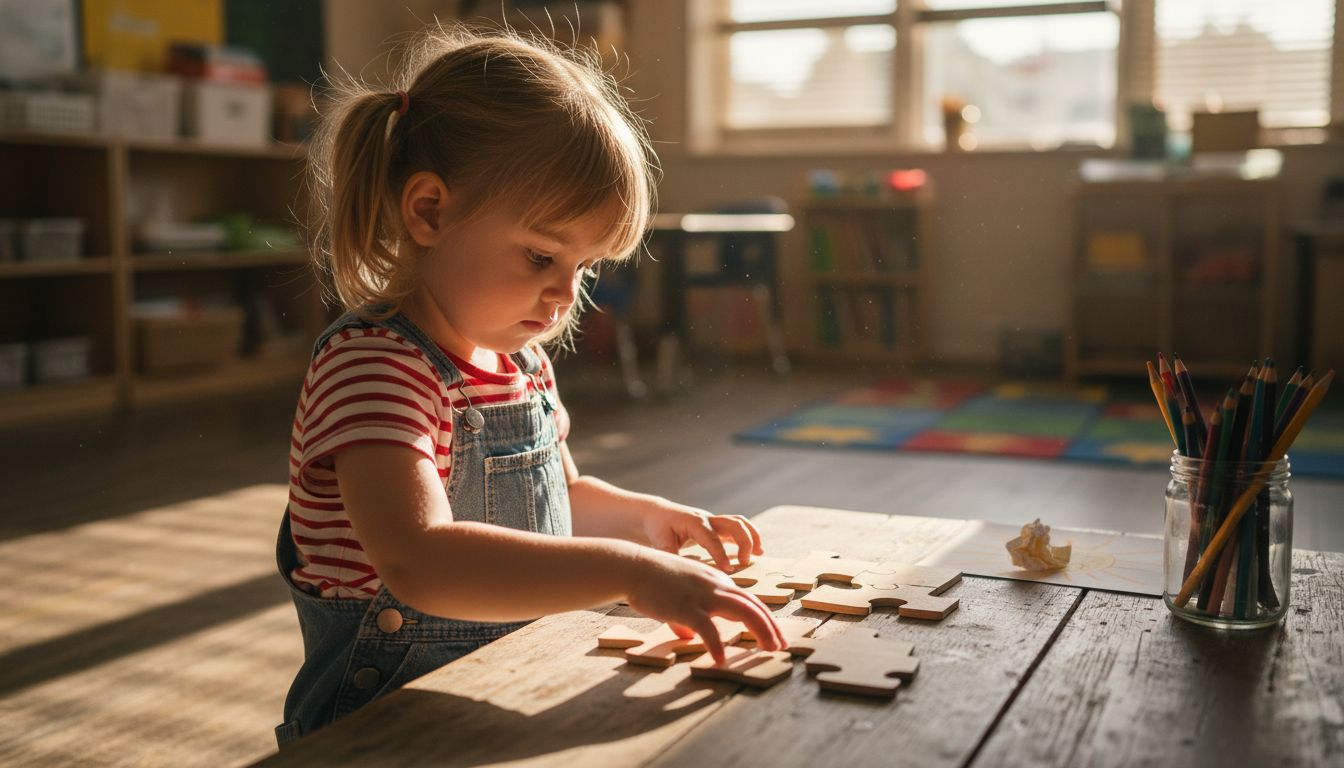
The jigsaw cooperative learning method transforms individual puzzle solving into powerful group education. Teachers divide content into sections, assign each student an expert area, then recombine groups so students teach peers their specialized knowledge. This structure mirrors puzzle assembly, where each piece contributes to the complete picture.
The Jigsaw cooperative learning technique improves socialization, motivation, and academic achievement when implemented in classrooms. Students develop social self-esteem by contributing unique expertise to group success, building confidence that transfers across subjects.
Implementing collaborative puzzle activities follows these steps:
- Divide a large wooden puzzle among small groups, assigning each a section to complete
- Groups work independently to solve their portion, developing strategies and communication
- Combine completed sections, requiring groups to coordinate edge matching and placement
- Reflect on collaboration challenges and successes, building metacognitive awareness
- Rotate roles in subsequent activities so all students experience different contribution types
Collaborative puzzle solving in classrooms using the jigsaw technique fosters teacher-modeled group discussion and cooperative learning. Teachers demonstrate respectful questioning, active listening, and constructive feedback during puzzle sessions, giving students concrete examples to emulate.
As one educator noted:
Puzzle collaboration teaches children that complex problems require multiple perspectives and that their individual contribution matters to group success, lessons that extend far beyond the classroom.
Emotional regulation improves when children share puzzle frustrations with peers who offer encouragement and alternative strategies. This peer support system reduces anxiety around challenging tasks and normalizes the learning process as iterative rather than immediate.
Explore collaborative puzzle learning articles for classroom implementation strategies and real-world success stories from educators integrating puzzles into daily instruction.
Eco-Friendly and Sustainability Considerations in Puzzle Selection
Choosing wooden puzzles from sustainably sourced materials aligns educational purchases with environmental responsibility. Eco-conscious families increasingly prioritize products that minimize ecological impact while delivering developmental benefits, making material sourcing a critical selection criterion.
Wooden puzzles crafted from recyclable, responsibly harvested wood reduce environmental footprint compared to plastic alternatives. Artisan brands committed to sustainability often provide material certifications and transparent sourcing information, letting you verify green claims before purchase.
Sustainability benefits include:
- Biodegradable materials that minimize landfill waste at end of life
- Reduced carbon footprint from natural materials versus petroleum-based plastics
- Support for responsible forestry practices and renewable resource management
- Elimination of harmful chemicals through natural wood and non-toxic finishes
- Longevity that prevents repeated purchases and associated manufacturing impact
Handcrafted wooden puzzles typically cost more than cardboard versions, but their durability justifies the investment. A quality wooden puzzle withstands years of use, serving multiple children or classroom cohorts without degradation. The visual appeal remains intact, maintaining educational value and aesthetic quality.
Brands emphasizing craftsmanship and sustainability ensure each puzzle reflects ethical production values. Laser-cut precision reduces material waste, while artisan design creates pieces that function as educational tools and decorative art. This dual purpose extends product life by keeping puzzles displayed between uses rather than stored away.
Pro Tip: Look for sustainability certifications like FSC (Forest Stewardship Council) when evaluating wooden puzzle brands to verify responsible sourcing claims.
Buying eco-friendly puzzles teaches children environmental stewardship through daily interactions with sustainable products. This experiential learning reinforces family values more effectively than abstract discussions about conservation. Browse eco-friendly wooden puzzles that combine educational excellence with environmental responsibility.
Price, Availability, and Accessibility of Wooden Jigsaw Puzzles
Understanding cost structures helps you budget for quality wooden puzzles without overspending. Handcrafted wooden puzzles generally cost 20-50% more than cardboard puzzles but offer durability and aesthetic value that justify the premium.
Price ranges typically span $20 to $60 depending on piece count, design complexity, and brand reputation. Simple 20-piece toddler puzzles start around $20, while intricate 100+ piece designs for older children reach $50 or more. Specialty 3D puzzles and limited edition artisan pieces command higher prices reflecting their craftsmanship.
| Puzzle Type | Piece Count | Age Range | Typical Price |
|---|---|---|---|
| Simple Shapes | 10-20 pieces | 2-4 years | $20-$30 |
| Themed Animals | 30-50 pieces | 4-6 years | $30-$40 |
| Complex Scenes | 60-100 pieces | 6-9 years | $40-$50 |
| Advanced Designs | 100+ pieces | 9+ years | $50-$60+ |
Availability concentrates in niche retailers and specialty toy stores rather than mass-market chains. Online shopping expands access to artisan brands and international craftspeople who ship directly to U.S. customers. This direct-to-consumer model often reduces costs by eliminating middleman markups.
Consider these purchasing strategies:
- Bundle purchases for volume discounts on multiple puzzles
- Gift vouchers for holidays and birthdays spread costs over time
- Classroom sets that divide per-student costs across group use
- Seasonal sales from specialty retailers offering 15-30% discounts
- Subscription services delivering new puzzles monthly at reduced rates
Accessibility improves as more retailers recognize demand for sustainable educational toys. Physical specialty stores let you examine puzzle quality firsthand, checking wood thickness, finish smoothness, and piece fit before purchase. Online retailers provide detailed specifications and customer reviews compensating for lack of tactile inspection.
Purchase wooden puzzles from dedicated specialists who curate collections based on educational value and material quality rather than mass-market appeal. Compare wooden puzzle prices across retailers to identify the best value for your budget and requirements.
Summary Comparison of Leading Wooden Jigsaw Puzzle Characteristics
Comparing popular wooden puzzle types side by side clarifies which options best match your educational goals and values. This overview consolidates key attributes to streamline decision-making.
| Feature | Toddler Shapes | Animal Themes | Scene Puzzles | 3D Designs | Artisan Custom |
|---|---|---|---|---|---|
| Piece Count | 10-20 | 30-50 | 60-100 | 50-150 | Varies |
| Age Range | 2-4 years | 4-6 years | 6-9 years | 8+ years | All ages |
| Theme Options | Basic shapes | Wildlife focus | Landscapes | Architecture | Fully custom |
| Sustainability | Standard | Certified wood | Eco-certified | Premium materials | Artisan sourced |
| Price Range | $20-$30 | $30-$40 | $40-$50 | $50-$70 | $60+ |
| Durability | High | Very high | Very high | Exceptional | Exceptional |
| Collaboration | Individual | Small groups | Medium groups | Partners | Variable |
Toddler shape puzzles prioritize safety and simplicity, using thick pieces that resist breakage and large knobs that accommodate developing fine motor skills. These entry-level options build confidence before advancing to complex designs.
Animal-themed puzzles leverage children’s natural interest in wildlife to sustain engagement. Educational content extends beyond puzzle solving to include species identification, habitat learning, and conservation awareness embedded in design choices.
Scene puzzles challenge spatial reasoning through multiple interconnected elements requiring placement strategy. Landscapes, cityscapes, and narrative illustrations teach compositional thinking while building patience for long-term projects.
3D wooden puzzles add architectural and engineering concepts to traditional jigsaw benefits. Vertical construction introduces gravity considerations and structural stability, expanding problem-solving dimensions beyond flat assembly.
Artisan custom puzzles offer personalization for special occasions or specific learning objectives. Family photos, educational diagrams, or commissioned artwork transform puzzles into meaningful keepsakes that combine sentimental and educational value.
This comparison reveals trade-offs between price, complexity, and specialization. Your priorities regarding developmental focus, budget constraints, and sustainability commitment determine the optimal puzzle category for your needs.
Situational Recommendations: Best Puzzles for Specific Educational Goals
Matching puzzles to educational priorities maximizes developmental impact and engagement. These tailored recommendations address common learning scenarios parents and educators face.
-
Fine Motor Development Priority: Select small-piece intricate wooden puzzles requiring precise manipulation. Look for designs with varied piece shapes and tight tolerances that demand careful positioning. Avoid oversized knobs that reduce dexterity challenge.
-
Classroom Jigsaw Method Implementation: Choose collaborative-themed puzzles depicting community scenes, ecosystems, or historical events that divide logically into expert sections. Ensure piece counts allow equitable distribution across group sizes.
-
Eco-Conscious Family Values: Prioritize handcrafted sustainably sourced puzzles with visible material certifications. Brands emphasizing recyclable packaging and carbon-neutral shipping align purchases with environmental commitments.
-
Engaging Reluctant Learners: Select interest-based themed puzzles matching child passions, whether dinosaurs, space exploration, or favorite storybook characters. Intrinsic motivation from beloved themes overcomes resistance to challenging tasks.
-
Building Persistence and Emotional Regulation: Introduce puzzles slightly above current skill level to create productive struggle without overwhelming frustration. Scaffold support by completing border sections together before independent work.
-
Multi-Age Household Needs: Invest in modular puzzle sets offering adjustable complexity through removable pieces or layered difficulty levels. This flexibility serves growing children without repeated purchases.
Pro Tip: Rotate puzzle availability every few weeks to maintain novelty and prevent boredom, storing completed puzzles away before reintroducing them months later as fresh challenges.
Balance challenge with accessibility by observing how children approach new puzzles. If they quit within minutes, the difficulty exceeds their current capacity. If they finish in one sitting without visible effort, increase complexity next time. The sweet spot produces engaged focus for 15-30 minutes with visible satisfaction upon completion.
Explore 3D wooden puzzles for advanced learners ready to extend problem-solving into three dimensions. These specialized designs introduce engineering principles through hands-on construction that bridges play and STEM education.
Explore Lubiwood’s Eco-Friendly Educational Wooden Puzzles
Now that you understand how wooden jigsaw puzzles support cognitive development, motor skills, and collaborative learning, explore Lubiwood’s carefully curated collection. Each puzzle combines educational benefits with sustainable materials, reflecting our commitment to children’s growth and environmental responsibility.
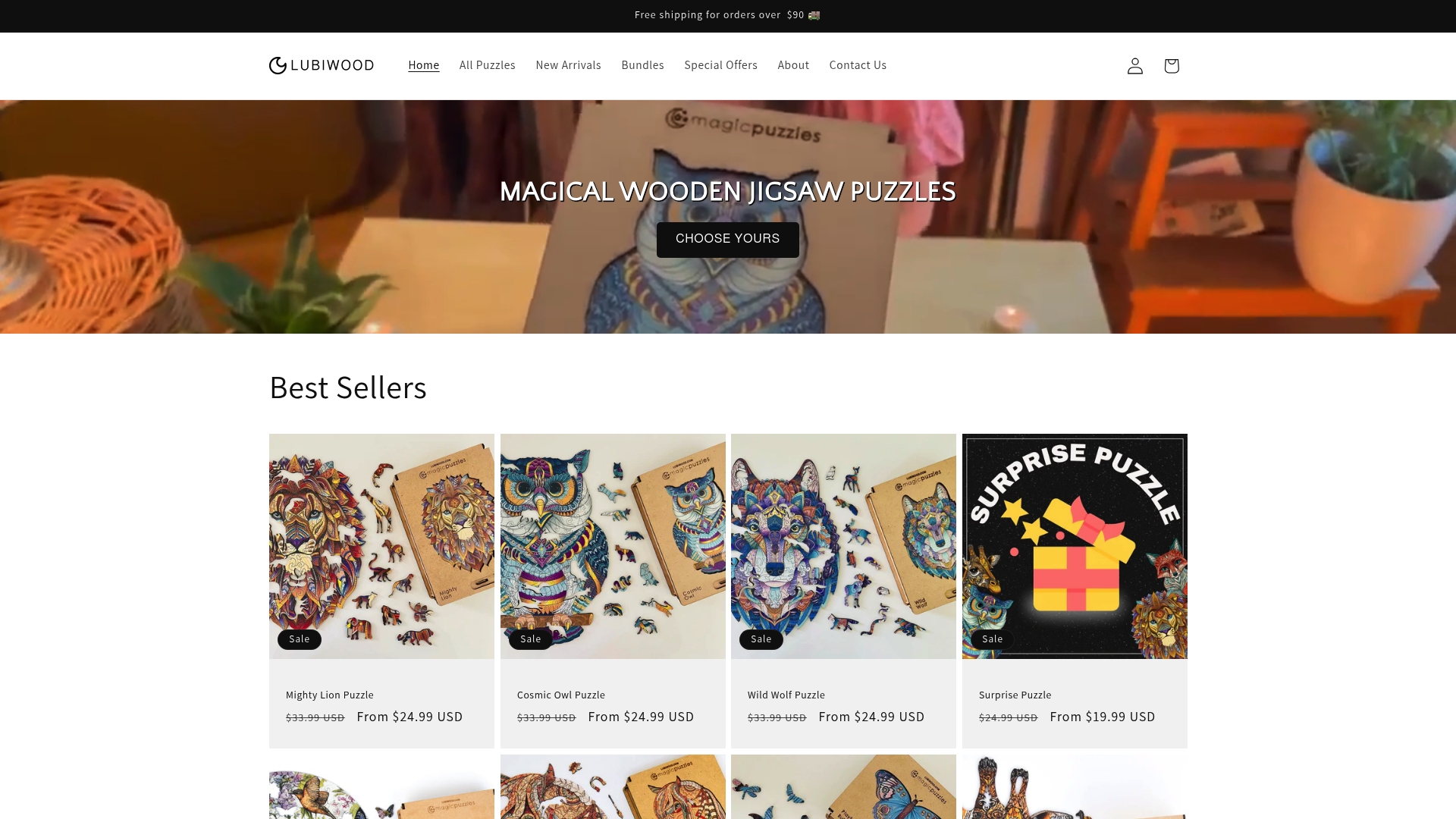
Our wooden jigsaw puzzles feature laser-cut precision and artistic designs that function as learning tools and decorative art. Browse themes spanning wildlife, landscapes, and imaginative scenes that align with varied interests and developmental stages.
For advanced learners, our 3D wooden puzzles introduce architectural challenges that build spatial reasoning and engineering thinking. These premium designs offer extended engagement for older children and family collaboration projects.
Consider gift vouchers for birthdays and holidays, letting recipients choose puzzles matching their current interests and skill levels. This flexibility ensures your gift delivers maximum educational value and enjoyment.
Frequently Asked Questions about Educational Wooden Jigsaw Puzzles
What age should children start wooden jigsaw puzzles?
Children can begin simple wooden puzzles around 18-24 months with large knobbed pieces. As fine motor skills develop, advance to 20-piece puzzles by age 3, then increase complexity annually based on individual progress.
How do I clean and maintain wooden puzzles safely?
Wipe wooden puzzles with a damp cloth and mild soap, avoiding soaking that damages wood. Dry thoroughly before storage to prevent warping. Check pieces regularly for splinters or finish damage requiring repair.
Can wooden puzzles help children who resist traditional learning?
Yes, interest-aligned puzzles transform learning into play, reducing resistance. The tactile engagement and immediate feedback satisfy kinesthetic learners while building skills that transfer to academic contexts.
Where can I buy authentic eco-friendly wooden puzzles in the U.S.?
Specialty toy retailers, artisan marketplaces, and dedicated online shops like Lubiwood offer certified sustainable wooden puzzles. Verify material sourcing and safety certifications before purchasing to ensure authenticity.
How do puzzles support specific cognitive development milestones?
Puzzles build spatial reasoning during preschool years, support executive function in elementary grades, and enhance problem-solving through adolescence. The complexity progression matches natural cognitive development stages.
Are wooden puzzles worth the higher cost compared to cardboard?
Wooden puzzles justify premium pricing through superior durability, tactile sensory benefits, and aesthetic longevity. They serve multiple children over years without degradation, reducing per-use costs below cardboard alternatives.